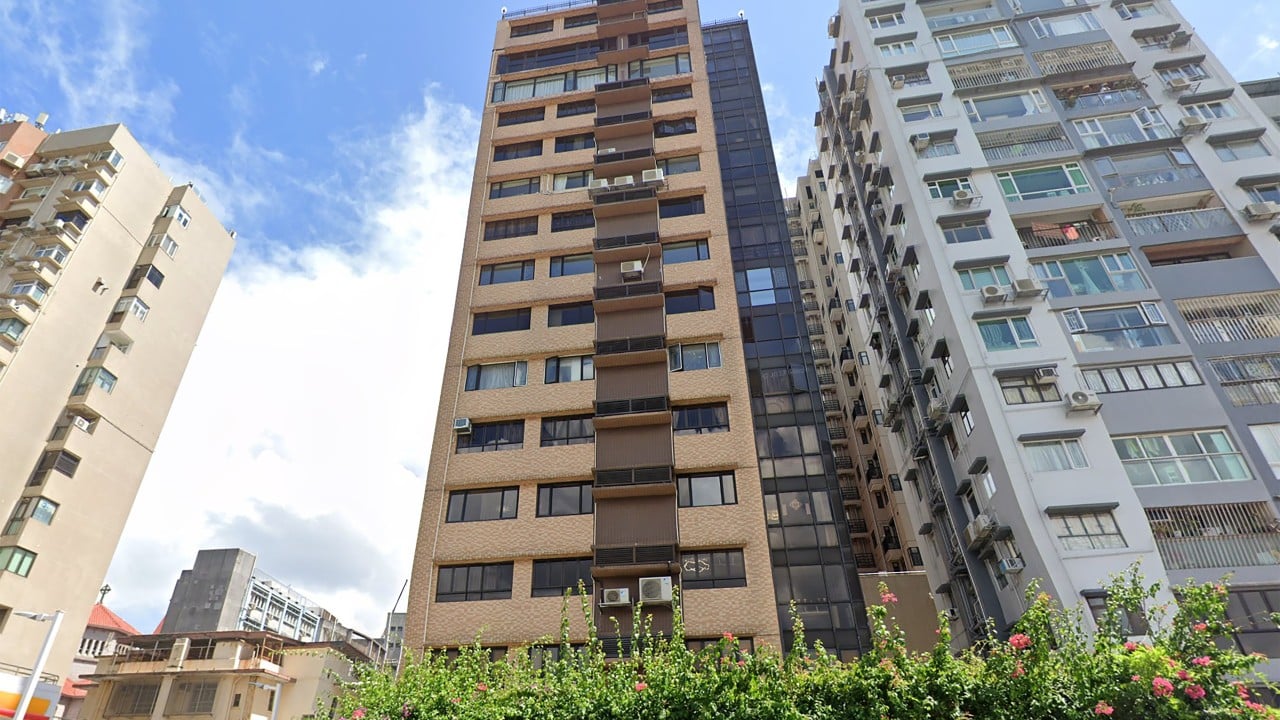
The intersection of a residential fire and a concurrent fatal fall from height represents a complex investigative knot for municipal law enforcement. In high-density urban environments, such incidents are rarely isolated events; they typically signal a catastrophic failure within a closed system—either through premeditated intent, a desperate escape mechanism, or a secondary consequence of environmental stressors. To understand the Hong Kong police investigation into the suspicious fire and subsequent death of a male victim, one must move beyond the surface-level reportage of "emergency response" and analyze the incident through the lens of forensic synchronicity and structural risk variables.
Forensic Synchronicity and the Investigation Threshold
The classification of a fire as "suspicious" by fire services and police investigators is not a subjective determination but a result of failing to meet the standard criteria for accidental ignition. In the context of the Hong Kong incident, the investigative team operates under a dual-track protocol: the Fire Services Department (FSD) evaluates the physical accelerants and heat signatures, while the Police Force (HKPF) assesses the human behavioral data.
When a fire and a death occur simultaneously, investigators look for the Point of Divergence. This is the specific moment where the sequence of events deviates from a standard accident. If the fire originated in a locked unit while the occupant was found at the base of the building, the investigative framework shifts to evaluate three potential causal relationships:
- The Escape Derivative: The fire was accidental or situational, and the fall resulted from a failed attempt to exit a window or balcony due to blocked primary egress routes.
- The Concealment Mechanism: The fire was intentionally set to destroy forensic evidence of a prior struggle or a self-harm event.
- The Simultaneous Crisis: The fire and the fall were both components of a singular, planned sequence of events initiated by the deceased or a third party.
The suspicious nature of the fire suggests that the FSD found multiple points of origin or the presence of accelerants that do not align with domestic appliances or electrical faults. In high-rise residential blocks, the "chimney effect" in stairwells and the proximity of units make the use of fire as a tool particularly lethal and structurally significant.
Structural Risk Variables in High-Density Housing
The investigation occurs within a specific socio-spatial environment. High-rise residential units in Hong Kong are characterized by high thermal mass and complex ventilation systems. When a fire is ignited in such a space, the oxygen-to-fuel ratio changes rapidly.
The Thermal Pressure Factor
Inside a sealed apartment, a fire creates a rapid increase in internal pressure. If the victim was found outside the building, investigators must determine if the pressure from a flashover or a backdraft forced the individual out of an aperture, or if the individual voluntarily jumped to avoid thermal injury. The distance of the body from the building's base provides a mathematical indicator of the fall’s nature:
- Zero to Two Meters: Suggests a vertical "drop" or a slip, often associated with trying to climb down the exterior.
- Three to Five Meters: Suggests an active "leap" or "push," indicating significant horizontal velocity.
- Five Meters Plus: Often indicates a high-velocity event, which in forensic terms, points toward intentionality or external force.
The Egress Obstruction Variable
Hong Kong’s residential safety is often compromised by "subdivided units" or the illegal storage of materials in common corridors. If the fire started near the primary entrance (the front door), the occupant is forced into a "dead-end" logic. Without a fire-rated balcony or an external fire escape, the window becomes the only exit. Investigators analyze the soot patterns on the window frames; a lack of soot on the victim’s hands or clothing may suggest they were incapacitated or had exited the premises before the smoke reached a certain density.
The Investigative Workflow and Evidence Processing
To transition from a "suspicious fire" to a "criminal case" or a "coroner's inquest," the HKPF employs a standardized analytical sequence. This removes the ambiguity of media narratives and replaces it with a logic-gated process.
Phase I: The Origin and Cause (O&C) Matrix
The FSD conducts a "layering" excavation of the fire scene. By stripping away debris, they map the "V-pattern" of burns on the walls. In the recent incident, the determination of "suspicious" likely stems from finding that the fire's intensity was inconsistent with the available fuel load (furniture/bedding) or that the fire-extinguishing systems (sprinklers/detectors) were tampered with.
Phase II: The Biological Timeline
The forensic pathologist’s role is to determine the Causal Link. A critical data point is the presence of carbon monoxide (CO) or soot in the victim's lungs.
- Presence of Soot/CO: Confirms the victim was alive and breathing while the fire was active. This suggests the fall was a reaction to the fire.
- Absence of Soot/CO: Indicates the victim was either dead or already outside the thermal zone before the fire reached peak intensity. This shifts the investigation toward a concealment-of-crime hypothesis.
Phase III: The Digital and Behavioral Audit
In modern urban investigations, the "hidden" evidence exists in the digital exhaust of the deceased. Investigators map the 48 hours leading up to the fire. This includes:
- CCTV Analysis: Tracking movement in the elevators and lobbies to ensure no third parties entered or exited the unit.
- Energy Consumption Patterns: Analyzing smart meter data to see if there was a spike in electricity or gas usage prior to the fire, which might indicate a struggle or the preparation of the scene.
- Financial and Social Friction: Assessing if the deceased was under external pressure, which provides the "motive" component in a forensic logic model.
The Logistics of Urban Tragedy
The death of a resident following a suspicious fire creates a ripple effect in urban management. It highlights the vulnerability of high-rise living where the actions of one individual can jeopardize hundreds of others. The structural integrity of the building is rarely the primary concern; rather, it is the "psychological contagion" and the administrative burden on the Housing Authority or private management.
The "suspicious" tag acts as a legal placeholder. It allows the police to seize property, obtain warrants for digital records, and bypass certain privacy protections that would otherwise apply to an accidental death. Until the forensic pathology report is reconciled with the FSD’s arson report, the case remains an open system with high entropy.
Strategic Operational Recommendations for Incident Response
Authorities and building management firms must treat the "fire-plus-fall" scenario as a unique category of risk. The following logic-based interventions are necessary for mitigating the fallout of such incidents:
- Vertical Egress Hardening: Since the "fall" is often a result of "fire-driven panic," buildings must prioritize the installation of non-combustible external barriers that prevent accidental falls while allowing ventilation.
- Integrated Sensor Logic: Fire alarms should be linked to real-time CCTV monitoring in common areas. The moment a smoke head is triggered, the camera system should automatically index the "ingress/egress" points of that specific floor to capture any departing individuals.
- Forensic Pre-servation: Management must be trained to secure the "base-of-fall" zone immediately. In many cases, critical evidence from the victim’s person or clothing is contaminated by onlookers or uncoordinated emergency personnel before the forensic team arrives.
The investigation into the fire and fall in Hong Kong will ultimately hinge on the biological state of the victim at the moment of the fire's ignition. If the pathology confirms the absence of smoke inhalation, the fire moves from a tragic accident to a secondary tool of a broader criminal event. The resolution of this case will require the synthesis of thermal dynamics, ballistic fall patterns, and digital behavior audits to close the gap between suspicious activity and definitive legal conclusion.
Logistical priority must now shift to the stabilization of the residential site and the rigorous cross-referencing of the victim’s final communications with the physical timeline established by the Fire Services Department. Failure to synchronize these data points will result in an inconclusive coroner’s report, leaving the structural causes of the "suspicious" fire unaddressed.