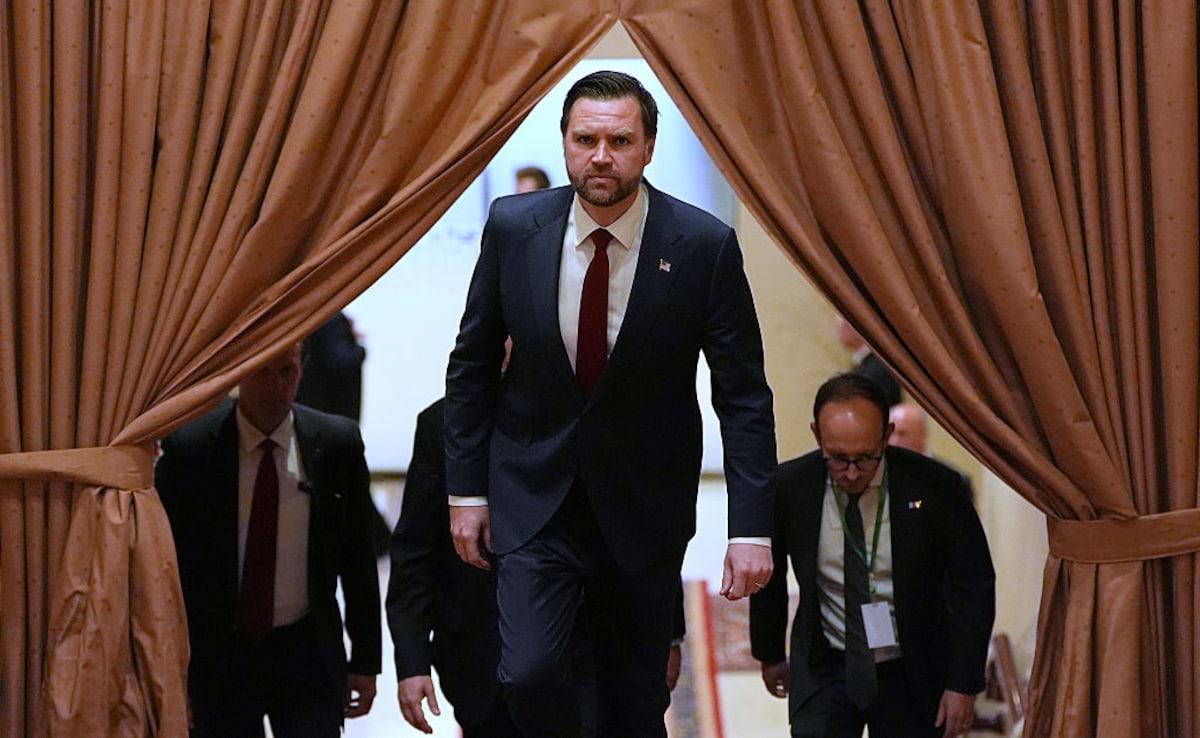
The assumption that a Vice Presidential candidate’s personal diplomatic alignment or ideological proximity to foreign leaders translates into immediate geopolitical leverage is a category error. While JD Vance has positioned himself as the primary intellectual architect of a "National Conservative" foreign policy, his recent inability to secure concrete concessions or measurable shifts in the behavior of Iran-aligned proxies or Viktor Orbán’s Hungary reveals a significant friction point between rhetoric and operational reality. This gap is not a failure of personality, but a result of entrenched structural barriers and the differing incentive structures governing the MAGA movement and its alleged international counterparts.
The Asymmetry of Ideological Alignment
Proximity to a leader like Viktor Orbán is often framed by critics and supporters alike as a "special relationship" that bypasses traditional State Department channels. However, this ignores the sovereign utility function of middle powers. Hungary’s alignment with the American populist right is tactical rather than foundational.
For Orbán, the relationship serves three primary functions:
- Veto Power Leverage: Using the prospect of a friendly U.S. administration to increase his bargaining power within the European Union.
- Information Arbitrage: Positioning Budapest as a necessary node for American conservatives to understand European "illiberalism."
- Hedge Strategy: Maintaining a footprint in Washington that is independent of the current administration’s policy.
Vance’s "empty-handed" status regarding Hungary stems from the fact that Hungary has already extracted the maximum utility from its association with the American right. There are no further concessions for Orbán to make without jeopardizing his actual power base—which is dependent on EU subsidies and Russian energy imports. Vance offers the promise of future legitimacy, but Orbán requires current fiscal and energy stability. The misalignment of time horizons (the 2024/2028 election cycle versus Hungary’s immediate economic needs) creates a stalemate where no substantive policy shifts occur.
The Iran Deterrence Deficit and Kinetic Realities
The critique that Vance has "come up empty" on Iran requires a dissection of how non-state actors and regional powers respond to shadow diplomacy. Unlike traditional diplomacy, which relies on the credibility of the current executive, populist diplomacy relies on the perceived inevitability of future power.
The failure to move the needle on Iranian aggression or regional instability via rhetoric can be attributed to the Credibility Gap in Shadow Deterrence. For a threat or an olive branch from a candidate to be effective, the target state must believe two things: that the candidate will win, and that the candidate’s future administration will be more punishing or rewarding than the current one.
Iran’s current strategy is a high-frequency response to immediate tactical opportunities in the Levant and the Red Sea. They operate on a weekly tactical loop. Vance’s policy framework operates on a four-year strategic loop. Because Iran perceives the current U.S. administration as hesitant to escalate, a Vice Presidential candidate’s warnings of future "maximum pressure" are discounted by a significant Geopolitical Net Present Value (NPV). A threat delivered today that cannot be executed for months or years has near-zero utility in stopping a drone launch in the present.
The Three Pillars of Diplomatic Friction
To understand why Vance’s outreach hasn't yielded "wins," we must categorize the friction into three distinct structural pillars:
1. The Institutional Inertia Pillar
The "Deep State" is not merely a political talking point but a collection of career bureaucrats, military leaders, and intelligence officers who manage the actual levers of foreign policy. Even if Vance builds a rapport with a foreign minister, that minister knows the actual flow of weapons, intelligence, and trade remains controlled by the current executive branch. Foreign leaders are risk-averse; they will not burn bridges with the sitting President for the sake of a candidate who might not take office.
2. The Isolationist-Internationalist Paradox
Vance advocates for a "restrained" foreign policy that prioritizes domestic industrial concerns over foreign entanglements. This creates a logical trap: Why would a foreign adversary or ally change their behavior for a leader who explicitly states he wants to do less in their region? If Vance’s goal is to pivot away from Europe or the Middle East to focus on China, he effectively signals to Hungary and Iran that they will have more freedom of movement under a Vance-influenced administration, not less. This reduces his leverage to zero.
3. The Lack of Sovereign Assets
Diplomacy is a transaction involving sovereign assets: sanctions relief, weapon sales, trade quotas, or security guarantees. A candidate possesses none of these. They possess only "attention" and "rhetorical alignment." While these are valuable for cultural branding, they are not currency in the realm of Realpolitik.
The Mechanism of Foreign Policy Signaling
When a candidate like Vance engages with foreign entities, the signal is often intended for a domestic audience rather than the foreign one. This is External Signaling for Internal Consumption. By appearing as a statesman on the world stage, Vance validates his credentials to a domestic base that values a "strong" image.
However, this creates a feedback loop of diminishing returns. Each time a high-profile meeting or statement results in no change in the status quo (e.g., Iran continues its enrichment, Orbán continues his dance with Moscow), the candidate's "clout" is devalued. The market for foreign policy influence treats these interactions like unbacked currency—inflationary and increasingly worthless without the "gold standard" of actual executive power.
The Cost Function of Premature Diplomacy
There is a measurable cost to this "empty-handed" diplomacy. It informs adversaries of the candidate’s specific triggers and thresholds. By articulating exactly what he finds objectionable in Iran’s behavior or what he admires in Hungary’s social policy, Vance provides a roadmap for these nations to manipulate a future administration.
In the case of Hungary, the cost is the alienation of traditional NATO allies who view the Vance-Orbán axis as a threat to the security architecture of the Suwalki Gap. In the case of Iran, the cost is the hardening of their position; they perceive the American right as divided between "isolationists" and "hawks," leading them to believe they can exploit these internal fissures to avoid a unified U.S. response.
Mapping the Failure of Logic in "National Conservatism"
The "National Conservative" framework posits that national interests should dictate all foreign engagement. But Vance’s application of this theory lacks a Scalable Escalation Ladder.
If the U.S. national interest is to ignore "minor" regional conflicts, then the U.S. loses the "small change" needed to buy cooperation on "major" issues. You cannot demand that Iran stop its proxy wars while simultaneously signaling that you have no interest in maintaining the regional alliances that would be necessary to fight those proxies. This is the Leverage Paradox: you only have influence if you are willing to use the very resources you claim you want to save.
Strategic Realignment Requirements
For Vance to convert his ideological influence into tangible foreign policy outcomes, his strategy must shift from rhetorical alignment to Functional Transactionalism. This would require:
- Specific Policy Carve-outs: Moving away from broad "America First" platitudes toward specific, actionable trade or security frameworks that can be pre-negotiated.
- Shadow Cabinet Integration: Coordinating with Congressional leadership to show that his foreign policy goals have legislative backing, providing a glimmer of current authority.
- The "Third Way" Deterrence: Creating a credible threat that a future administration would not just be "tougher," but fundamentally different in a way that makes current non-compliance more expensive than the status quo.
The current "empty" results are not a failure of Vance’s intellect, but a predictable outcome of attempting to exercise the "soft power" of an insurgent movement against the "hard power" of established states and non-state actors. Influence without the ability to distribute pain or pleasure is merely commentary.
The immediate tactical move for the Vance camp is to cease high-profile foreign engagements that lack a clear, measurable deliverable. Every "empty-handed" return reinforces the perception of JD Vance as a theorist in a world governed by practitioners. Until he can bridge the gap between ideological affinity and the actual mechanics of statecraft, his foreign policy influence will remain a derivative asset with high volatility and low liquidity. Focus must shift toward building the administrative infrastructure that will allow for the immediate execution of policy on Day One, rather than attempting to perform diplomacy without a portfolio.