The prevailing geopolitical fixation on 2027 as a definitive "invasion date" for Taiwan misinterprets the functional relationship between military capability and political intent. While 2027 marks the centenary of the People’s Liberation Army (PLA) and a documented milestone for achieving specific modernization goals, the transition from "capability to execute" to "intent to launch" is governed by a complex cost-benefit calculus that currently favors coercive gray-zone operations over high-intensity kinetic conflict. Intelligence assessments suggesting China is not currently planning a 2027 invasion are not declarations of peace; they are reflections of an ongoing structural bottleneck in amphibious lift capacity, joint-force integration, and economic insulation.
The Three Pillars of Cross-Strait Stability
To understand why a 2027 timeline remains a benchmark for capability rather than a fixed operational schedule, one must analyze the three structural pillars that dictate Beijing's decision-making matrix. If you liked this piece, you should look at: this related article.
1. The Amphibious Lift Gap
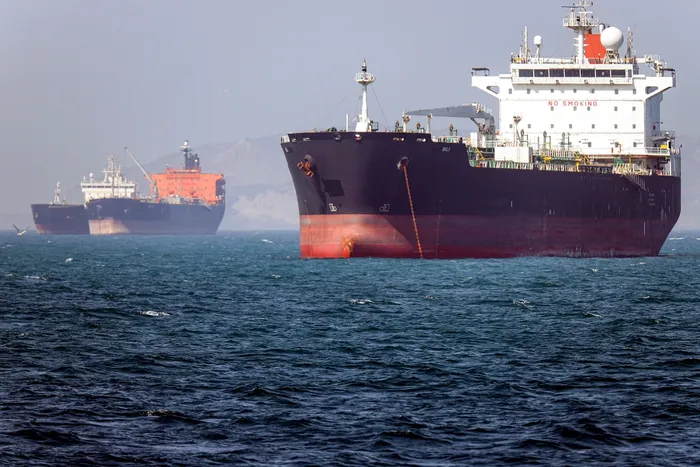
Military projection across the 100-mile Taiwan Strait requires more than just a large navy. It requires specialized amphibious assault ships (LHA/LHD), roll-on/roll-off (RO-RO) vessels, and the logistical architecture to sustain a force under constant fire. Current PLA naval expansion focuses heavily on blue-water capabilities and carrier strike groups. While these are effective for sea denial and "island chain" defense, they do not solve the fundamental problem of transporting hundreds of thousands of troops across a contested waterway.
The "2027 goal" is specifically tied to the PLA's ability to operate as a fully "integrated" force. This includes the maturation of the PLAAF (Air Force) and PLARF (Rocket Force) to create an Anti-Access/Area Denial (A2/AD) bubble. If the PLA cannot guarantee the neutralization of US carrier strike groups or regional bases in Okinawa and Guam, the risk of a failed crossing remains unacceptably high. A failed invasion is not just a military defeat; it is a terminal threat to the Chinese Communist Party's domestic legitimacy. For another angle on this event, see the latest update from Reuters.
2. The Silicon Shield and Economic Interdependence
The global reliance on the Taiwan Semiconductor Manufacturing Company (TSMC) creates a unique economic friction. Taiwan produces over 90% of the world's most advanced logic chips. An invasion would trigger a global economic depression, impacting China’s own manufacturing sector as much as the West’s.
Until China achieves a higher degree of "Semicondcutor Sovereignty"—the ability to design and manufacture sub-7nm chips without Western IP or equipment—an invasion remains a form of economic suicide. The current US-led export controls on lithography equipment (DUV and EUV) have extended the timeline for Chinese self-sufficiency, thereby inadvertently extending the lifespan of the Silicon Shield.
3. Domestic Social Stability and the Cost of Sanctions
China’s leadership views internal stability as the highest priority. The Russian experience in Ukraine demonstrated the speed at which a global financial system can be weaponized. China is currently working to "sanction-proof" its economy through the internationalization of the Yuan and the development of the Cross-Border Interbank Payment System (CIPS). However, as long as China remains a net importer of energy and food, the threat of a maritime blockade at the Malacca Strait acts as a powerful deterrent.
The Cost Function of Kinetic vs. Coercive Action
The shift in US assessments regarding 2027 reflects a realization that Beijing is finding higher ROI in "Gray-Zone Warfare" than in open conflict. We can define the cost function of Chinese strategy through the following variables:
- K (Kinetic Cost): High probability of US intervention, potential for nuclear escalation, total economic decoupling, and risk of regime collapse.
- G (Gray-Zone Cost): Incremental diplomatic isolation of Taipei, psychological exhaustion of the ROC Armed Forces, and normalization of PLA operations within Taiwan’s Air Defense Identification Zone (ADIZ).
The logic of "winning without fighting" suggests that if Beijing can degrade Taiwan’s will to resist and exhaust its military hardware through constant sorties, the necessity for a risky amphibious assault diminishes. The PLA has shifted from occasional exercises to a "permanent presence" model, effectively erasing the median line of the Taiwan Strait. This creates a "new normal" where a transition from exercise to invasion could happen with minimal warning time, but the current phase is focused on attrition rather than occupation.
The Technological Bottleneck: Joint Force Command and Control
A primary reason for the skeptical 2027 outlook is the PLA’s struggle with "Jointness." An invasion of Taiwan would be the most complex military operation in modern history, requiring seamless synchronization between land, sea, air, cyber, and space assets. Historically, the PLA has been a ground-centric force with siloed branches.
The 2027 mandate is largely an internal organizational deadline to fix this. The Central Military Commission is pushing for "Multi-Domain Precision Warfare." However, technical integration is slower than hardware procurement. Developing the data links and theater-level command structures to manage a chaotic multi-domain environment is a task that often takes decades, not years. US planners look for specific "tells" of readiness:
- Massing of medical and fuel supplies in Fujian province.
- Mobilization of civilian RO-RO vessels into military command structures.
- Hardening of domestic financial systems against SWIFT disconnection.
None of these indicators are currently at the "pre-invasion" threshold.
The Strategy of Strategic Ambiguity 2.0
The US assessment is also a tool of psychological signaling. By publicly stating that an invasion is not imminent, Washington lowers the immediate temperature while justifying continued high-tech military aid to Taiwan. This "Strategic Ambiguity 2.0" focuses on turning Taiwan into a "porcupine"—a territory so costly to ingest that the attempt is never made.
The focus on 2027 has successfully spurred Taiwanese defense spending and US regional realignment (AUKUS, Quad). From a consultant's perspective, the "2027 threat" served as a necessary catalyst for market correction in the defense sector, even if the actual probability of a kinetic event in that specific year is statistically lower than the media cycle suggests.
The Pivot to Blockade Logistics
If a traditional invasion is deemed too risky due to the factors mentioned, the alternative is a maritime and digital blockade. This would involve:
- Declaring "No-Fly" or "No-Sail" zones under the guise of military drills.
- Severing undersea fiber-optic cables to isolate the island’s communications.
- Cyber-attacks on critical infrastructure (power, water, banking).
A blockade forces the onus of escalation onto the United States. To break a blockade, the US would have to fire the first shot, changing the global narrative from Chinese aggression to American provocation. This is the strategic play that current intelligence suggests is more likely than a 1944-style D-Day landing.
The operational recommendation for regional actors is to shift focus from "Invasion Prep" to "Resilience Logistics." This includes the decentralization of energy grids, the stockpiling of critical food and medical supplies, and the establishment of redundant satellite communication arrays (such as Starshield) that are not dependent on vulnerable undersea cables. The goal is to move the "failure point" of a blockade further out, making the siege as expensive for the blockader as it is for the blockaded.
Beijing’s restraint is not a sign of weakened resolve, but of a calculated wait for a more favorable correlation of forces. The 2027 window is a milestone for military readiness, but the actual trigger remains contingent on the perceived weakness of the Western alliance and the internal stability of the Chinese state.
Maintain focus on the "Kill Web" integration of Taiwanese defense systems and the rapid expansion of mobile, land-based anti-ship missile batteries. This specific capability directly counters the PLA's amphibious lift advantage and remains the most effective deterrent against a shift from coercive to kinetic operations.
Would you like me to analyze the specific maritime lift capacity of China's civilian roll-on/roll-off fleet to determine the current shortfall in their invasion logistics?