The reported casualty figure of 3,000 deaths following a series of US-Israel strikes on Iranian territory represents a fundamental shift from shadow warfare to open, high-intensity kinetic engagement. This volume of attrition suggests a transition from "surgical" suppression of enemy air defenses (SEAD) toward a strategy of industrial-scale degradation. To understand the gravity of these strikes, one must move past the headline and analyze the structural pillars of this escalation: the failure of integrated deterrence, the mechanics of urban-military saturation, and the resulting erosion of regional security architecture.
The Breakdown of Strategic Ambiguity
For decades, the confrontation between the Iranian axis and the US-Israel partnership operated within a framework of plausible deniability and calibrated response. This "gray zone" conflict relied on asymmetric proxies—Hezbollah, the Houthis, and various PMFs—to absorb the costs of kinetic friction. The move to direct, large-scale strikes on Iranian soil signifies the collapse of this buffer.
The current casualty counts indicate that the targeting logic has evolved. In previous iterations of this conflict, "Red Lines" were defined by the avoidance of Iranian sovereignty. Now, the operational objective appears to focus on three specific vectors:
- Command and Control (C2) Neutralization: The targeting of the Islamic Revolutionary Guard Corps (IRGC) infrastructure, specifically within high-density urban or semi-urban environments.
- Logistical Bottlenecking: Disrupting the physical transit of ballistic technology from central production hubs to the periphery.
- Psychological Parity: Establishing a new status quo where the Iranian interior is as vulnerable as the Mediterranean coast or the Red Sea shipping lanes.
When 3,000 fatalities are recorded in a short duration, the "collateral damage" variable is no longer a peripheral concern; it is a mathematical certainty of high-yield munitions applied to hardened military targets located near civilian or paramilitary housing. This scale of loss indicates the use of bunker-busting payloads and mass-coordinated sorties that overwhelm local defense capacities.
The Kinematics of Air Superiority and Defense Saturation
The success of a strike of this magnitude depends on the total suppression of the Iranian integrated air defense system (IADS). Iran’s defense relies heavily on a mix of domestic systems like the Bavar-373 and aging Russian-made S-300 batteries. A casualty count in the thousands implies that these systems were not merely bypassed but systematically dismantled.
The kinetic sequence likely followed a classic SEAD/DEAD (Suppression/Destruction of Enemy Air Defenses) progression. Initially, electronic warfare platforms scramble radar signatures, followed by a wave of decoy drones designed to force the activation of interceptor batteries. Once the batteries are exposed, high-speed anti-radiation missiles (HARMs) neutralize the radar nodes, leaving the primary targets—missile silos, drone factories, and command bunkers—vulnerable to heavy ordnance.
The high casualty rate suggests a "saturation" approach. If the report of 3,000 dead is accurate, the strikes likely hit:
- Concentrated IRGC barracks.
- Subterranean facility entrances during peak operational shifts.
- Dual-use infrastructure where military assets are housed within civilian industrial complexes.
The Economic and Industrial Cost Function
The impact of these strikes extends beyond the immediate loss of life. We must quantify the "Recovery Time Objective" (RTO) for the Iranian military-industrial complex. The destruction of specialized manufacturing equipment for centrifugal components or solid-fuel rocket motors cannot be rectified through simple reconstruction. These are long-lead-time assets often subject to international sanctions, making their replacement a multi-year endeavor.
This creates a "Capability Gap" where the rate of attrition far exceeds the rate of replenishment. Iran's primary strategic advantage has historically been its "Strategic Depth" and its "Quantity over Quality" approach to missile saturation. By successfully striking the source of these assets, the US-Israel coalition effectively short-circuits the supply chain before it reaches the Levant or the Arabian Peninsula.
The economic fallout for the Iranian state is equally severe. A strike of this scale necessitates:
- A massive reallocation of capital from civil infrastructure to rapid military rebuilding.
- The immediate spike in insurance premiums for all Persian Gulf shipping, effectively acting as a secondary sanction on Iranian oil exports.
- A crisis of domestic confidence in the state's ability to provide "The Iron Shield" promised by the clerical leadership.
Regional Contagion and the Proxy Dilemma
The most significant missing link in standard reporting is the "Escalation Ladder" within the proxy network. When the Iranian center is struck, the periphery faces a critical choice: total mobilization or strategic retreat.
- Hezbollah's Calculus: If the 3,000 deaths include high-ranking IRGC liaisons, Hezbollah loses its direct line to Tehran’s strategic planning. This creates a vacuum where local commanders may act impulsively, leading to an uncoordinated and highly volatile northern front in Israel.
- The Maritime Bottleneck: The Houthis in Yemen serve as the primary leverage point against global trade. Any degradation of Iranian command capabilities could lead to an "unshackling" of Houthi aggression, where the objective shifts from targeted pressure to indiscriminate disruption of the Bab el-Mandeb.
- The Iraqi Vacuum: Iranian-backed militias in Iraq occupy a precarious position within the Iraqi state. Significant losses in Tehran weaken these groups' political standing, potentially inviting a resurgence of domestic opposition or competing extremist factions.
Intelligence Discrepancies and Verification Challenges
The figure of 3,000 casualties must be viewed through the lens of information warfare. In high-stakes kinetic conflicts, casualty data is often weaponized by both sides. The Iranian state may deflate numbers to project resilience, or inflate them to garner international sympathy and condemnations of "disproportionate force." Conversely, intelligence sources may leak high numbers to signal the absolute effectiveness of the strikes and deter further Iranian retaliation.
We must distinguish between "Combatant Attrition" and "Non-Combatant Fatality." The ratio of these two numbers determines the diplomatic trajectory of the conflict. A high civilian-to-military ratio triggers international legal mechanisms and pressures the US to restrain Israeli operations. A low ratio, however, validates the precision-strike narrative and allows for continued operations.
The Shift Toward a Post-Deterrence Environment
The reality of 3,000 deaths suggests that the era of "calibrated deterrence" is over. We have entered a "Post-Deterrence Environment" where the threat of retaliation is no longer sufficient to prevent direct state-on-state violence. This shift is driven by a fundamental reassessment of risk by the US-Israel coalition. The perceived risk of a nuclear-capable Iran has finally outweighed the perceived risk of a regional war.
In this environment, the objective is not to bring the opponent back to the negotiating table, but to achieve "Strategic Primacy" through the physical elimination of the opponent's ability to wage war.
The immediate tactical requirement for the Iranian leadership is to demonstrate a "Symmetric Response" to restore some semblance of deterrence. However, the magnitude of the strikes suggests that the traditional Iranian response—a salvo of ballistic missiles against Israeli population centers—may now be met with an even more devastating "Phase 2" strike targeting Iranian energy infrastructure or leadership bunkers.
This creates a "Negative Sum Game" where both participants incur costs that far outweigh any potential territorial or political gain. The structural integrity of the Middle Eastern security order is now dependent on whether Iran chooses to absorb the loss as a "calculated sacrifice" or escalate into a "Total War" scenario.
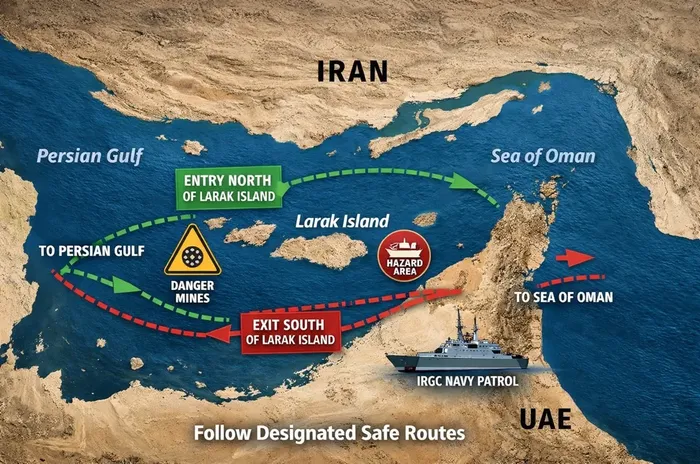
The strategic play for regional players and global markets is to prepare for a "Long-Term Kinetic Friction" model. This is not a one-off event. The depth of the strikes and the casualty count indicate a systematic campaign. Investors and policy planners must account for a permanent risk premium on Middle Eastern energy and a likely shift in global naval deployments toward the permanent protection of the Strait of Hormuz. The focus now shifts to the Iranian "Second-Strike Capability"—if it remains intact, the 3,000 casualties are merely the opening note of a much longer, more brutal symphony.