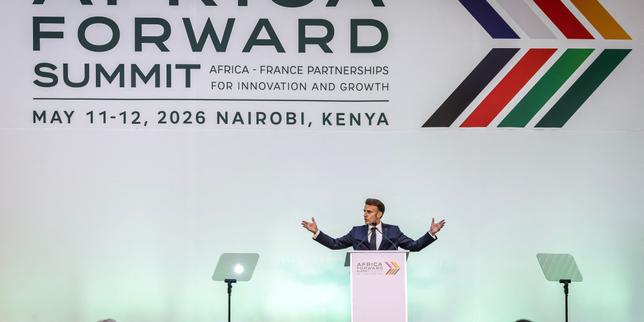
The Decoupling of Historical Dependency
The traditional framework of Franco-African relations, often characterized by vertical integration and monetary paternalism, is currently undergoing a non-linear disintegration. This shift is not merely a political choice but a structural necessity driven by three converging pressures: the erosion of the CFA Franc’s peg logic, the rise of multi-polar infrastructure financing, and the demographic explosion of the African middle class. To move toward an egalitarian partnership, the relationship must move from a model of extraction and aid to one of risk-sharing and technical co-investment.
Current discourse often obscures the underlying economic mechanics with vague appeals to "mutual respect." A rigorous analysis reveals that the primary bottleneck is not a lack of intent, but a mismatch between French risk-assessment models and the high-growth, high-volatility realities of emerging African markets.
The Monetary Trilemma and the Eco Transition
The debate surrounding the West African CFA Franc (and its proposed successor, the Eco) serves as the ultimate litmus test for egalitarian ties. The current arrangement provides exchange rate stability through a fixed peg to the Euro, which effectively subsidizes imports and suppresses inflation. However, this stability comes at a significant cost to domestic industrialization.
The cost function of the fixed peg includes:
- Loss of Monetary Autonomy: Central banks cannot use interest rates to stimulate local growth during downturns.
- Overvaluation Risk: A strong Euro makes African exports less competitive on the global stage, entrenching a reliance on raw material exports rather than finished goods.
- Reserve Opportunity Cost: The historical requirement to sit on foreign exchange reserves in the French Treasury—while largely mitigated by recent reforms—still symbolizes a lack of sovereign liquidity management.
Transitioning to a more egalitarian model requires a shift toward a flexible exchange rate regime or a basket-peg (weighted against the Euro, Dollar, and Yuan) to better reflect the actual trade flows of West African nations. France’s role must transition from a "guarantor" to a "technical partner" in central bank capacity building, removing the psychological and financial baggage of the colonial era.
Reforming the Capital Flow Asymmetry
Foreign Direct Investment (FDI) from France to Africa has historically concentrated in extractive industries (hydrocarbons, mining) and infrastructure. While these provide immediate tax revenue, they offer low multipliers for local employment and technology transfer. The "egalitarian" pivot requires a recalibration of how French capital enters the continent.
The current barrier to entry for French SMEs is the "Risk Premium." French banks often overprice the risk of African ventures due to a lack of granular data, leading to a credit crunch for local subsidiaries. To solve this, we must replace the "Aid" model with a "Derisking" model. This involves:
- Blended Finance Structures: Utilizing French development agencies (like AFD) to provide first-loss guarantees, allowing private French and African investors to co-fund mid-cap industrial projects.
- Localized Value Chains: Moving beyond the export of raw cocoa or minerals. A strategic partnership would involve French firms establishing processing plants within the ZLECAf (African Continental Free Trade Area) framework, ensuring that the majority of value-added activities occur on the continent.
- Equity over Debt: The current debt-heavy financing of African infrastructure is reaching a ceiling. Transitioning to equity-based investments aligns the interests of the French investor with the long-term profitability and stability of the African enterprise.
The Technological Leapfrog and Intellectual Property
France’s competitive advantage in Africa is no longer its military presence or historical ties; it is its specialized technical expertise in energy, water management, and digital infrastructure. However, the traditional "turnkey" project model—where a French company builds a plant and leaves—is obsolete.
Egalitarianism in technology requires a "Double-Loop Learning" approach. French firms must integrate African R&D into their global supply chains. The African tech ecosystem (notably in Kenya, Nigeria, and Senegal) is currently outpacing European counterparts in mobile fintech and decentralized energy solutions. A strategic reversal is occurring where French utilities can learn from African "leapfrogging" in off-grid solar and mobile banking.
The intellectual property (IP) framework must reflect this. Joint patents and localized IP ownership are the only ways to ensure that technological cooperation does not result in a new form of digital extraction.
Demographic Arbitrage and Human Capital
By 2050, one in four people on Earth will be African. This is the most significant demographic shift of the 21st century. The French approach has often viewed this through the lens of migration control rather than human capital development.
The structural disconnect lies in the "Brain Drain" vs. "Brain Gain" dynamic. A rigorous partnership focuses on circular mobility. This means:
- Vocational Parity: Aligning certification standards so that an electrician trained in Abidjan is recognized in Lyon, and vice versa.
- Education Outsourcing: Instead of the best African students leaving for Paris, French universities must establish full-scale campuses in African hubs, creating a regional "Knowledge Economy" that retains talent locally.
The Geopolitical Competitive Landscape
France no longer holds a monopoly on influence in Francophone Africa. The entry of China, Turkey, and Russia has introduced a "Buyer's Market" for African nations. These competitors offer different value propositions: China provides rapid infrastructure for debt; Russia provides security services.
France's unique value proposition must be "Institutional Quality." While other actors may build bridges faster, France can offer the regulatory frameworks, legal standards, and environmental certifications required for long-term integration into global markets. However, this only works if these standards are not used as non-tariff barriers to exclude African goods from the European market.
Strategic Realignment and the Sovereign Play
The path to an egalitarian relationship is paved with the dismantling of informal networks (Françafrique) in favor of transparent, institutionalized commerce. African nations are increasingly asserting "Agency" over "Access." They are no longer looking for a "special relationship" with Paris; they are looking for a competitive partner in a globalized world.
The final strategic move involves a tripartite agreement between the French private sector, the French state, and the African Union to harmonize investment codes. This would eliminate the "informality tax" that currently plagues bilateral trade. France must accept a smaller piece of a much larger, more stable African pie, moving away from a strategy of dominance toward one of integrated resilience. The survival of French influence on the continent depends entirely on its ability to become a minority shareholder in Africa's success rather than a majority owner of its resources.