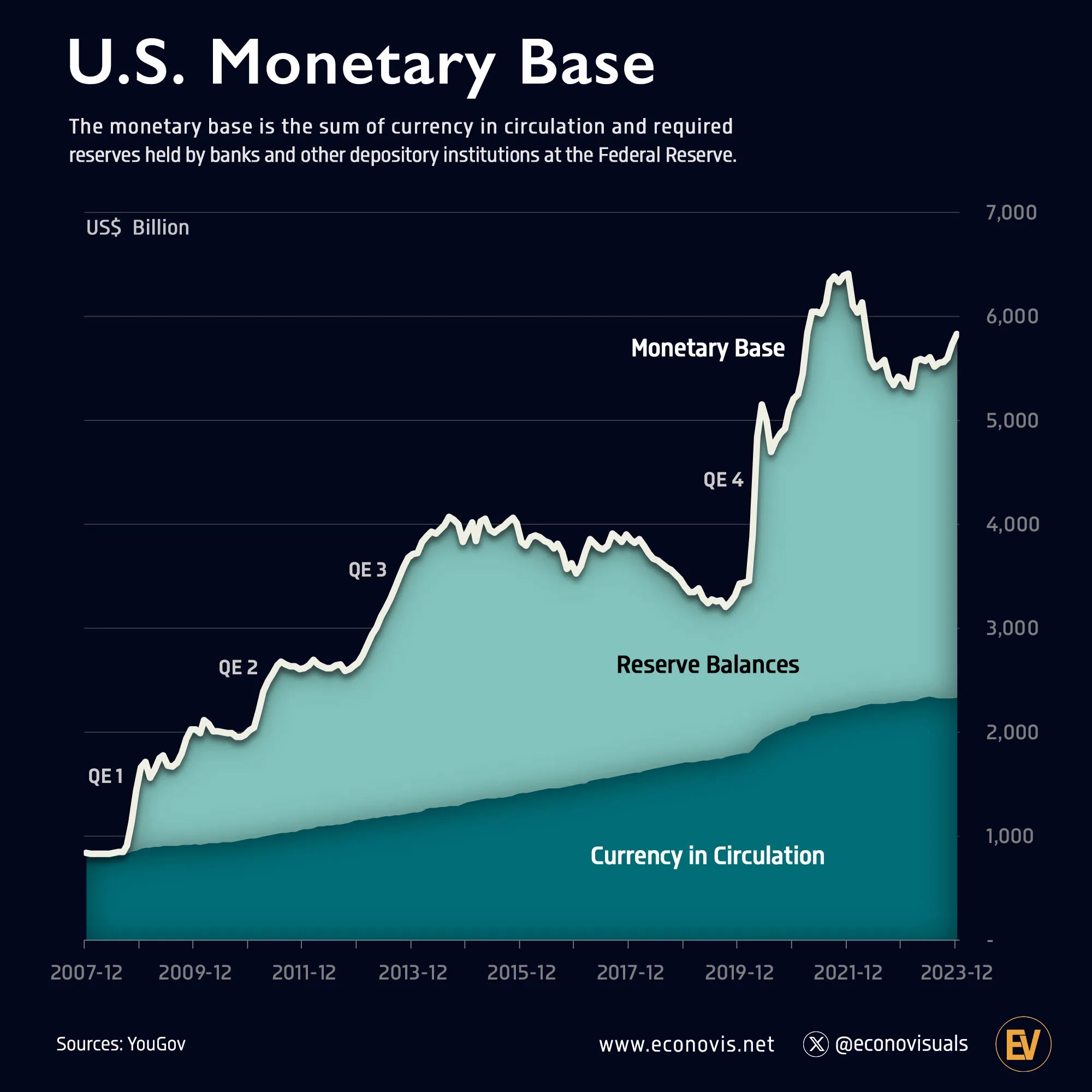
The proposed integration of United Kingdom-style monetary-fiscal coordination into the United States Treasury strategy represents a fundamental shift from the post-1951 Accord era of strict central bank independence toward a model of "coordinated signaling." Scott Bessent’s exploration of the Bank of England (BoE) architectural model—specifically the historical proximity between the Chancellor of the Exchequer and the Governor—suggests a desire to reduce the lag between fiscal policy implementation and monetary response. By establishing a "Shadow Fed" or a more integrated Treasury-Fed communication loop, the executive branch seeks to internalize the interest rate costs of debt issuance, effectively attempting to manage the term structure of interest rates through narrative pressure rather than direct legislative change.
The BoE Archetype and the Friction of Independence
The Bank of England, while granted operational independence in 1997, retains a structural intimacy with the Treasury that the Federal Reserve lacks. This is manifested through the presence of a Treasury representative at Monetary Policy Committee (MPC) meetings—a non-voting observer who nonetheless bridges the information gap between fiscal spending plans and monetary tightening. In the US context, the Federal Reserve Act of 1913 and the 1951 Treasury-Fed Accord created a firewall designed to prevent the monetization of debt.
The Bessent proposal targets three specific points of friction in the current US arrangement:
- Information Asymmetry: The Treasury manages the maturity profile of US debt (the supply side of safe assets), while the Fed manages the short-term policy rate (the price of liquidity). Currently, these two bodies operate on distinct timelines, often leading to counter-productive signals—for example, the Treasury issuing long-dated bonds while the Fed is attempting to flatten the yield curve through Quantitative Tightening.
- Policy Lag: Fiscal multipliers often take 12 to 18 months to manifest in GDP data, yet the Fed reacts to current inflation prints. By "recasting ties" in the BoE’s image, the Treasury aims to synchronize the forward guidance of both institutions.
- The Yield Curve Premia: If the market perceives that the Fed and Treasury are at odds, it demands a higher term premium. A coordinated front, mimicking the BoE’s "unified government" perception, aims to suppress this premium by reducing uncertainty regarding the path of future short-term rates.
The Mechanism of Shadow Forward Guidance
The core of the strategy involves the appointment of a "Shadow Fed Chair" or a highly vocal Treasury Undersecretary for Domestic Finance who provides a competing or reinforcing narrative to the FOMC’s Dot Plot. This is not a formal policy change but a psychological shift in market expectations.
Consider the Taylor Rule equation:
$$i_t = r_t^* + \pi_t + 0.5(\pi_t - \pi^) + 0.5(y_t - \bar{y}_t)$$
Where $i_t$ is the nominal fed funds rate. In a standard independent model, the Fed calculates $r_t^$ (the neutral rate) based on economic fundamentals. In a coordinated BoE-style model, the Treasury attempts to influence the $r_t^*$ variable by signaling fiscal constraints or productivity-enhancing spending shifts before the Fed can incorporate them into their projections.
Three Pillars of the Treasury Fed Recalibration
To understand the strategic shift, we must categorize the proposed changes into three distinct pillars of intervention:
Pillar I: Institutionalized Communication (The Observer Role)
Mimicking the BoE’s Treasury representative, this pillar involves placing executive-branch observers in FOMC deliberations. While these observers would not vote, their presence serves as a constant reminder of the fiscal burden of high interest rates. This creates a "soft" constraint on the Fed's hawkishness, as the Treasury can immediately signal the specific budgetary impacts of a 25-basis-point hike on debt-servicing costs.
Pillar II: Debt Maturity Management as a Monetary Tool
The Treasury can influence the yield curve without Fed permission by shifting the issuance mix between T-Bills (short-term) and long-dated Bonds. If the Fed is keeping rates "higher for longer," the Treasury can flood the market with Bills to lower long-term yields, effectively conducting its own version of "Operation Twist." By aligning this with BoE-style coordination, the Treasury ensures that its issuance strategy isn't neutralized by the Fed's balance sheet run-off.
Pillar III: The Narrative Dominance of the Shadow Chair
By announcing a successor to the Fed Chair long before the current term expires, the Treasury creates a dual-power structure. Markets begin to price in the "Shadow Chair’s" preferred policy path rather than the incumbent’s. This erodes the incumbent's ability to provide effective forward guidance, forcing them to either align with the incoming administration’s views or risk total market irrelevance.
Logical Failures and Structural Risks
The assumption that the BoE model is superior ignores the distinct currency dynamics of the US Dollar. The BoE operates within a smaller, more open economy where exchange rate stability is a primary concern. The US, holding the global reserve currency, faces the Triffin Dilemma: it must provide liquidity to the world while maintaining domestic price stability.
A breakdown in the perceived independence of the Fed introduces a "Politicization Premium" into the bond market.
- The Credibility Gap: If the Treasury successfully pressures the Fed to lower rates prematurely, inflation expectations ($E[\pi]$) decouple from the 2% target.
- Capital Flight Dynamics: Foreign central banks, holding trillions in US Treasuries, view independence as a guarantee of value. If the Fed becomes a subset of the Treasury, the risk of "fiscal dominance"—where monetary policy is subservient to debt sustainability—leads to a sell-off in the long end of the curve.
- The Feedback Loop: Higher long-term yields (driven by inflation fears) negate any benefit gained from a lower short-term policy rate, resulting in a steeper yield curve that increases borrowing costs for the private sector.
Quantitative Implications of Fiscal Dominance
In a regime of fiscal dominance, the Fed’s primary function shifts from price stability to ensuring the government remains solvent. This is quantified by the intertemporal budget constraint:
$$\frac{B_{t-1}}{P_t} = \sum_{j=0}^{\infty} E_t \left[ \frac{S_{t+j}}{(1+r)^j} \right]$$
Where $B$ is debt, $P$ is the price level, and $S$ is the primary surplus. If the market expects the Treasury to continue running large deficits (low $S$), the only way to balance the equation is for the price level ($P$) to rise. By forcing a BoE-style tie, the Treasury is signaling to the market that it has no intention of increasing $S$, and therefore expects the Fed to manage $P$ through higher inflation or $r$ through financial repression.
The Strategic Recommendation for Market Participants
Asset managers and corporate treasurers must discard the assumption of a "Fed Put" based solely on equity market volatility. The new paradigm suggests a "Treasury Put" based on debt-servicing thresholds.
The play is as follows:
- Short-duration exposure in the transition phase: As the Treasury begins its narrative assault on Fed independence, volatility in the 10-year and 30-year segments will spike. Expect the term premium to return to its historical mean of 100-150 basis points.
- Monitor the "Issuing Mix" over the "Dot Plot": Pay less attention to FOMC press conferences and more to the Treasury's Quarterly Refunding Announcements (QRA). The QRA is becoming the primary instrument of yield curve control.
- Hedge for "Stag-Coordination": In a coordinated BoE-style environment, the likelihood of "sticky" inflation increases because the fiscal authority has a direct seat at the monetary table. Nominal assets will underperform relative to real-asset-linked derivatives.
The integration of these two disparate powers does not eliminate economic friction; it merely transfers it from the policy rate to the currency and the term premium. The strategy remains a high-stakes gamble on the market's willingness to accept "coordinated growth" over "independent stability."