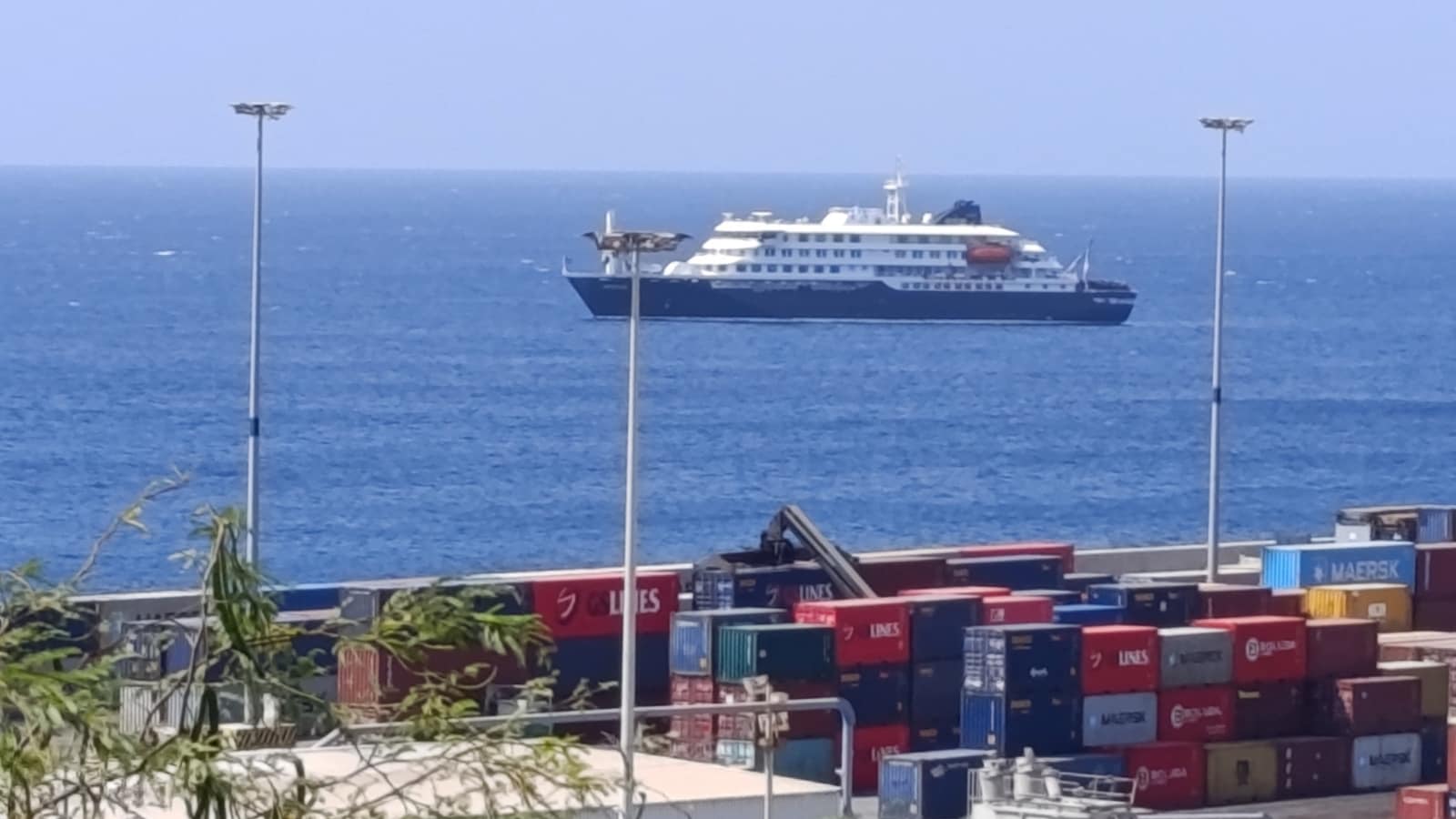
The designation of every passenger on a hantavirus-affected vessel as a high-risk contact marks a shift from precision-based epidemiological tracking to a scorched-earth containment strategy. This systemic escalation by European health authorities reflects a fundamental acknowledgment: the enclosed, recirculating environments of modern maritime vessels nullify traditional social distancing and localized quarantine models. When a pathogen traditionally associated with localized rodent-to-human transmission enters a high-density, closed-loop ventilation system, the risk profile transforms from a discrete incident into a systemic failure of biosecurity.
The Pathogen Vector Dynamics
Hantaviruses, primarily of the Orthohantavirus genus, operate through a specific transmission matrix that makes maritime environments uniquely vulnerable. Unlike highly contagious respiratory viruses like influenza or SARS-CoV-2, hantaviruses are typically contracted through the inhalation of aerosolized viral particles found in the excreta of infected rodents.
The viral load required for infection is relatively low, and the environmental stability of the virus in cool, damp conditions—common in lower-deck storage and galley areas—prolongs the window of infectivity.
The Three Stages of Maritime Viral Proliferation
- Infiltration: The introduction of the reservoir host (rodents) into the vessel’s logistics chain, typically through port-side loading of dry goods or structural ingress in aging hulls.
- Aerosolization: Disturbance of nesting sites during routine maintenance or cleaning, which launches viral particles into the immediate atmosphere.
- Mechanical Distribution: The uptake of these particles into the Heating, Ventilation, and Air Conditioning (HVAC) systems, which bypasses physical deck barriers and delivers the pathogen to passenger quarters.
http://googleusercontent.com/image_content/211
Structural Determinants of High-Risk Classification
The decision to categorize an entire passenger manifest as "high-risk" is rarely a reflection of clinical certainty but rather a response to the "Black Box" nature of shipboard airflow. In a standard office building, airflow can be mapped and filtered with HEPA-grade precision. On a ship, the integration of common areas, shared plumbing, and interconnected ventilation ducts creates a "mixed-air" environment.
The European Centre for Disease Prevention and Control (ECDC) utilizes a precautionary risk assessment framework that assumes a 100% exposure rate when a point source cannot be isolated. If a rodent infestation is detected in a central food processing area or a main ventilation trunk, the probability of exposure for any individual on the manifest ceases to be a function of proximity and becomes a function of duration.
Quantifying the Containment Failure
The failure to contain hantavirus to a specific deck or sector highlights three critical bottlenecks in maritime health management:
- Diagnostic Latency: Hantavirus Pulmonary Syndrome (HPS) or Hemorrhagic Fever with Renal Syndrome (HFRS) has an incubation period ranging from one to eight weeks. This delay ensures that by the time a primary case is symptomatic, the "exposure window" for the rest of the crew and passengers has already closed, making retroactive isolation the only viable, albeit late, strategy.
- The Filtration Gap: Most maritime HVAC systems are designed for thermal comfort and fuel efficiency, not microbiological exclusion. The pressure drops required for fine-particle filtration are often beyond the mechanical capacity of shipboard fans, allowing aerosolized excreta to circulate unimpeded.
- Logistical Rigidity: Unlike terrestrial facilities, a ship cannot be partially evacuated without compromising its operational integrity. The entire structure moves as a single unit, ensuring that the pathogen remains in constant contact with the host population until a port of call is reached.
The Economic Cost Function of Blanket Quarantine
Classifying a full vessel as high-risk triggers a cascade of economic liabilities. The cost is not merely the medical treatment of the infected but the total cessation of the asset’s productivity.
The cost function can be modeled as:
$$C_{total} = C_{m} + C_{o} + C_{l}$$
Where:
- $C_{m}$ represents medical intervention and long-term monitoring costs.
- $C_{o}$ represents the opportunity cost of the vessel’s downtime and "off-hire" status.
- $C_{l}$ represents the legal and reputational liability stemming from a failure of the "Duty of Care."
By declaring all passengers high-risk, the agency effectively forces the operator to internalize these costs immediately, preventing the further export of the virus into port cities but effectively bankrupting the current voyage's utility.
Epidemiology of the Closed-Loop Environment
In terrestrial epidemiology, the $R_0$ (basic reproduction number) of hantavirus is effectively zero for human-to-human transmission, with the notable exception of the Andes virus strain. However, in the maritime context, the "environmental $R_0$" must be considered. This measures how many secondary infections occur due to a single environmental source distributed through mechanical means.
The high-risk designation suggests that authorities suspect either a highly virulent strain or a catastrophic failure in the ship’s Integrated Pest Management (IPM). If the virus is present in the galley, every meal served becomes a potential vector, not necessarily through ingestion, but through the handling of contaminated packaging which is subsequently aerosolized in dining areas.
The Mechanism of Surveillance and Reporting
Current maritime law, under the International Health Regulations (IHR 2005), requires masters of vessels to report any health risks on board via the Maritime Declaration of Health. However, there is a structural incentive for under-reporting. A single reported case of a "rare" disease like hantavirus can lead to a "Free Pratique" denial, where the ship is refused entry to a port.
The ECDC’s aggressive stance acts as a market correction to this incentive. By setting the bar for "high-risk" at the manifest level, they signal to the industry that the cost of an outbreak will always exceed the cost of rigorous, transparent pest control and early reporting.
Operational Recommendations for Maritime Operators
The transition from a "reactive" to a "structural" biosecurity posture is the only way to avoid the total-loss scenario presented by a high-risk blanket classification. This requires three distinct shifts in operational strategy.
First, the implementation of "Aerosol-Grade" sanitation protocols in all sub-deck areas. This involves the use of 10% bleach solutions or equivalent virucides specifically applied to potential nesting sites, rather than simple dry sweeping which increases aerosolization risk.
Second, the installation of ultraviolet germicidal irradiation (UVGI) within central HVAC trunks. While HEPA filtration may be mechanically unfeasible, UVC light can neutralize the DNA/RNA of viral particles in the air stream without affecting air pressure or fuel consumption.
Third, the adoption of "Sentinel Monitoring." Instead of waiting for human symptoms, operators must implement routine biological testing of rodent traps and dust samples in high-traffic zones. Detecting the presence of the viral genome in the environment before it crosses the species barrier into the passenger population is the only method to prevent a universal high-risk designation.
The current situation demonstrates that in the eyes of international health regulators, a ship is not a collection of individuals but a single biological entity. If one cell is compromised, the entire organism is treated as infected. Future maritime strategy must be built on the principle of compartmentation—not just of water, but of air and bio-exposure.
Ensure that all passengers currently under the high-risk mandate are transitioned to facilities capable of providing extracorporeal membrane oxygenation (ECMO), as respiratory failure in HPS progresses with a speed that exceeds standard shipboard medical capabilities. Immediate cessation of all ventilation recycling on the vessel is the final mandatory step before full decontamination can begin.