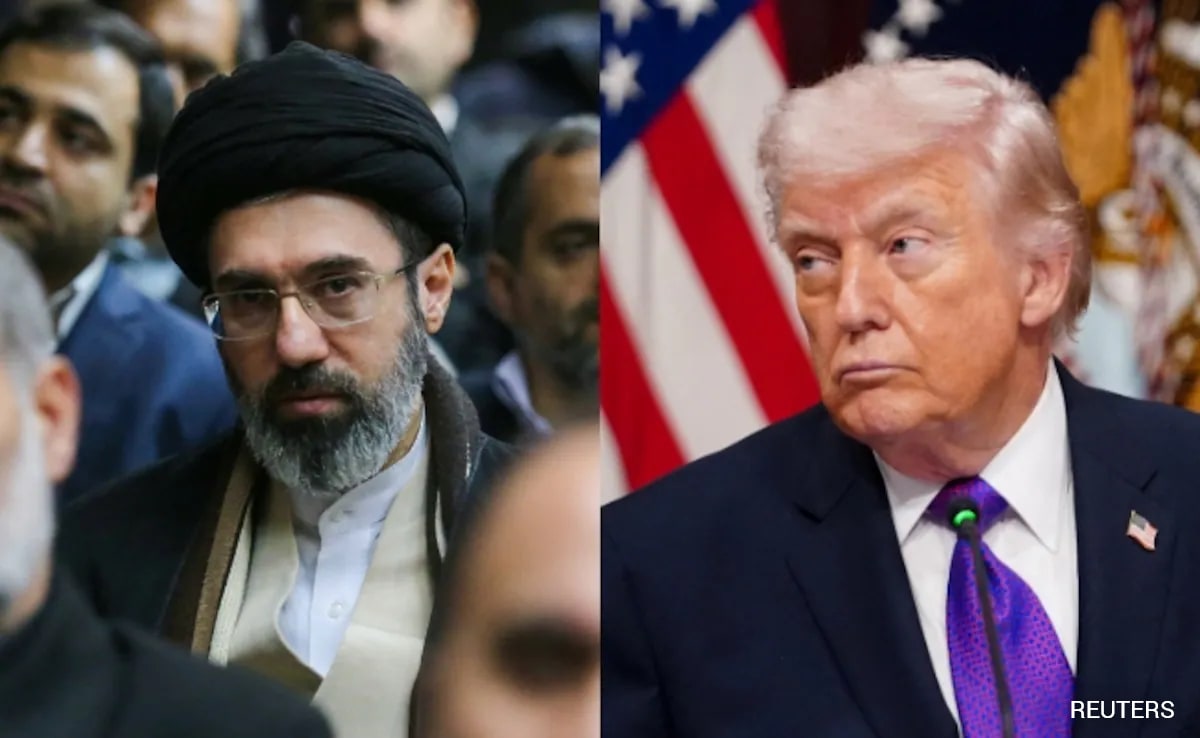
The rumors began as a frantic whisper in the digital underground of Tehran before bleeding into the international intelligence community. Following a series of precision strikes targeting high-level Iranian infrastructure and command centers, the conspicuous absence of Mojtaba Khamenei—the second son of Supreme Leader Ali Khamenei and the presumptive heir to the Islamic Republic’s highest office—triggered a wave of speculation. Reports suggested he had been "disfigured" or incapacitated in a tactical hit. Tehran’s response was a calculated, icy silence followed by a series of staged, dated media appearances that did more to fuel the fire than extinguish it.
To understand the weight of these rumors, one must look past the immediate tactical damage of a missile strike. In the opaque world of Iranian theocracy, physical presence is the only currency that matters. If Mojtaba is indeed injured, the carefully managed transition of power from father to son is not just delayed; it is potentially dead. This is not merely a story about a wounded man. It is a story about a fracturing regime caught between a hereditary slip toward monarchy and the internal vultures waiting for the elder Khamenei to falter.
The Ghost in the Machine
For decades, Mojtaba Khamenei has operated as the ultimate shadow broker. Unlike his father, who projects the image of a pious, public-facing ascetic, Mojtaba is the man of the apparatus. He controls the levers of the Basij militia and maintains a stranglehold on the financial conduits of the Revolutionary Guard (IRGC). He is the bridge between the clerical establishment and the raw military power required to keep the streets quiet.
When the strikes hit, the immediate question wasn't just "Is he alive?" but "Can he still lead?" In a system where the Supreme Leader must project an aura of divine protection and physical wholeness, a "disfigured" leader is a non-starter. This isn't vanity. It is a foundational requirement of the Velayat-e Faqih—the guardianship of the jurist. Any perceived weakness or physical degradation provides the Assembly of Experts the theological cover they need to bypass him in favor of a more "pristine" candidate.
The regime’s propaganda arm, IRNA, eventually released footage of Mojtaba allegedly teaching a seminary class. Analysts were quick to point out the lack of temporal markers. No newspapers were visible. No mentions of current events occurred in the lecture. The video felt like a "proof of life" file pulled from a dusty cabinet, intended to pacify the markets and the mid-level commanders, yet it lacked the vibrancy of a man currently in command of his faculties.
Why the IRGC Needs a Whole Mojtaba
The Islamic Revolutionary Guard Corps is not a monolithic entity. It is a conglomerate of competing business interests, intelligence wings, and expeditionary forces. Mojtaba has spent twenty years ensuring that these disparate factions see him as their best bet for stability once his father passes. He represents the status quo. He is the guarantee that the billions of dollars flowing through IRGC-controlled front companies will not be seized by a reformist or a rival cleric.
If Mojtaba is sidelined by injury, the internal equilibrium of the IRGC collapses. We are seeing the early signs of this friction now. Intelligence leaks from within Tehran have increased in frequency, often targeting Mojtaba’s inner circle. This suggests that rival factions—perhaps those aligned with more traditional clerical figures in Qom—are using the "disfigurement" narrative to test the waters. They are checking to see who still bows when the shadow prince enters the room, or if the room is, in fact, empty.
The Theology of Appearance
The rumors of disfigurement carry a specific sting in Iranian politics. Throughout history, Persian kings and later Islamic leaders have been held to a standard of physical perfection. While modern politics is supposedly more sophisticated, the primal optics of leadership remain unchanged in the Middle East. A leader who cannot appear on a balcony to address a crowd without showing the scars of an enemy’s reach is a leader who has lost his "khvarenah"—the divine glory or right to rule.
Consider the optics of the elder Khamenei. Despite his age and a long-standing issue with his right arm—the result of a 1981 assassination attempt—he has maintained a public image of stoic resilience. He used that injury to cultivate a persona of a "living martyr." But for Mojtaba, who has not yet secured the throne, a new and debilitating injury is not a badge of honor. It is a liability. It suggests that the state’s security apparatus, which he personally oversees, failed to protect its most valuable asset.
The Geography of the Strikes
The locations targeted in the recent escalations were not random. They focused on communication hubs and secure bunkers used by the inner sanctum of the Office of the Supreme Leader (the Beyt). These are the most guarded square miles in the country. If a strike managed to harm Mojtaba, it implies a level of penetration by foreign intelligence that makes every other high-ranking official a "dead man walking."
The regime cannot admit he was hurt because to do so would be to admit that their "impenetrable" bunkers are sieves. They would rather the world wonder about his health than know for certain that their defenses were bypassed. Silence is their only shield.
The Assembly of Experts and the Waiting Game
While the public watches the skies for drones, the real battle is happening in the carpeted halls of the Assembly of Experts. This body of 88 clerics is officially responsible for picking the next leader. For years, it was assumed they would simply rubber-stamp Mojtaba. Now, the conversation has shifted.
Names that were previously whispered are being spoken more loudly. Figures who lack Mojtaba’s military backing but possess greater clerical "purity" are being dusted off. If Mojtaba is unable to perform his duties or if his recovery is long and arduous, the Assembly may move to appoint a council of leaders instead of a single successor. This would effectively end the era of absolute clerical rule and transition Iran into a more traditional military junta masked by a committee of elders.
The Iranian people, meanwhile, are watching this play out with a mixture of apathy and dread. They have seen rumors of the Supreme Leader’s death or his son’s injury many times before. Yet, there is a different energy this time. The economic desperation brought on by sanctions and mismanagement has reached a boiling point. A succession crisis fueled by a "disfigured" heir could be the spark that turns a palace coup into a national uprising.
Technical Failure or Human Intelligence?
If we accept the premise that Mojtaba was at least in the vicinity of a strike, we must analyze the "how." High-value targets in Iran do not move without a sophisticated web of electronic countermeasures and human decoys. A successful hit on such a figure requires real-time human intelligence—someone in the room or in the motorcade providing the exact coordinates.
This points to a deep rot within the security services. The very people Mojtaba has spent his life patronizing may be the ones selling his location. This creates a feedback loop of paranoia. If Mojtaba is injured, he cannot trust his doctors. He cannot trust his guards. He becomes a prisoner of his own survival. The "disfigurement" then becomes metaphorical; the face of the regime’s security is scarred beyond recognition, regardless of whether the man himself has a scratch on him.
The Cost of the Cover-Up
The longer Tehran waits to produce a definitive, unedited, and contemporary appearance by Mojtaba Khamenei, the more the regional power balance shifts. Neighbors like Saudi Arabia and rivals like Israel view this uncertainty as a window of opportunity. An Iran focused on internal survival is an Iran that is less capable of projecting power through its proxies in Lebanon, Yemen, and Iraq.
We are entering a phase where the "truth" of Mojtaba's physical condition matters less than the "perception" of his absence. Power in a dictatorship is about the projection of inevitability. Once that inevitability is questioned—once people start asking if the heir is even capable of sitting in the chair—the transition has already failed.
The regime is currently trying to manage a "Schrödinger’s Succession." Mojtaba is both the leader and a ghost, both the future and a memory. But the Iranian state is too heavy a machine to be steered by a ghost. Every day he remains out of the public eye is a day that the IRGC factions spend sharpening their knives, preparing for a world where the Khamenei name no longer holds the ultimate veto.
The next few weeks will be telling. If there is no high-profile, live appearance at a major religious or state function, the rumors of his incapacitation will move from the realm of "foreign propaganda" to accepted fact within the Iranian streets. At that point, the struggle for the soul of the Islamic Republic will move out of the shadows and into the sunlight of a very violent reality.
Watch the movements of the specialized medical transport units in and out of the Niavaran complex. They tell a story that the official news agencies never will.