The air in Baghdad doesn’t just sit; it clings. It carries the scent of dust, diesel, and a history that refuses to stay buried. For an American living there—perhaps a contractor in a high-walled compound or a student tracing the cradle of civilization—the morning of a security alert doesn't start with a siren. It starts with a vibration on a nightstand. A push notification. A sudden, heavy silence in the room that feels louder than any explosion.
When the U.S. State Department issues a Level 4 travel advisory, it isn’t a suggestion. It is a formal admission that the safety net has been pulled back. "Leave immediately," the text reads. It is a cold, clinical instruction for a deeply messy, human predicament.
Consider a hypothetical woman named Sarah. She isn’t a soldier. she is a civil engineer working on water treatment plants. She has friends in the Green Zone. She has a favorite coffee shop where the owner knows she likes extra cardamom. When that alert hits her phone, the world doesn't shift on its axis, but her internal map dissolves. She looks at her bookshelf, her unwashed laundry, and the cat she adopted from a street in Erbil.
The geopolitics of the Middle East are often discussed in terms of "spheres of influence" or "strategic pivots." These are bloodless terms. They ignore the reality of a person standing in a living room, wondering if they have enough time to pack a second pair of shoes.
The Anatomy of an Exit
The urgency of the current mandate stems from a volatile cocktail of militia activity and regional spillover. It is a calculated response to a specific kind of math: the cost of staying versus the probability of a closed border. In Iraq, the window between "tense" and "impassable" can be measured in hours.
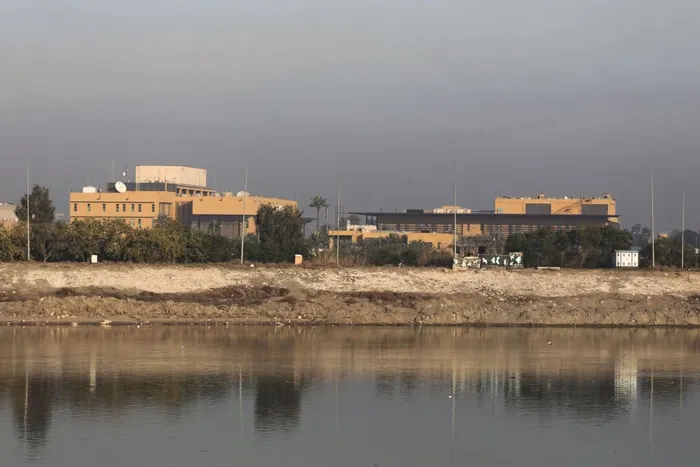
The U.S. Embassy in Baghdad operates under a constant shadow. It is one of the most fortified diplomatic missions on earth, yet it is not a fortress that can protect every citizen scattered across the provinces. When the order to depart is given, it is because the intelligence suggests that the "unforeseeable" has become "likely."
Terrorism, kidnapping, and armed conflict are not just bullet points on a government website. They are the reasons why commercial flights suddenly triple in price. They are why the road to the airport becomes a gauntlet of anxiety. Sarah doesn't think about the "regional security architecture." She thinks about whether the local driver she trusts will answer his phone, or if he is already hiding his own family.
The Weight of the Invisible Stakes
We often view these news cycles as distant ripples. We see a headline about Iraq and scroll past, conditioned by decades of similar reports. But every time an "immediate departure" is triggered, a micro-economy of life collapses.
Contracts are abandoned. Projects that would have brought clean water or stable electricity to thousands of Iraqis are paused indefinitely. The human capital—the teachers, the doctors, the engineers—evaporates overnight. This is the invisible cost of instability. It is a brain drain enforced by the threat of violence.
The decision to leave is rarely about personal cowardice. It is about the brutal reality of being a liability. If Sarah stays and is taken, she becomes a pawn in a game she never signed up to play. Her presence, intended to be a bridge, suddenly becomes a weight that her government must carry.
Why the Warning is Different This Time
History has a way of repeating itself until the pattern becomes a prison. For years, the presence of U.S. forces and diplomats in Iraq has been a pendulum, swinging between reconstruction and retreat.
What makes the current atmosphere particularly jagged is the lack of a clear center. In previous decades, threats were more centralized, more identifiable. Today, the threat is a mist. It comes from "non-state actors" and "aligned militias"—groups that don't always answer to a central command. When the State Department warns that "the U.S. government has extremely limited ability to provide emergency services," they are telling Sarah that she is, for all intents and purposes, on her own.
The logistics of an emergency exit are a nightmare of fine print. Most people assume a helicopter will land on their roof. The reality is much more mundane and much more terrifying. It is a frantic search for an available seat on a Middle East Airlines flight to Amman or Dubai. It is the realization that your credit card might be flagged for "unusual activity" just as you try to buy a $4,000 one-way ticket.
The Silence After the Departure
When the Americans leave, the rooms they occupied stay warm for a while. The desks at the NGOs stay cluttered. The locals who worked alongside them are left with a different kind of "immediate" problem. They don't have a blue passport to tuck into a jacket pocket. They don't have a Level 4 advisory to follow; they have a life to endure.
The narrative of Iraq is too often told through the lens of those who arrive and those who leave. We rarely focus on the space left behind. That void is where the real story lives—the story of a nation trying to find its footing while the world's superpowers keep checking their watches and looking for the exit.
Sarah eventually makes it to the airport. She leaves the cat with a neighbor who promises to look after it, both of them knowing it’s a lie. She carries one suitcase. Inside are her passport, her laptop, and a small, stone carving she bought in a market—a fragment of a history that lasted five thousand years, now tucked into a bag for a twelve-hour flight.
She sits in the terminal and watches the sunset over the tarmac. The orange light hits the concrete, beautiful and indifferent. She is safe, but she feels a profound sense of failure. The "order to leave" is a survival mechanism, but it is also a confession. It is an admission that, for now, the chaos has won.
The plane lifts off. Below, the lights of Baghdad flicker, a grid of millions of lives that cannot be packed into a suitcase. Sarah looks out the window until the city disappears into the blackness of the desert, wondering not when she will return, but what will be left to return to.
The suitcase sits in the overhead bin, heavy with everything she couldn't say goodbye to.



