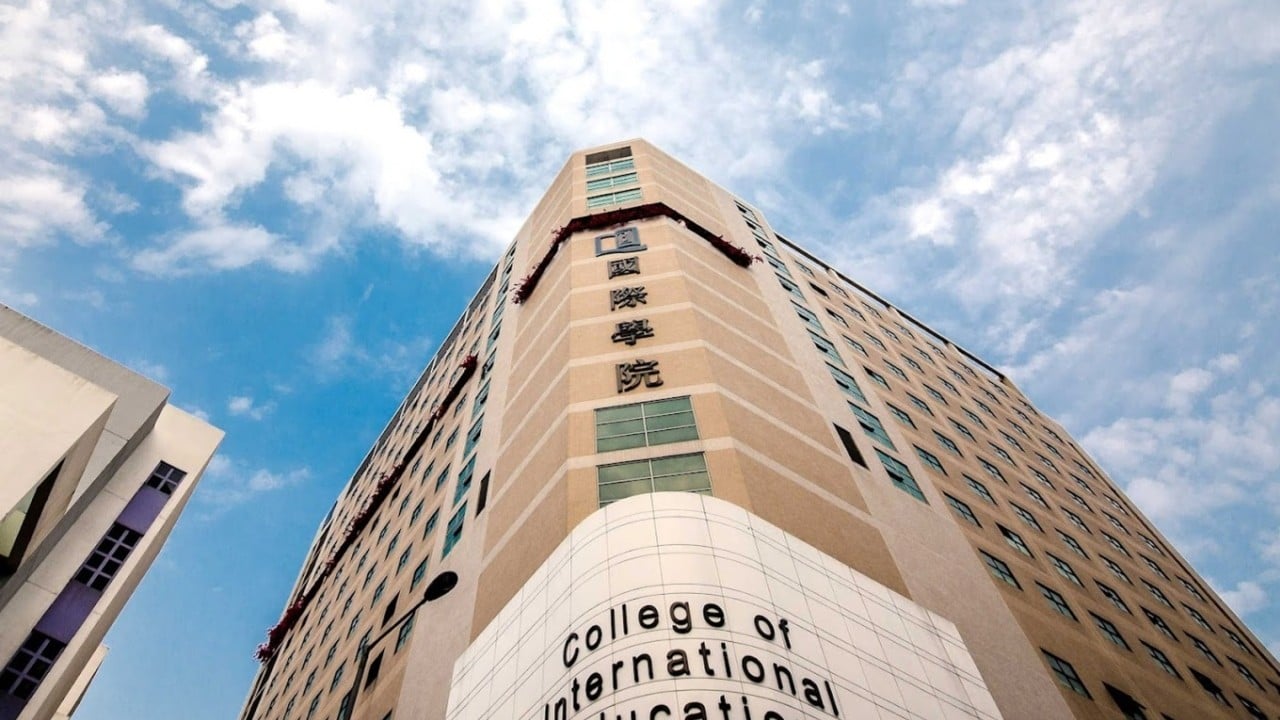
Hong Kong Baptist University (HKBU) is preparing to transition its School of Continuing Education (SCE) into a fully private entity, a move that signals a tectonic shift in how higher education operates within the city. This is not merely an administrative reshuffle. By moving the SCE away from the direct financial and regulatory oversight of the University Grants Committee (UGC), HKBU is betting that autonomy will outweigh the loss of public safety nets. The primary driver is a desperate need for agility in a market where student demographics are cratering and competition from mainland Chinese institutions is intensifying.
The Financial Handcuffs of Public Funding
For decades, being a "UGC-funded" institution was the ultimate badge of stability in Hong Kong. It meant guaranteed subventions, government-backed land grants, and a steady stream of local students. But that stability came with a heavy price in the form of bureaucratic inertia. Every new program, every tuition hike, and every major capital expenditure required layers of government approval that could take years to clear.
In the current economic climate, years are a luxury the SCE does not have. The school primarily serves the "self-financing" sector, offering diplomas, top-up degrees, and professional certificates to adult learners and sub-degree students. This market is volatile. When the local birth rate dropped, the pool of traditional applicants evaporated. HKBU realized that to survive, the SCE needs to pivot toward niche professional markets and international recruitment—specifically from the Greater Bay Area—without waiting for a government green light that might never come.
Privatization allows the school to set its own tuition rates based on market demand rather than government caps. It also enables the institution to hire specialized faculty with industry experience who might not fit the traditional academic profiles required by UGC standards. It is a transition from a public service model to a high-stakes business model.
Demographic Collapse and the Fight for Survival
The numbers are grim. Hong Kong’s secondary school graduate population has been on a downward slope for years, and the "brain drain" of young families has only accelerated the decline. For a school like the SCE, which thrives on volume, this is an existential threat.
The Competition for Mainland Capital
Mainland China is no longer just a source of students; it is a competitor. Universities in Shenzhen and Guangzhou are rapidly expanding their continuing education arms, often with state-of-the-art facilities and lower price points. By going private, the SCE can establish more flexible partnerships with mainland enterprises and educational hubs. They can create joint ventures that would be legally tangled or prohibited under the current public university framework.
This is about capturing the "silver economy" and the professional upskilling market in the Greater Bay Area. If a professional in Futian needs a specialized certificate in data ethics or green finance, they want it now, not after a three-year curriculum review by a Hong Kong government committee.
Risk of the Second Tier Label
There is a significant danger in this maneuver. In Hong Kong’s prestige-obsessed society, "private" is often unfairly equated with "sub-standard." The SCE risks losing the halo effect of the HKBU brand if the public perceives this as the university cutting its "weaker" limb adrift.
To counter this, the university must maintain a strict quality assurance link. If the degrees issued by the private SCE are seen as "HKBU-lite," the enrollment numbers will continue to slide regardless of how much autonomy the school gains. The challenge lies in maintaining the academic rigor of a top-tier university while operating with the aggressive efficiency of a private corporation.
The Infrastructure Pivot
One of the most overlooked aspects of this privatization is the real estate and infrastructure play. Under the UGC, facilities are strictly regulated. A private entity has far more latitude in how it utilizes its footprint. We are seeing a move toward "vertical campuses"—leased office spaces in prime business districts rather than sprawling traditional campuses.
This reduces overhead and places the classroom closer to the working professional. It also allows the school to liquidate or repurpose underperforming assets. In the high-stakes world of Hong Kong real estate, the ability to pivot property usage is a massive financial lever that public institutions simply cannot pull.
Faculty Anxiety and the Labor Shift
While the leadership talks about "agility" and "market responsiveness," the rank-and-file staff are facing a different reality. Moving to a private model almost inevitably leads to a shift in labor dynamics. Tenure-track security is replaced by performance-based contracts.
The Gig Economy of Higher Education
We are likely to see an increase in "adjunctification." Instead of full-time professors, the private SCE will likely rely on industry practitioners hired on a per-course basis. This is great for practical relevance but terrible for institutional memory and research output. It creates a two-tier system within the broader HKBU family: the "protected" academics in the funded wing and the "contractors" in the private wing.
This labor shift is the hidden engine of privatization. It lowers the "cost per student" significantly, allowing the school to stay competitive on price while still generating a surplus. But it also risks a "hollowed-out" academic culture where faculty have no long-term stake in the institution’s success.
Governance Without a Safety Net
Who watches the watchers when a public school goes private? Currently, the UGC provides a level of public accountability. Once the SCE is independent, its primary accountability is to its board and its bottom line. While HKBU will still oversee academic standards, the financial risks are now internalized.
If a major private program fails to attract students, there is no government bailout. The school must carry the loss. This creates a pressure cooker environment where programs might be launched based on "trendiness" rather than long-term educational value. We have seen this play out in other markets, like the US or Australia, where private arms of public universities ended up chasing "cash cow" programs in business or communications while gutting less profitable but essential subjects.
The Greater Bay Area Integration Strategy
The true test of this privatization will be the school’s ability to integrate into the Greater Bay Area (GBA) framework. The Hong Kong government has been pushing for "education hubs" in the GBA, but the logistics are a nightmare for public universities due to cross-border funding regulations.
A private SCE can bypass these hurdles. It can set up satellite centers in Zhuhai or Qianhai with far less friction. It can accept mainland tuition fees directly and reinvest them in local infrastructure. This is the "hard-hitting" reality: the privatization of the SCE is a move toward the border. It is an admission that the local Hong Kong market is no longer sufficient to sustain the institution.
Quality Assurance or Revenue Generation
The tension between academic integrity and the need for profit is the defining conflict of this transition. For the SCE to succeed, it must prove that privatization does not mean a "pay-to-play" degree system. The oversight mechanisms must be transparent and rigorous.
If the school focuses too heavily on short-term revenue, it will tarnish the HKBU brand globally. However, if it remains too rigid, it will bleed money until it is no longer viable. The veteran analyst knows that in these situations, the "middle ground" is usually a myth. You either become a lean, mean, professional training machine, or you slowly fade into irrelevance as a boutique relic of a bygone era.
The SCE’s move is a bellwether for the rest of Hong Kong’s self-financing sector. Other universities are watching closely. If HKBU successfully navigates this, expect a domino effect across the city’s educational landscape.
Evaluate the current professional certificate offerings at the SCE to see if they align with the high-growth sectors of the GBA, as these will be the first indicators of the school's new market strategy.