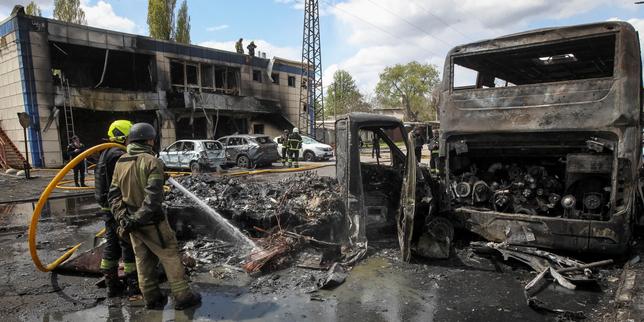
United Nations human rights experts have issued a blistering condemnation of what they describe as a calculated strategy to dismantle Palestinian life through the targeted destruction of shelters in Gaza and the rapid expansion of forced displacement in the West Bank. This isn't just about the fog of war. The experts argue that the repeated strikes on schools-turned-shelters and the state-backed settler violence in the West Bank are two prongs of a single policy aimed at making the territory uninhabitable for its indigenous population.
While international headlines often treat the kinetic warfare in Gaza and the bureaucratic dispossession in the West Bank as separate issues, the UN’s latest findings suggest a terrifying cohesion. In Gaza, the "safe zones" promised to civilians have become kill boxes. In the West Bank, the absence of a formal declaration of war has not stopped the record-breaking seizure of land. This report moves beyond simple casualty counts to examine the mechanics of displacement and the legal frameworks being shredded in the process. Building on this topic, you can find more in: Why Looted Antiquities Returning to India is a Policy Failure in Disguise.
The Illusion of Safety in Gaza
The bombardment of the Al-Tabin school in Gaza City, which killed scores of displaced people during morning prayers, serves as a grim case study in the failure of humanitarian protections. Military spokespeople often claim these facilities are used by combatants, yet the UN experts point out a glaring legal reality: even the presence of a few individuals does not strip hundreds of civilians of their protected status under international law.
The pattern is repetitive and predictable. Civilians are told to move south for safety. They pack what remains of their lives into plastic bags and trek for miles, only to find the new "humanitarian zone" is already under fire or lacks the basic infrastructure to support human life. This creates a state of perpetual flight. When a population is kept in constant motion, social structures collapse, and the psychological toll becomes a weapon of war itself. Experts at BBC News have shared their thoughts on this trend.
It is a logistical nightmare. Imagine trying to coordinate the movement of two million people into a space the size of an international airport, then cutting off the water. That is the reality on the ground. The experts argue that by targeting the very places people flee to for protection—schools, hospitals, and mosques—the offensive is effectively signaling that there is no sanctuary.
The West Bank’s Quiet Annexation
While the world watches the explosions in Gaza, the West Bank is undergoing a transformation that is less explosive but equally permanent. Forced displacement here doesn't always happen with a missile. Often, it happens with a bulldozer or a group of armed settlers backed by the military.
Since October, the rate of home demolitions and the establishment of "illegal" outposts—illegal even under domestic law—has surged. The UN experts highlight that this is not a series of random acts by fringe actors. It is a state-integrated process. When a community’s water source is cemented over or their olive groves are burned, they aren't just losing property; they are losing the ability to exist in that space.
The Weaponization of Zoning
One of the most effective tools for displacement is the complex web of building permits and zoning laws. In Area C, which makes up about 60% of the West Bank, it is nearly impossible for Palestinians to obtain legal permission to build. When they build anyway—because families grow and people need roofs—the structures are labeled "illegal" and slated for destruction.
Contrast this with the rapid approval of thousands of units for settlers in the same geographical area. The dual legal system is so stark it has forced even the most cautious international observers to use the term apartheid. The goal is clear: consolidate land for one group while squeezing the other into disconnected, unviable enclaves.
Settler Violence as State Policy
The experts also noted a sharp increase in "coercive environments." This is the academic term for making life so miserable that people "choose" to leave. In the Jordan Valley and the South Hebron Hills, entire pastoral communities have packed up and fled. They didn't leave because of a formal deportation order; they left because their children were being harassed on the way to school and their livestock were being stolen in the middle of the night while soldiers stood by.
The Collapse of International Law
The most chilling aspect of the UN experts' statement is the underlying message that the international order is failing to act as a deterrent. When the Geneva Conventions are violated repeatedly without consequence, the conventions themselves lose their power.
The experts are not just calling for a ceasefire; they are calling for an end to the "culture of impunity." They argue that the reason these attacks on shelters and forced displacements continue is that the perpetrators believe—rightly so far—that there will be no legal or economic fallout. The rhetoric of "self-defense" is being stretched to cover actions that, in any other context, would be classified as war crimes.
The Role of Third Party States
A significant portion of the blame is being shifted toward the countries that provide the weapons and the diplomatic cover for these operations. If a state knows that its munitions are being used to strike schools housing refugees, and it continues to ship those munitions, it becomes legally and morally complicit. This is a point the UN experts are increasingly emphasizing. The legal obligations of the 1948 Genocide Convention require states not only to refrain from committing genocide but to actively prevent it.
The Destruction of the Future
Beyond the immediate loss of life, the targeting of Gaza's educational and health infrastructure is an attack on the future. When every university in Gaza is destroyed, you aren't just fighting a war; you are erasing the intellectual capital of a society. When children are displaced five, six, or seven times, the developmental trauma ensures that the conflict will continue for generations.
The displacement in the West Bank works toward the same end by different means. By breaking up the contiguity of Palestinian land, the possibility of a sovereign Palestinian state is being physically erased. You cannot build a country on a series of disconnected islands surrounded by hostile checkpoints and expanding settlements.
A Definitve Shift in Tactics
We are seeing a shift from traditional military occupation to something much more final. The experts describe a process of "cleansing" through attrition. In Gaza, it is the attrition of the body and the spirit through starvation and bombardment. In the West Bank, it is the attrition of the land and the law.
The international community's response has largely been limited to "concerns" and "deep concern." But as the UN report makes clear, concern doesn't stop a bulldozer or intercept a missile. The experts are demanding a total arms embargo and targeted sanctions. They are arguing that the window for a negotiated settlement is not just closing; it is being nailed shut.
The reality is that the displacement is the point. The destruction of the shelters is the point. By removing the places where people can sleep, eat, and pray, you remove the people. The "why" is no longer a mystery; it is an overt political objective being carried out in full view of a world that seems unable, or unwilling, to enforce its own rules.
Stop looking at these events as a series of unfortunate accidents and start seeing them as a roadmap for the total takeover of the territory.