Six months before the flashbulbs start popping, a woman named Elena sits in a windowless room in Paris, squinting at a swatch of silk that costs more than a mid-sized sedan. She is not thinking about the Actor Awards. She is not thinking about "best dressed" lists or social media engagement. She is thinking about the way light dies when it hits a poorly placed fold.
We watch the red carpet and see a parade of effortless perfection. We see the stars glide, teeth white and skin glowing, as if they simply woke up, stepped into a cloud of tulle, and floated toward the cameras. It is a lie. A beautiful, expensive, high-stakes lie.
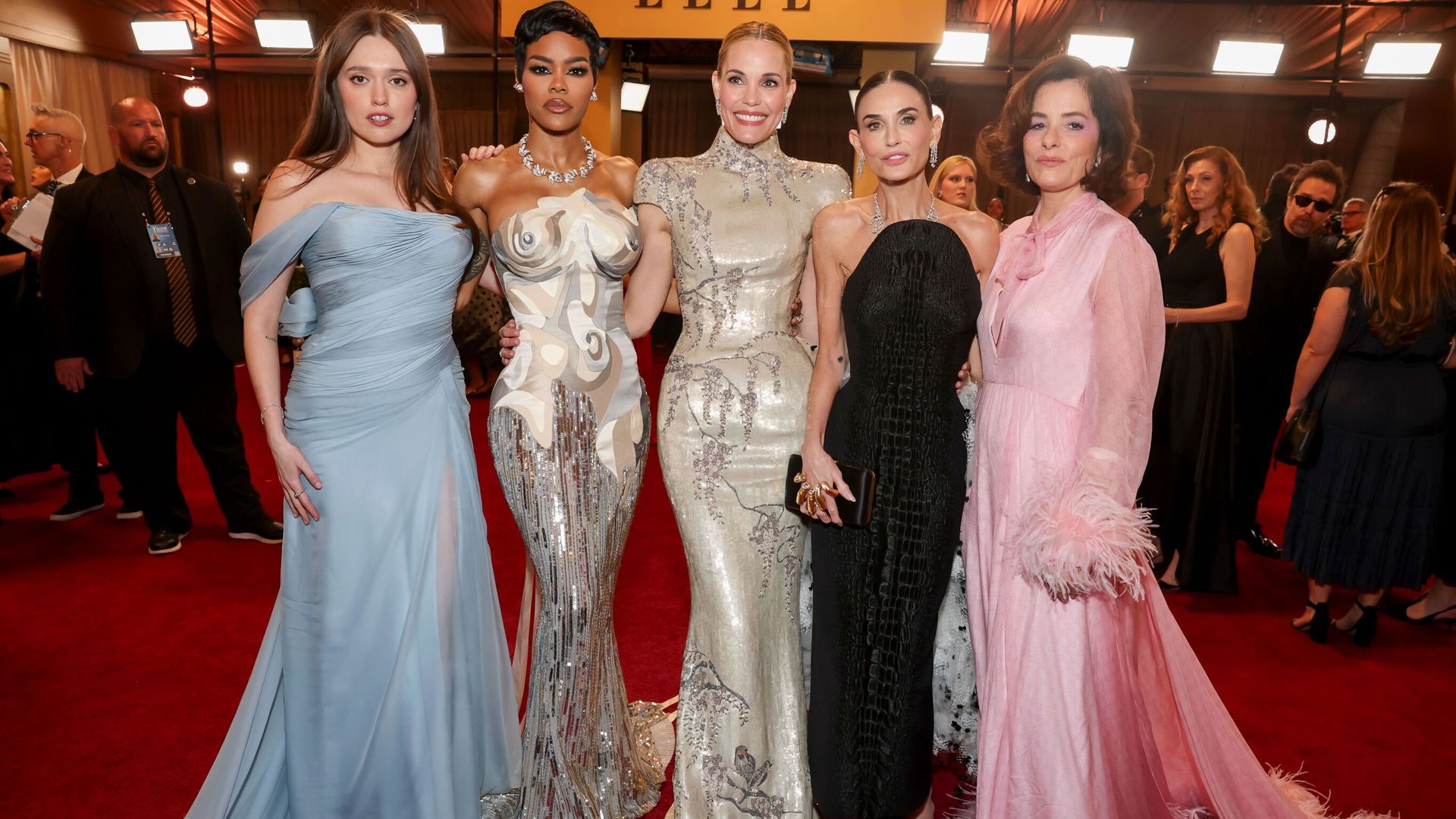
The red carpet is not a fashion show. It is a battlefield where the weapons are hand-stitched beads and the casualties are measured in career longevity. When a nominated actress steps out of a black SUV, she isn't just wearing a dress; she is wearing a narrative.
The Weight of Twelve Pounds of Glass
Consider the physics of the evening. A gown encrusted with Swarovski crystals can weigh upward of fifteen pounds. Imagine carrying that weight on a frame that has been surviving on green juice and nerves for three weeks.
The actress—let’s call her Sarah—is standing in the limousine. She cannot sit down. To sit is to risk a microscopic crease in the silk faille that will look like a canyon under the unforgiving 4K lenses of the global press. She stands, braced against the interior handle, while her stylist crouches at her feet, steaming out a ghost of a wrinkle with a handheld device that hissed to life at 4:00 AM.
This is the invisible labor of the Actor Awards. For every "best look," there is a team of three people who haven't slept, a tailor with pin-pricked thumbs, and a jewelry guard whose entire job is to ensure five million dollars of borrowed diamonds don't vanish into the carpet.
The public sees the glamour. Sarah feels the corset. It is tightened to a degree that makes deep breathing a luxury. She has to practice a specific type of shallow "red carpet breath"—a rhythmic, steady expansion of the upper chest that keeps the bodice perfectly smooth. If she gasps, the boning might snap. If she slumps, the silhouette is ruined.
Architecture of the Ego
Why do we care? Why do millions of people tune in to watch celebrities walk a hundred yards of crimson nylon?
It isn't about the clothes. Not really. It is about the human desire to see a transformation. We are looking for the moment where the person we know from a gritty indie drama or a sitcom becomes an icon. Fashion is the medium for that alchemy.
Take the trend of "Method Dressing" that has overtaken recent seasons. When an actor wears a suit that subtly mimics the texture of the film they are promoting, they are engaging in a sophisticated psychological game. They are telling us that the work never ends. The character and the human have merged.
But there is a danger in the perfection.
In 1954, things were simpler. You wore a nice dress, you smiled, you held your trophy. Today, a single "Worst Dressed" slide on a popular website can tank a branding deal. The stakes are no longer just aesthetic; they are financial. A successful red carpet appearance can lead to a multi-million dollar fragrance contract. A "fashion fail" becomes a meme that haunts a Google search result for a decade.
The Secret Language of the Fitting Room
The most compelling stories aren't told on the carpet itself, but in the hotel suites four hours before the event. This is where the vulnerability lives.
I have stood in those rooms. They smell of hairspray, expensive sushi that no one is eating, and frantic, metallic sweat. There is a moment, usually about an hour before departure, where the actor looks in the mirror and doesn't recognize themselves. They see a sculpted, painted, upholstered version of a human being.
"Do I look like I’m trying too hard?" they ask.
The stylist lies and says no. But everyone is trying too hard. That is the point.
The "Best Looks" are the ones that manage to hide the effort. We praise the "effortless" chic of a velvet tuxedo or a sheer column gown precisely because we know, deep down, that it required a monumental amount of effort to appear that relaxed. It is a performance of nonchalance while being filmed from 360 degrees.
The Ghost in the Garment
Look closely at the photos from this year’s ceremony. Look past the sparkle.
Notice the way a certain veteran actor wears a vintage suit. That isn't just a style choice; it’s a statement about sustainability and the permanence of talent in an industry obsessed with the new. Notice the young starlet in the avant-garde structural piece that looks impossible to move in. She is claiming space. She is saying that she refuses to be small or easily digestible.
Then there are the mistakes. The hemlines that are an inch too long, causing a subtle stumble. The straps that dig into shoulders, leaving red welts that the makeup artist desperately tries to cover with high-definition foundation.
These are the cracks in the armor. They remind us that under the couture, there is a person who is probably hungry, definitely tired, and terrified of tripping in front of thirty million people.
The Aftermath of the Image
By the time the sun rises the next day, the dresses are already being packed into acid-free tissue paper. They are shipped back to archives in Milan or Paris, never to be worn by that person again. They become artifacts of a single night.
The images, however, stay.
We digest them in seconds. We scroll, we like, we judge. We say "I love the color" or "That's a disaster." We rarely think about Elena in Paris and her swatch of silk. We don't think about the tailor who stayed up until dawn to ensure the sleeves hit exactly two centimeters above the wrist.
We are part of the machinery. Our attention is the currency that pays for the diamonds and the silk. We demand the spectacle, and the actors provide it, sacrificing their comfort and their breath for the sake of a perfect silhouette.
As the final limousine pulls away and the cleaning crews begin to roll up the red carpet, the magic evaporates. The sequins lose their luster in the harsh morning light. What remains is the memory of a shape, a color, and the way a human being stood under the weight of a thousand expectations and didn't break.
The real fashion isn't the fabric. It is the courage to be looked at.
The carpet is pulled back, revealing the gray, stained concrete of the street underneath, reminding us that the dream was only ever held together by a few hidden stitches and a prayer.