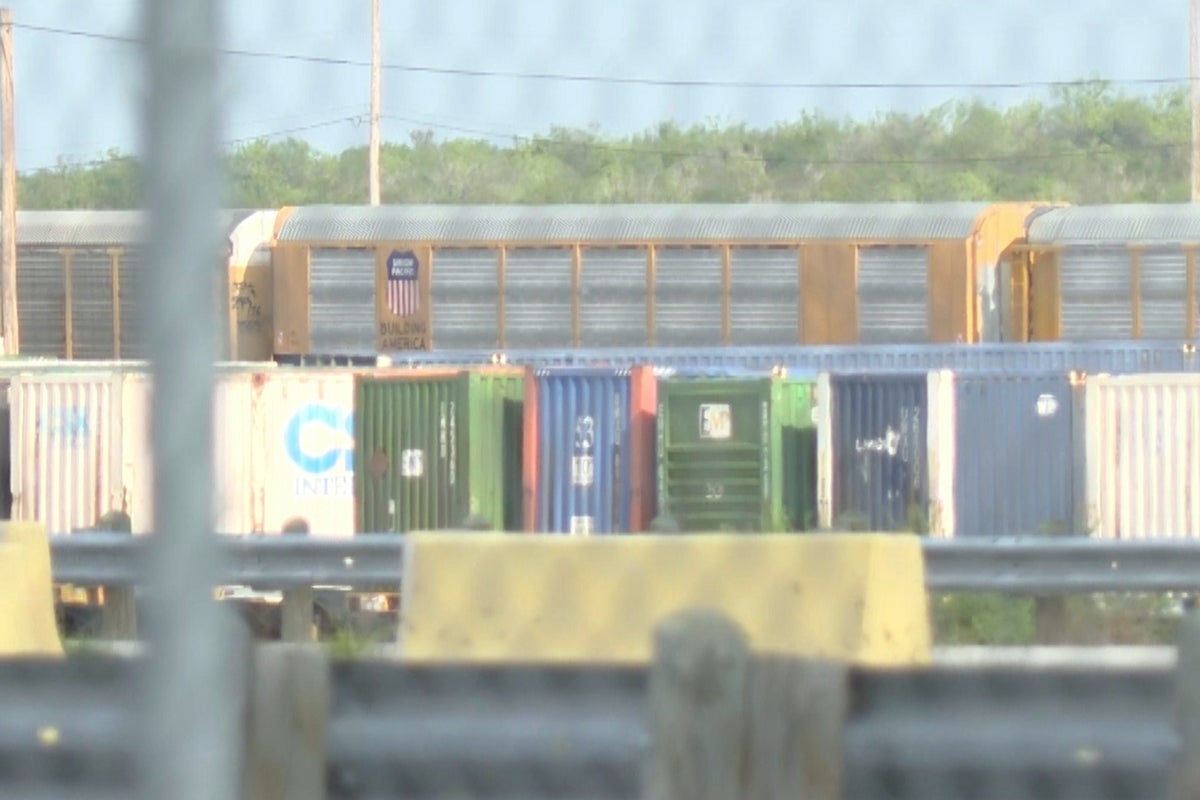
Six people are dead in a Texas rail yard because a metal box became an oven. Emergency responders in Eagle Pass found the bodies inside a shipping container on a parked train, and the preliminary cause isn't a mystery. It's heatstroke. When temperatures in South Texas climb past 100 degrees, the interior of a steel container can easily hit 130 or 140 degrees within an hour. There’s no ventilation. There’s no escape. This isn't just a freak accident; it’s a recurring nightmare that highlights the lethal intersection of extreme weather and human movement.
The victims were likely trapped for days. Eagle Pass is a major transit point, but it's also a place where the sun is relentless. Law enforcement officials noted that several other people were found alive in the same shipment but required immediate hospitalization for severe dehydration and heat exhaustion. This wasn't a "suspected" issue for them. It was a fight for survival.
The Science of Why a Shipping Container Becomes a Death Trap
We need to talk about the physics of this because people underestimate how fast things go wrong. A shipping container is a massive heat sink. It’s made of Cor-Ten steel, which is designed to withstand the elements but also absorbs thermal energy with terrifying efficiency. Once the sun starts beating down on that dark metal, the air inside has nowhere to go.
Inside these containers, the humidity spikes from the breath and sweat of the occupants. This prevents the body’s natural cooling mechanism—evaporation—from working. Once your core temperature hits 104°F, your organs start to fail. Your brain swells. Your heart struggles to pump thickened blood. By the time it hits 107°F, you're looking at permanent brain damage or death. The victims in Texas didn't just get "too hot." They suffered a systemic internal meltdown while trapped in a dark, silent box.
Rail Yard Logistics and the Failure of Detection
Rail yards are massive, sprawling labyrinths of steel. In places like Eagle Pass or San Antonio, thousands of cars move through every day. The sheer volume makes it nearly impossible to inspect every single container for human life without slowing the entire American supply chain to a crawl.
Technology exists to find people, but it's rarely deployed at the scale needed. We have heartbeat monitors and CO2 sensors that can "sniff" out the presence of people inside a sealed unit. However, these are mostly used at official ports of entry or high-security checkpoints. In the middle of a rail yard? You’re lucky if there’s a lone security guard on a golf cart.
The reality is that rail companies and border agencies are playing a game of catch-up with human desperation. When people are desperate enough to climb into a steel box in 100-degree weather, they aren't thinking about the thermodynamics of steel. They're thinking about the destination.
What Heatstroke Does to the Human Body
Most people think heatstroke is just a bad version of being "overheated." It’s not. It’s a medical emergency that looks a lot like a stroke or a heart attack. If you’ve ever felt lightheaded on a summer day, you’ve felt the very first, mildest warning sign.
- Phase One: Heat Exhaustion. You sweat profusely. You feel nauseous. Your pulse is fast but weak.
- Phase Two: The Threshold. You stop sweating. This is the danger zone. Your skin feels dry and hot.
- Phase Three: Heatstroke. Confusion sets in. You might have seizures. You lose consciousness.
In the Texas case, the survivors found alongside the deceased were likely in Phase Two or Three. Recovery from this isn't as simple as drinking a glass of water. It involves aggressive cooling—ice baths, intravenous fluids, and monitoring for kidney failure. The physical toll is immense, and the psychological trauma of being trapped next to people who didn't make it is something we rarely discuss.
The Border Policy Connection
You can't talk about this tragedy without acknowledging why people are in these containers in the first place. Increased surveillance at traditional crossings pushes people toward more dangerous methods of transit. It's a "balloon effect." You squeeze one area, and the problem pops up somewhere else, usually somewhere more lethal.
Shipping containers are the "invisible" way to move. They're tracked by GPS, moved by machines, and rarely opened until they reach a warehouse hundreds of miles away. That makes them perfect for smuggling, but it also makes them a perfect coffin.
Real World Measures to Prevent Rail Yard Deaths
If we actually want to stop seeing these headlines, we have to change how we monitor rail infrastructure. It's not enough to just "patrol" more. We need automated systems.
- Thermal Imaging Drones. Using drones equipped with FLIR (Forward Looking Infrared) cameras can spot "hot spots" in containers that indicate human body heat.
- Acoustic Sensors. Modern sensors can detect the sound of knocking or shouting from inside a steel structure, even over the noise of a moving train.
- Mandatory Venting. There’s a push in some industries to require all non-refrigerated containers to have passive ventilation. It wouldn't make them comfortable, but it might keep the temperature below the lethal threshold.
Honestly, the tech is there. The will to spend the money on it isn't. Until the cost of these tragedies outweighs the cost of the sensors, the shipping industry will likely keep moving at the same pace.
How to Help in an Emergency
If you ever find yourself near a rail yard or shipping hub and hear knocking or see signs of life in a container, don't try to open it yourself. These locking mechanisms are complex and can be dangerous if the load has shifted.
- Call 911 immediately and provide the container ID number (usually a four-letter prefix followed by six or seven digits).
- Tell the dispatcher you suspect "entrapment in a high-heat environment." This triggers a different medical response than a standard welfare check.
- Keep track of the car number if it's on a train. This helps the rail company track the manifest and locate the specific unit.
Don't wait. In 105-degree weather, the difference between life and death is measured in minutes, not hours. The six people who died in Texas are a reminder that the environment is becoming a weapon, and our current systems aren't doing enough to shield the most vulnerable from it. Stay aware of your surroundings and understand that heat is a silent killer that doesn't need a weapon to take a life.