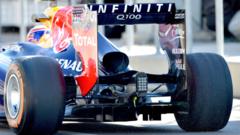
The 2026 Formula 1 technical regulations represent the most significant shift in energy recovery philosophy since the introduction of the V6 Turbo Hybrid in 2014. By mandating a near 50/50 split between internal combustion and electrical power, the FIA is not merely adjusting a performance slider; they are fundamentally altering the thermal efficiency requirements and energy management heuristics of the sport. This transition necessitates a total redesign of the Power Unit (PU) architecture, prioritizing the MGU-K (Motor Generator Unit - Kinetic) while deleting the MGU-H (Motor Generator Unit - Heat), a move that creates a massive electrical deficit that teams must bridge through aggressive kinetic harvesting and aerodynamic drag reduction.
The Bifurcation of Energy Streams
The current 2024-spec power units generate approximately 750kW total, with the internal combustion engine (ICE) contributing the vast majority and the MGU-K capped at 120kW. The 2026 framework shifts this balance to a targeted 400kW (approx. 535hp) from the ICE and 350kW (approx. 470hp) from the ERS (Energy Recovery System). This creates three distinct engineering bottlenecks: Read more on a similar issue: this related article.
- The Thermal Ceiling: With fuel flow restricted to an energy-based limit rather than a mass-flow limit, the ICE must operate at unprecedented levels of lean-burn efficiency to maintain 400kW.
- The Recovery Deficit: Removing the MGU-H—which previously acted as a "bottoming cycle" for the turbocharger, converting waste heat directly into electricity—removes the most consistent source of energy replenishment.
- The Storage-to-Deployment Ratio: The 350kW deployment target is nearly triple the current output, yet the battery (Energy Store) capacity remains relatively fixed by weight constraints.
The removal of the MGU-H is the most controversial element of this strategic pivot. In the current era, the MGU-H prevents turbo lag by spinning the compressor and recovers energy indefinitely on long straights. Without it, the 2026 PU is susceptible to "clipping"—a state where the battery is depleted before the end of a straight, leading to a sudden, catastrophic loss of 350kW. To prevent this, the ICE must now function partially as a generator, burning fuel specifically to charge the battery via the MGU-K during off-throttle or low-load phases.
The Aerodynamic Counterweight: Active Drag Reduction
To solve the "clipping" problem, the 2026 regulations introduce Active Aerodynamics. Standard high-downforce configurations create too much drag for a 400kW ICE to overcome once the 350kW electrical boost fades. The relationship between power and drag is cubic; doubling your speed requires eight times the power. More analysis by TechCrunch highlights similar views on the subject.
Formula 1’s solution is a dual-state aerodynamic map:
- Z-Mode: High downforce for cornering, utilizing maximum wing angles.
- X-Mode: Low drag for straights, where both front and rear wing elements flatten to reduce the longitudinal profile.
This shift moves the primary performance differentiator from "peak downforce" to "switching efficiency." A car that can transition from X-Mode to Z-Mode 0.1 seconds faster than its rival gains a non-linear advantage in braking stability and corner entry speed. Furthermore, the active aero must be perfectly synchronized with the Energy Management System (EMS). If the wings fail to flatten exactly when the electrical deployment tapers off, the car will hit an "aerodynamic wall," making it a stationary target for any car with remaining charge.
Combustion Dynamics under Energy-Based Fuel Flow
Historically, F1 used a mass flow limit (100kg/hr). The 2026 rules move to an energy flow limit (3000MJ/hr). This distinction is critical because it incentivizes the development of 100% sustainable fuels with high energy density. The challenge lies in the combustion velocity and knock resistance of these synthetic drop-in fuels.
The 1.6L V6 must now produce high torque at lower RPMs to facilitate energy recovery. We are seeing a move toward higher compression ratios and "pre-chamber" ignition systems that are tuned for leaner mixtures. The goal is to maximize the Indicated Thermal Efficiency (ITE). Since the MGU-H is gone, any heat exiting the exhaust pipe is a total loss to the system. Engineers are forced to keep as much energy as possible within the cylinder to drive the piston, rather than relying on a turbo-compounding recovery system.
This creates a conflict in turbocharger sizing. A larger turbo increases top-end power but increases lag and weight. A smaller turbo improves response but restricts the ICE's breathing at high RPM. Without the MGU-H to spin the shaft, we will see the return of sophisticated anti-lag calibrations, likely involving the MGU-K "over-harvesting" during braking to ensure the battery is always prepared to "torque-fill" during the transition from braking to acceleration.
The Weight Penalty and Safety Geometry
The 2026 cars aim to be 30kg lighter, reducing the minimum weight from 798kg to 768kg. However, the electrical components are becoming heavier. The MGU-K will be larger and require more robust cooling to handle 350kW of continuous throughput.
The weight reduction must therefore come from the chassis and the footprint:
- Wheelbase: Shortened from 3600mm to 3400mm.
- Width: Reduced from 2000mm to 1900mm.
- Tire Dimensions: Narrower fronts and rears to reduce frontal area and rolling resistance.
The paradox here is that a smaller, lighter car is inherently less stable at the extreme speeds F1 demands. By shrinking the "box" the car sits in, the FIA is forcing designers to find downforce through the floor (ground effect) rather than the wings, as floor-generated downforce is generally more "efficient" (higher L/D ratio) than wing-generated downforce.
The Tactical Energy Management (TEM) Framework
In 2026, the "race" will be won by the software engineers. The driver will have access to an "Override Mode"—a tactical reserve of energy similar to "Push-to-Pass" in IndyCar—but its usage is governed by a strict energy decay curve.
We can categorize the energy deployment into three tactical pillars:
- The Base Map: Steady-state deployment used to maintain a competitive lap time. This map will be "harvest-heavy," often utilizing "lift and coast" even during qualifying to ensure the battery doesn't hit 0% SoC (State of Charge).
- The Attack/Defend Map: Maximum 350kW deployment, utilized primarily in the "Override" zones. This will be restricted based on the distance to the car ahead, effectively replacing or augmenting the current DRS (Drag Reduction System).
- The Recovery Map: High-torque harvesting during the braking phase. The 2026 MGU-K will harvest up to 350kW under braking (up from 120kW). This massive increase in "engine braking" will require a complete overhaul of Brake-by-Wire (BBW) systems to ensure the transition between friction braking and electromagnetic harvesting doesn't lock the rear wheels.
The limitation of this strategy is the "Energy Loophole." If a car is stuck in traffic, it cannot harvest efficiently because it cannot maintain the optimal speed through corners to keep the MGU-K in its peak recovery window. This creates a "rich get richer" scenario where the leader in clean air can manage their battery SoC with 15% more efficiency than the car following in turbulent air.
Strategic Shift in Constructor Hierarchies
The removal of the MGU-H lowers the "barrier to entry" for new Power Unit manufacturers, which is why Audi and Ford (via Red Bull Powertrains) have entered the fray. The MGU-H was a ceramic-bearing, 125,000 RPM nightmare that cost hundreds of millions to master. By removing it, the FIA has shifted the battleground from exotic materials science to battery chemistry and power electronics.
The most critical component of 2026 will not be the piston; it will be the Inverter. Converting DC from the battery to AC for the motor at 350kW creates immense heat and switching losses. A 1% increase in inverter efficiency is worth more than a 5hp increase in ICE output, as that 1% translates directly into less cooling required (less drag) and more energy available at the end of the straight.
The Forecast: A Return to Driver-Centric Variance
Because the power delivery will be so non-linear—exploding with 350kW out of a corner and then tapering off as the ICE takes over the heavy lifting—the cars will be significantly harder to drive. The torque curve will look like a mountain range rather than a plateau.
The 2026 regulations will likely result in:
- Increased Overtaking via Energy Depletion: Passing will occur when one driver mismanages their SoC, leading to a "derating" event where they lose 300hp halfway down a straight.
- Qualifying Complexity: A "perfect lap" will require a sophisticated "recharge lap" prior, making track position in Q3 even more volatile.
- Engine Sound Alteration: The removal of the MGU-H (which acts as a muffler for the turbo) will ironically make the cars louder, as more waste energy is dumped through the wastegate.
The strategic play for teams over the next 18 months is the development of a "Digital Twin" of the 2026 energy map. The team that most accurately models the intersection of active aero drag and MGU-K deployment curves will enter the 2026 season with a structural advantage that no amount of mid-season development can bridge. The era of pure aerodynamic dominance is ending; the era of Systems Integration Dominance is beginning. Focus must shift immediately from wind tunnel hours to HIL (Hardware-in-the-Loop) battery simulation and transient combustion analysis.