The streets of Bethlehem don't look like your typical marathon course. There are no flat, glass-smooth highways or sprawling city parks designed for personal bests. Instead, you've got steep hills, ancient stone alleys, and the looming presence of an eight-meter-high concrete wall. Yet, thousands of runners just flooded these streets for the return of the Palestine Marathon. They didn't come for the prize money. They came to move.
When you run 26.2 miles in most parts of the world, you’re usually worried about your hydration strategy or whether your shoes are too tight. In Bethlehem, the challenge is simpler and much more profound. It’s about the right to movement. This isn't just a sporting event. It's a massive, sweating, breathing statement of existence. If you think sports and politics don't mix, you've never stood at the starting line in Manger Square.
The Logistics of Running in Circles
Most major marathons are "point-to-point" or one big loop. The Palestine Marathon is different because it has to be. Bethlehem isn't a massive, open territory. Due to checkpoints and restricted zones, the organizers actually struggled to find a continuous 26.2-mile stretch of road that runners could use without being stopped.
So, they got creative. The course is a double loop. Runners see the same sights twice. They pass the Church of the Nativity, weave through refugee camps like Aida and Dheisheh, and run alongside the separation wall. It’s a repetitive path that forces you to stare at the reality of the landscape twice over. You don't just pass the obstacles; you live with them for four or five hours.
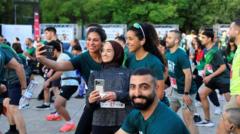
The turnout for the recent return was staggering. We’re talking about more than 10,000 participants from dozens of different countries. Some are elite athletes. Most are just locals in sneakers. You see grandmothers in hijabs walking the 5K and teenagers sprinting like their lives depend on it. It’s loud. It’s chaotic. It’s beautiful.
Why International Runners are Flocking to Bethlehem
You might wonder why someone would fly from London or New York to run through a conflict zone. It isn't "disaster tourism." It's solidarity. The Right to Movement organization, which stays behind the scenes to keep this race alive, makes it clear that showing up is an act of support.
International runners bring a spotlight. When they post their race photos online, they aren't just showing off a medal. They’re showing the world what the wall looks like from the ground. They’re showing the hospitality of Palestinian families who hand out water and cheer from their balconies.
- Economic Impact: The surge of visitors fills up hotels that have sat empty for far too long.
- Cultural Exchange: You can't spend a weekend in Bethlehem without eating your weight in hummus and talking to people who have lived there for generations.
- Global Awareness: Every runner becomes a storyteller.
I’ve seen plenty of races where the crowd is polite and quiet. This isn't that. The energy in the refugee camps is electric. Kids line the streets to high-five runners. There’s music blasting from portable speakers. It’s a festival disguised as a footrace.
Crossing the Line in Manger Square
Finishing a marathon is always emotional, but finishing this one feels heavy. You end back where you started, in front of the Church of the Nativity. You get your medal, which is usually carved from local olive wood. It’s a piece of the land you just spent the morning pounding with your feet.
The return of this race after recent hiatuses caused by global instability and local tensions was a victory in itself. It proved that the community's spirit hadn't dampened. They still want to run. They still want to host the world. They still want to show that despite the restrictions, they can organize a world-class event that rivals any European city race.
Don't mistake this for a somber event, though. It’s surprisingly fun. There’s a sense of humor among the runners. You see shirts with jokes about the hills and signs that poke fun at the slow pace. It’s a reminder that even in the most difficult circumstances, people find ways to play.
What You Should Know Before Signing Up
If you’re thinking about joining the next one, leave your ego at home. This isn't the place to chase a world record. The hills are brutal. The air can be dusty. The emotional weight of the surroundings might actually slow you down more than the incline.
Bring an open mind instead of a stopwatch. Talk to the person running next to you. Ask them why they’re there. Most locals will tell you they run because they can’t always go where they want, so they’ll run as far as the road allows today.
Check the registration dates early. The event usually sells out because the logistics are so tightly managed. Make sure your travel documents are in order, as getting into the West Bank involves going through Israeli-controlled crossings. It’s part of the experience. It’s the context that makes the race meaningful.
Pack light, stay in a local guesthouse, and prepare to have your perspective shifted. You’ll leave with sore legs and a very different understanding of what "freedom of movement" actually looks like on the ground. Go for the run, stay for the people, and don't forget to grab a falafel wrap the second you cross the finish line. You've earned it.