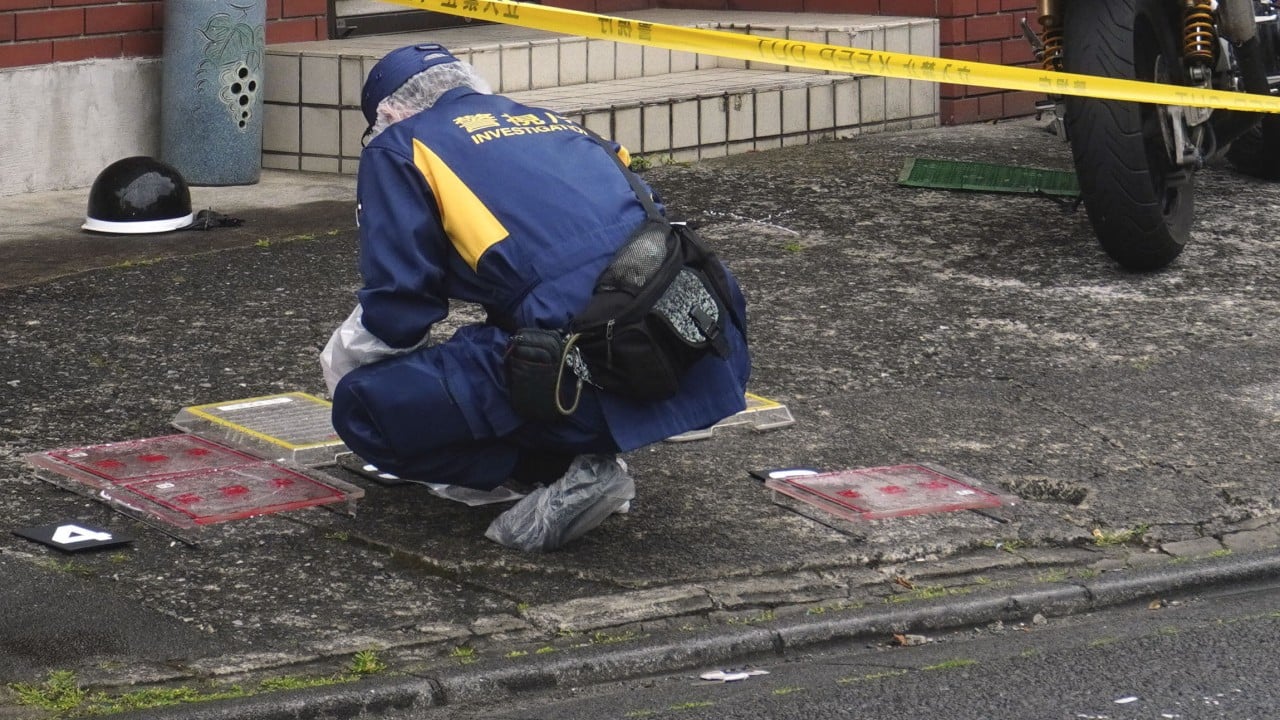
The media is feeding you a sedative. Every time a headline like "Tokyo man who attacked teens with hammer arrested after manhunt" hits the wire, the collective sigh of relief is audible across the Shibuya Crossing. The "bad guy" is in a cage. The system worked. We can all go back to staring at our phones in the subway without a care in the world.
That narrative is a lie. It’s a comforting, dangerous delusion that ignores the fraying social fabric of the world’s supposedly safest city.
By focusing on the "manhunt" and the eventual arrest, we are treating the symptom of a Stage 4 cancer while congratulating the doctor for prescribing a bandage. This isn't just about one man with a hardware store tool. It is about the systemic collapse of Japanese social vigilance and the terrifying reality that Tokyo’s "safety" has become its greatest liability.
The Myth of the Manhunt Success
Let’s dismantle the "successful manhunt" trope first. Standard reporting focuses on the efficiency of the Metropolitan Police Department. They tracked him. They caught him. The teens are safe.
But look at the timeline. In a city with more CCTV cameras than vending machines, a man can walk into a public space, bash teenagers with a hammer, and then vanish into the urban sprawl long enough to trigger a city-wide panic. The "success" isn't that they caught him; the failure is that he felt emboldened enough to do it in broad daylight in a society that prides itself on wa (harmony).
The arrest is a clerical detail. The real story is the lag. The real story is the "bystander effect" on steroids, powered by a culture that has outsourced its personal safety entirely to the state. We’ve become so reliant on the idea of a "safe Japan" that we’ve lost the primitive instinct to recognize a threat until it’s literally cracking our skulls.
The "Lone Wolf" Lie
Mainstream outlets love the "lone wolf" or "mentally unstable" labels. They are convenient. They allow us to categorize the attacker as an anomaly—a glitch in the Matrix.
I’ve spent years analyzing urban security trends and social friction points. These aren't glitches. They are features of an increasingly alienated urban population. When you have a society where "loneliness" is a literal government portfolio, you aren't dealing with random acts of violence. You are dealing with the inevitable pressure release of a pressure cooker that has no safety valve.
Calling this a "random attack" is lazy. It ignores the reality of hikikomori (social recluses) and the growing class of "disposables" who have no stake in the social contract. If you have nothing to lose, the deterrent of a Japanese prison—which is essentially a well-run nursing home with bars—is non-existent.
Why "Safety" is Your Biggest Threat
Here is the counter-intuitive truth: Tokyo is dangerous because it is safe.
In high-crime environments, people have "situational awareness." They don't walk around with noise-canceling headphones at 11 PM. They scan rooms. They notice the guy carrying a heavy bag awkwardly.
In Tokyo, that muscle has atrophied. We have cultivated a population of "sheeple" (to use a tired but accurate term) who believe that the law of the land is a physical shield. It isn't. A law against assault doesn't stop a hammer; it only provides a framework for punishing the guy after he’s used it.
By obsessing over the "arrest," the media reinforces this passivity. They tell you: "Don't worry, the police will handle it."
They won't handle the three seconds it takes for a hammer to change your life forever.
The Geography of Apathy
The attack happened in a public space. People were around. In any other global tier-one city, a man swinging a hammer would be met with immediate, perhaps even violent, civilian intervention. In Tokyo, the initial reaction is often confusion, followed by a polite distancing.
We’ve traded our "fight or flight" response for a "record and report" response.
Think about the architecture of these crimes. They happen in transit hubs or near schools—places where the density of people should, theoretically, make the crime impossible. Yet, the density acts as camouflage. In a crowd of ten thousand people who are all determined to ignore one another, a monster is invisible.
The Cost of the "Clean" Image
Japan’s obsession with its image as a crime-free utopia prevents honest conversation about radicalization. I'm not talking about religious radicalization. I'm talking about social radicalization.
The attacker isn't usually a mastermind. He’s a guy who felt invisible until he picked up a tool. If we admit that these attacks are rising—which they are, from the Kyoto Animation arson to the various "Joker" attacks on the subway—we have to admit that the "Japanese Miracle" of social cohesion is over.
The authorities prefer the "hammer man" narrative because it’s easy to solve. You find the man, you find the hammer. Problem solved.
But what about the thousands of others simmering in 1K apartments in Nakano or Adachi, watching the world go by through a screen, realizing that the only way to be "seen" is to bleed?
Stop Asking "How Did This Happen?"
The "People Also Ask" sections are filled with variations of "Is Tokyo still safe?"
You’re asking the wrong question. Safety isn't a binary state. It’s a depreciating asset.
The right question is: "Why are we surprised?"
When you squeeze a population into microscopic living spaces, demand 60-hour work weeks, and replace human interaction with automated convenience, you are building a factory for psychosis. The hammer isn't the weapon; the city is.
The Actionable Truth
If you want to survive the next "random" outburst, stop reading the police reports and start changing your behavior.
- Discard the "Safe Japan" Mental Model: Treat a walk through Shinjuku with the same baseline awareness you’d use in South Philly or East London. Not because Tokyo is "bad," but because being the only person paying attention makes you the safest person in the room.
- Identify the Outlier: In a culture of extreme conformity, the person breaking the script is your primary data point. The guy muttering? The guy with the misplaced aggression? Don't look away to be "polite." Look at him to be "alive."
- Acknowledge the Failure of the State: The police are a cleanup crew. They are historians of your misfortune. Your safety is your personal responsibility, a concept that has become almost taboo in modern Japanese discourse.
The manhunt is over, but the conditions that created the "Hammer Man" are being reinforced every single day by the very people claiming to protect you. We are celebrating the capture of a single spark while the house is soaked in gasoline.
Next time you see a headline about a "successful arrest," don't feel safe. Feel warned.