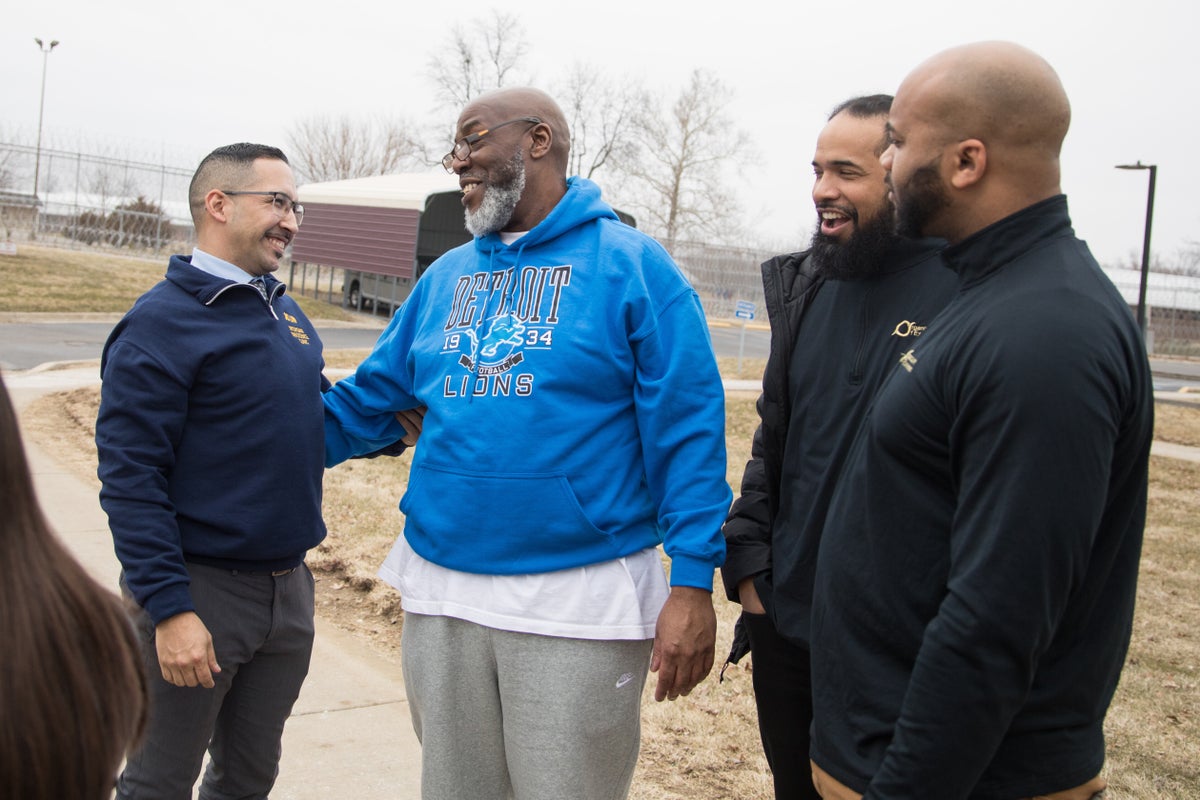
Justice is supposed to be blind, but in the case of a man recently released after more than 25 years behind bars, it was also incredibly stubborn. This isn't just another headline about a prison release. It’s a systemic failure that highlights how easily the American legal system can swallow a person whole based on nothing more than a few hours of high-pressure interrogation.
When a person spends a quarter of a century in a cell for a crime they didn't commit, we usually look for a villain. We look for the corrupt cop or the lying witness. Those often exist, sure. But the real culprit is usually the "confession" itself—a piece of evidence that juries find almost impossible to ignore, even when it’s clearly been manufactured by the state.
The myth of the voluntary confession
Most people think they’d never admit to a murder they didn't do. You’re sitting on your couch right now thinking, "No way. I’d stay silent. I’d ask for a lawyer."
You’re wrong.
Under the right amount of pressure, sleep deprivation, and psychological manipulation, almost anyone will break. The recent release of a man whose conviction rested on a coerced confession proves that the techniques used by investigators in the 1990s—and still used today—are designed to produce results, not necessarily the truth.
Detectives often use the Reid Technique or similar high-pressure methods. They tell the suspect they already have all the evidence. They say, "We know you did it, we just want to know why." They offer a way out: "If it was an accident, you can go home, but if you lie to us, you’re going away forever." After ten, twelve, or twenty hours of this, the human brain stops thinking about the long-term trial and starts thinking about making the immediate nightmare stop.
When DNA isn't enough to break the chains
In this specific case, the road to freedom wasn't a straight line. It took decades of appeals, the tireless work of legal advocacy groups, and a shifting political climate regarding criminal justice reform. Often, even when new evidence emerges, prosecutors fight tooth and nail to keep the original conviction standing. Why? Because admitting a mistake means admitting that the system is fallible. It means acknowledging that a "closed case" was actually a tragedy in progress.
We see this pattern constantly. A man is convicted in his twenties, his youth is erased by four concrete walls, and by the time he’s released in his fifties, the world is unrecognizable. The technology has changed. His family members have passed away. The "justice" delivered by his release is a thin consolation prize for a stolen life.
The high cost of closing cases too fast
The pressure on police departments to clear homicides is immense. High clearance rates look good on paper and keep the public feeling safe. But when that pressure leads to "tunnel vision," investigators stop looking for the actual killer and start building a case around the easiest target.
In coerced confession cases, you usually see a few red flags that were ignored at the original trial:
- The "confession" contains details that only the police knew.
- The suspect’s story changes multiple times to match the evidence shown to them.
- The interrogation lasted for an unreasonable amount of time without a lawyer present.
- There is zero physical evidence—no DNA, no fingerprints, no weapon—linking the suspect to the scene.
In the case of this recent release, the lack of corroborating evidence was staggering. It was a conviction built on words alone, extracted in a room where the power imbalance was absolute.
Why the system protects its mistakes
It’s tempting to blame a single "bad apple" detective, but the problem is structural. Once a conviction is on the books, the legal hurdles to overturn it are intentionally massive. This is known as "finality." The idea is that the legal system needs to end cases so victims can move on and the courts don't get bogged down.
But finality is a cruel joke when the person in the cell is innocent.
Appellate courts often look at whether the "process" was followed, not whether the person is actually guilty. If the judge gave the right instructions and the lawyer wasn't technically incompetent, the court might uphold a conviction even if the evidence looks shaky. It takes a monumental effort—and usually a new District Attorney or a specialized Conviction Integrity Unit—to actually look at the facts with fresh eyes.
The long road back to the world
Leaving prison after 25 years isn't like the movies. There’s no slow-motion walk into the sunset. It’s a terrifying plunge into a society that has moved on without you. You don't have a credit score. You don't know how to use a smartphone. You have a gap in your resume that spans the entire digital revolution.
For the man recently freed, the struggle is just beginning. While the state might eventually offer compensation, it’s usually a pittance compared to the value of the decades lost. Some states have caps on how much an exoneree can receive, and others make them sue for every penny.
What we need to change right now
If we want to stop this from happening again, we can’t just celebrate when one person gets out. We have to change how the room works.
First, every single interrogation must be recorded from start to finish. Not just the final "statement," but the hours of grueling back-and-forth that lead up to it. Juries need to see the process of breaking a human being. Second, we need to move away from the Reid Technique and toward investigative interviewing—a method used in many European countries that focuses on gathering information rather than extracting a confession.
Lastly, there must be accountability for prosecutors who hide "Brady material"—evidence that could prove a defendant's innocence. Currently, prosecutors have nearly absolute immunity for their actions in court. Without a real threat of consequences for misconduct, the incentive remains to win at all costs, even if "winning" means sending an innocent man to a cage for 25 years.
Stop assuming a confession is the "gold standard" of evidence. It’s often the most unreliable thing in the courtroom. If you ever find yourself on a jury, look at the physical evidence first. If the only thing the state has is a story the defendant told after twelve hours in a windowless room, you’re likely looking at a lie.
Support organizations like the Innocence Project or local legal clinics that do the heavy lifting of reinvestigating these "closed" cases. They’re the only ones holding the system's feet to the fire. Push for local legislation that mandates the recording of all custodial interrogations. It’s the simplest way to ensure that the "truth" found in a police station is actually the truth.