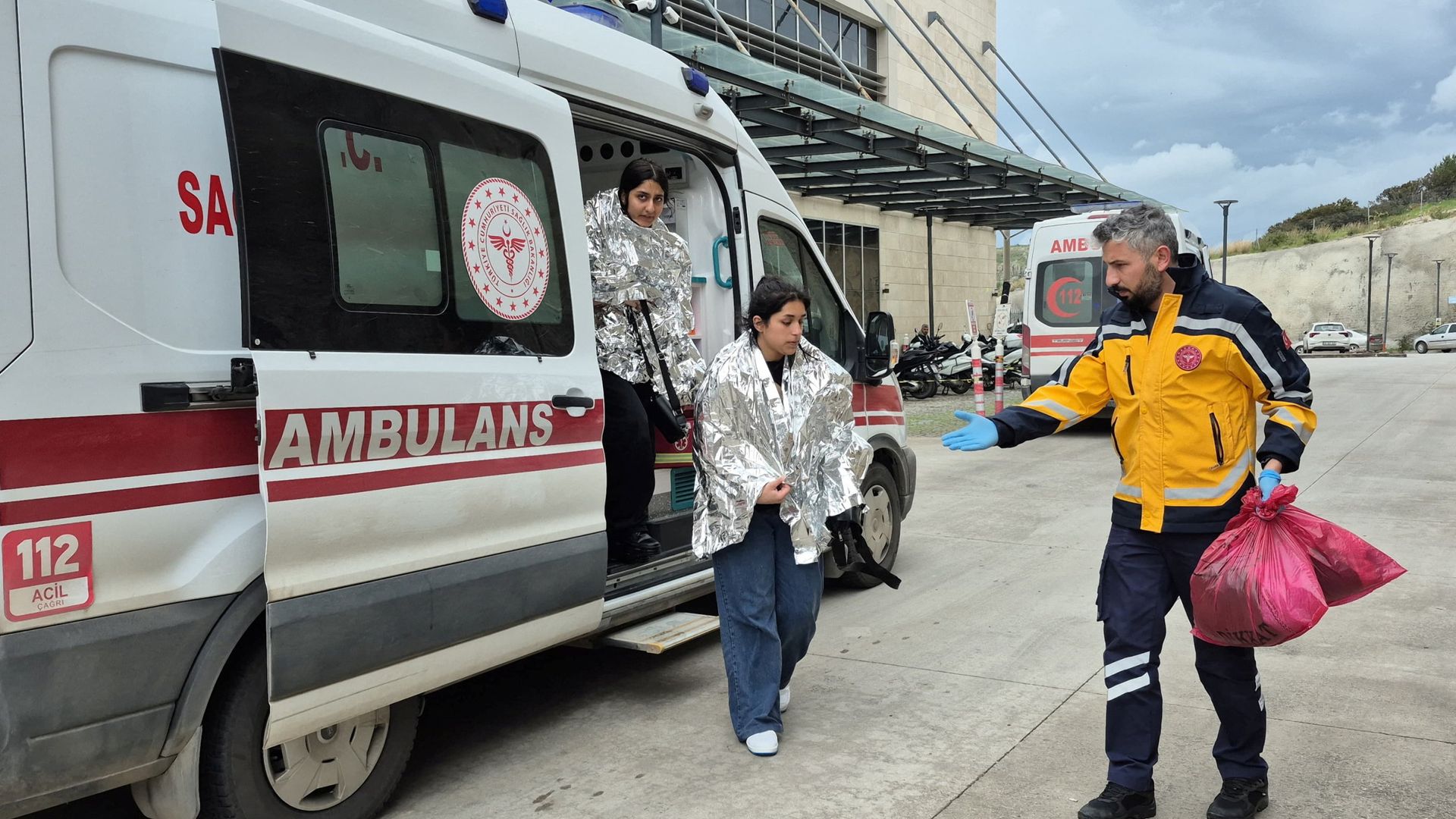
Nineteen people are dead because a wooden boat couldn't outrun the law. It happened right off the coast of a popular holiday destination, within sight of where people sip cocktails and tan. The juxtaposition is jarring. While tourists were planning their dinners, others were fighting for breath in the churn of a high-speed chase. This isn't just another headline about "migrant issues." It’s a specific, localized tragedy that highlights exactly how desperate the Mediterranean crossing has become.
You see these stories and think they happen in the middle of nowhere. They don't. They happen in the backyard of luxury resorts. When a migrant boat sinks after a pursuit, the mechanical and human failure is total. We’re looking at a situation where nineteen lives ended in the surf, and it’s time to stop pretending this is a freak accident. It's the result of a high-stakes game played by smugglers who treat human beings like disposable cargo. Meanwhile, you can read related developments here: Structural Attrition and the Kinetic Ceiling of US-Iran Escalation.
Why High Speed Chases Lead to Fatalities at Sea
When coast guards or maritime police spot a suspect vessel, the protocol is usually to intercept. But smugglers aren't interested in a peaceful chat. They've paid for their passage through bribes or are facing heavy prison time if caught. So they bolt.
A migrant boat isn't a sleek speedboat. It's usually a repurposed fishing vessel or a cheap inflatable crammed way past its weight limit. When these boats take sharp turns at high speeds to evade capture, they lose stability instantly. Water isn't soft when you hit it at thirty knots. The moment that hull breaches or the weight shifts, the boat capsizes. There’s no time for life jackets. Most of these boats don't even have them. To explore the full picture, check out the detailed analysis by Associated Press.
The Mechanics of a Capsize
In this specific disaster, the chase lasted for several miles. Think about that. Minutes of terrifying speed, the engine screaming, and 50 or 60 people crushed together. If everyone moves to one side of the boat at once—which is a natural human reaction when panic sets in—the center of gravity vanishes.
The boat flips. Those trapped underneath the hull are the first to go. The nineteen victims in this latest incident likely didn't stand a chance once the chase reached peak intensity. Rescuers often arrive within seconds, but in choppy water, seconds are an eternity. You can't find people in the dark or the spray that easily.
The Smuggler Mentality is the Real Killer
We talk about border policy, but we don't talk enough about the guys driving the boats. These aren't seasoned captains. Often, the smugglers recruit one of the migrants to steer in exchange for a free trip. They give them a crash course on how to use a GPS and tell them to "go that way."
When the police lights appear, these "captains" freak out. They don't know how to handle a heavy vessel in a wake. They push the throttle and hope for a miracle. Honestly, it’s a miracle more of these boats don’t sink every single night. The smugglers on the shore have already collected the money. Whether the boat arrives or sinks makes no difference to their bottom line.
Impact on Local Tourism and Regional Perception
It’s uncomfortable to talk about, but these tragedies happen right in front of holiday-makers. The sight of body bags on a beach meant for sunbathing is a reality that coastal resorts are struggling to manage.
- Local businesses see immediate cancellations after high-profile sinkings.
- First responders are often local volunteers who aren't trained for mass casualty events.
- The psychological toll on the community is immense.
I've talked to locals in these areas. They aren't cold-hearted. They're traumatized. They see the clothes washing up on the shore weeks later. They see the debris. It changes the way a "paradise" feels. You can't look at the ocean the same way after you've seen it swallow nineteen people.
What the Data Says About Survival Rates
Search and rescue operations are becoming more difficult. The International Organization for Migration (IOM) tracks these deaths, and the numbers are grim. The "Central Mediterranean Route" remains the deadliest.
| Year | Recorded Deaths | Main Cause |
|---|---|---|
| 2023 | 2,400+ | Capsizing/Stability |
| 2024 | 2,100+ | Engine Failure/Weather |
| 2025 | 1,900+ | Interception Incidents |
These aren't just statistics. Each of those nineteen people had a family who probably doesn't know they're dead yet. The lack of a formal passenger list makes identification a nightmare. Usually, we only know how many died because the survivors tell the police how many were on board at the start.
The Myth of the Easy Crossing
People think these migrants are just "jumping on a boat." They're not. They've walked across deserts, stayed in "connection houses" that are basically prisons, and paid thousands of dollars. By the time they get on that boat, they're exhausted. They're dehydrated.
When the chase starts, they don't have the physical strength to hold on. The physical toll of the journey makes them more likely to drown even if they are good swimmers. Muscle cramps, hypothermia, and pure shock set in the moment they hit the water.
Why Resorts are the Target
Smugglers aim for resorts because the coastline is often better lit and there are more landmarks. It's easier to navigate toward the lights of a hotel than a dark, rocky cliffside. Plus, they hope that the presence of tourists might make the coast guard more hesitant to use aggressive tactics. Clearly, that gamble failed here.
Improving Search and Rescue Efficiency
We need to be honest about what works. Using drones is becoming more common, and they help spot boats long before a high-speed chase is necessary. If you can track a boat from five miles out, you can position multiple vessels to box it in slowly.
Aggressive pursuits in the dark are a recipe for disaster. The nineteen people who died off the holiday resort are proof of that. We need a shift in how these interceptions happen. If the goal is to save lives, the tactic of the high-speed chase needs a serious rethink.
The reality of the situation is that as long as there's a demand for escape, there will be smugglers. And as long as there are smugglers, there will be boats that aren't fit for the water. We can't fix the whole world, but we can demand better protocols for when these boats are found.
Demand transparency from maritime authorities. Support organizations like the Red Cross or Médecins Sans Frontières that provide the actual boots-on-the-ground (or feet-in-the-water) rescue support. Don't let this be just another story you read and forget by tomorrow. The families of those nineteen people won't forget. The tourists who watched the boats go down won't forget.
Stay informed on regional maritime laws and support policies that prioritize rescue over pursuit. Check the updates from the UN Refugee Agency (UNHCR) to see how you can help with the identification of victims. Every bit of pressure on governments to handle these interceptions with more care saves lives. Don't look away from the shore.