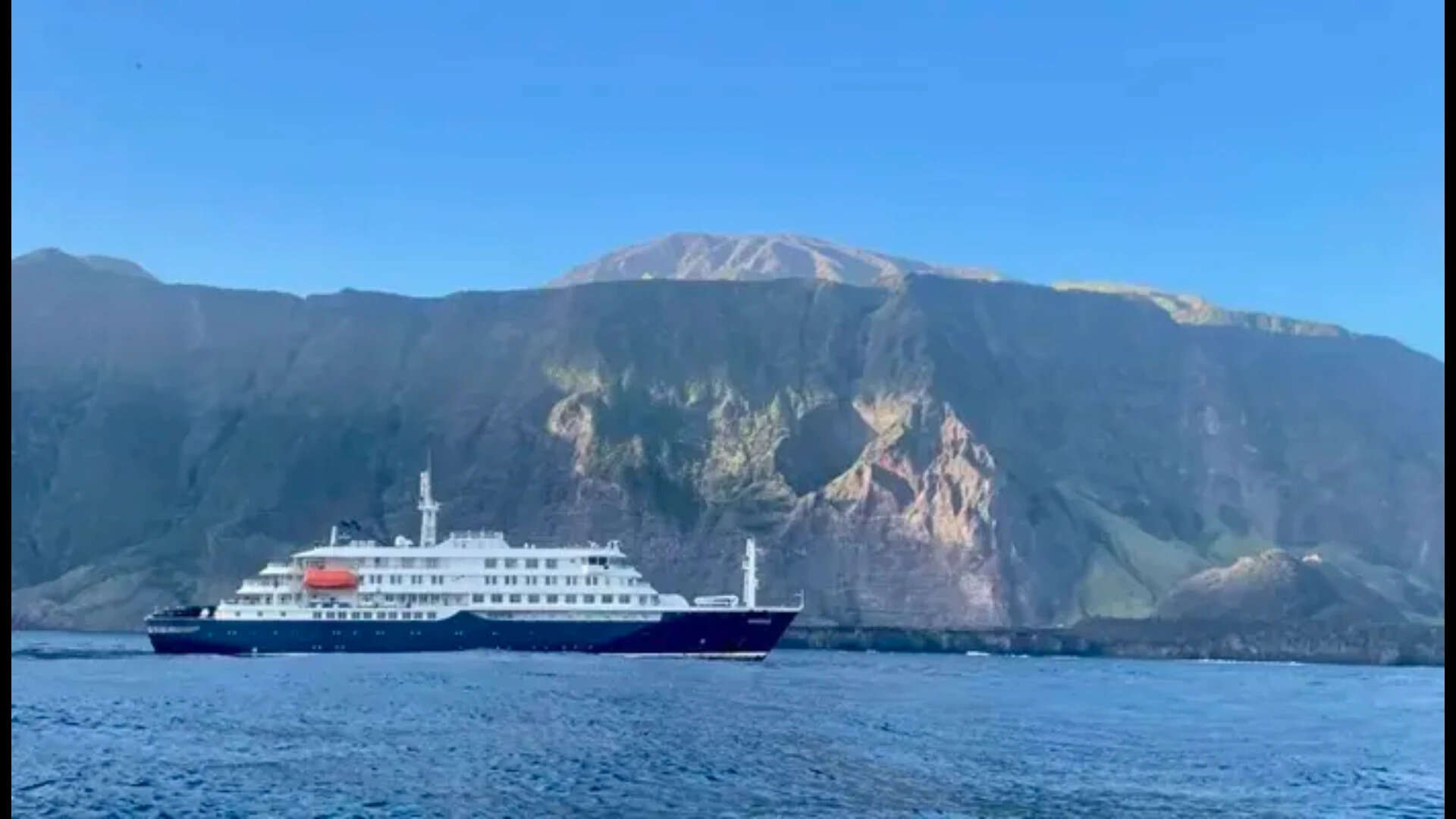
Imagine living on a volcanic rock in the middle of the South Atlantic, 1,500 miles from the nearest human being. You’ve got one small village, no airstrip, and a single doctor. Then, a cruise ship anchors offshore, and a passenger walks into your local school. A few days later, you find out that passenger was likely carrying Hantavirus. This isn't a plot for a disaster movie. It's exactly what happened on Tristan da Cunha, the most remote inhabited archipelago on Earth.
The arrival of the MS Silver Cloud brought more than just tourists to Edinburgh of the Seven Seas. It brought a potential biological nightmare. When reports surfaced that a passenger suspected of having Hantavirus had interacted with the island's children, the community didn't just worry. They faced an existential threat. This situation highlights a massive gap in how we handle luxury expedition travel and the fragile safety of isolated communities. Discover more on a related issue: this related article.
A Single Visitor Could Break Tristan da Cunha
Tristan da Cunha is home to about 250 people. Everyone knows everyone. They share everything, from the potato patches to the communal fishing hauls. Their isolation is their biggest defense, but it’s also their greatest weakness. They don't have the natural immunity to common mainland bugs, let alone a rare, rodent-borne pathogen like Hantavirus.
Hantavirus isn't your typical seasonal flu. It’s a severe respiratory disease often transmitted through contact with infected rodents or their droppings. In humans, it can lead to Hantavirus Pulmonary Syndrome (HPS). The mortality rate is terrifying—roughly 38%. When the news broke that a visitor to the local school was believed to be infected, the panic was justified. There are no ICU beds here. There's no fleet of ambulances. If an outbreak starts on Tristan, the math is simple and brutal. People die before help arrives by sea. More journalism by The New York Times delves into related perspectives on this issue.
The passenger in question was part of a cruise that had reportedly seen an outbreak of gastrointestinal issues and other symptoms. While Hantavirus usually doesn't spread person-to-person (with the exception of the Andes virus strain in South America), the presence of any high-risk pathogen in such a tight-knit, vulnerable population is a failure of protocol.
Why the Cruise Industry Must Do Better
Expedition cruising is booming. Everyone wants to see the "untouched" parts of the world. But "untouched" usually means "unprotected." The MS Silver Cloud is a luxury vessel, but luxury doesn't mean it’s a sterile bubble. Ships are floating petri dishes. We’ve known this for decades, yet the protocols for landing passengers in hyper-remote areas still feel incredibly lax.
The fact that a passenger "believed to be infected" was allowed to disembark and visit a school is a massive red flag. Schools are the heart of Tristan. If the children get sick, the entire future of the island is at risk. We're talking about a population that can fit inside a few city buses.
Cruise lines often talk about "responsible tourism." They mention carbon offsets and plastic-free straws. Those things are fine. But the most responsible thing a cruise line can do is ensure they aren't offloading a virus onto a population that has no way to fight it. Screening needs to be more than a checkbox on a form. If there's an active illness on a ship, the gangway stays up. Period.
The Logistics of a Remote Medical Crisis
If you get seriously ill on Tristan da Cunha, you wait. You wait for a ship to happen to be passing by, or you wait for a dedicated vessel to sail from Cape Town. That journey takes about six to seven days, depending on the weather. The South Atlantic isn't known for its calm seas.
The island's medical facility, the Camogli Hospital, is well-run but tiny. They have basic X-ray equipment and a small lab. They aren't equipped for a mass casualty event or a viral outbreak that requires multiple ventilators and round-the-clock intensive care.
- Total Population: ~250
- Distance to South Africa: 1,750 miles
- Distance to Saint Helena: 1,500 miles
- Transport: Sea only (no airport)
When a potential Hantavirus case enters this environment, the medical officer has to make impossible choices. Do you quarantine the whole village? How do you manage a school full of kids who might have been exposed? The psychological toll on a community this small is immense. They rely on the outside world for supplies and occasional tourism income, but that same world just sent them a potential death sentence.
Misconceptions About Hantavirus and Island Safety
Most people hear "virus" and think of the common cold. That's a mistake. Hantavirus is different. It usually stays in rural areas where humans bump into deer mice or long-tailed pygmy rice rats. You don't expect it on a cruise ship. This suggests the infection likely started before the passenger boarded or during a previous land excursion.
Another misconception is that remote islands are "safe" because they're far away. The reality is that their distance makes them more susceptible to "virgin soil" epidemics. History is full of stories where a single ship wiped out half an island's population with measles or the flu. We haven't moved as far past that as we think. The technology has changed, but the biology hasn't.
If the passenger on the Silver Cloud indeed had Hantavirus, the risk of a secondary outbreak among the islanders was low but not zero. The real danger is the precedent. If it wasn't Hantavirus this time, it could be something much more contagious next time.
How Remote Communities Can Protect Themselves
Tristan da Cunha can't just build a wall. They need the mail ships and the supplies. However, they can change the rules of engagement for tourism.
Firstly, health clearances for cruise passengers should be non-negotiable and verified by the island's authorities before anyone sets foot on the jetty. If a ship has reported illness in the last 14 days, the landing should be canceled. It sucks for the tourists who paid $20,000 for the trip. It sucks for the islanders who lose the souvenir sales. But a dead community doesn't have an economy.
Secondly, the "school visit" model needs to die. Mixing international travelers with local school children in a tiny, enclosed classroom is a recipe for disaster. Tourism on Tristan should be outdoors, socially distanced, and strictly monitored. The residents are incredibly welcoming—it's part of their culture—but that kindness shouldn't be a vulnerability.
Next Steps for Expedition Travel
If you're planning to visit a place like Tristan da Cunha, Pitcairn, or any of the fringe islands of the world, you have a responsibility.
- Be Honest: If you feel even slightly off, stay on the boat. Don't "power through" for the sake of the excursion.
- Sanitize Everything: This isn't just for your safety; it's for theirs.
- Support Stricter Rules: Don't complain when a landing is canceled due to health concerns. Support the cruise lines that prioritize the locals over the itinerary.
The Tristan da Cunha incident should be a wake-up call for the South Atlantic and beyond. We can't keep treating these remote outposts like theme parks. They are living, breathing communities with almost zero margin for error. Protecting them isn't just about preserving a "remote experience"—it's about basic human rights and biosecurity. The world is smaller than it used to be. A virus in South America or Africa can be in a schoolroom on the most remote island on Earth in a matter of days. We need to start acting like it.