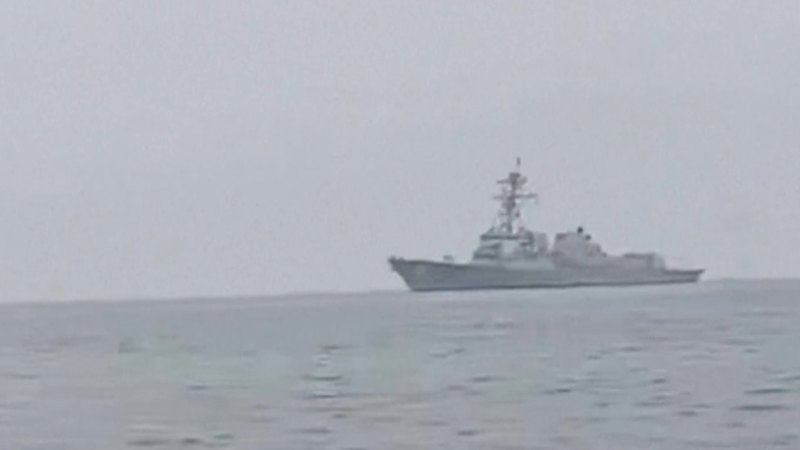
Donald Trump just pulled the trigger on a strategy that's been looming over the Persian Gulf for years. The blockade of Iranian ports isn't just another round of sanctions. It's a physical, aggressive halt to the flow of Iranian crude and goods. If you think this is just about "maximum pressure" part two, you're missing the point. This move effectively tries to choke off the Islamic Republic's economic windpipe in a way we haven't seen in modern history.
For anyone holding assets in energy or tracking international shipping, the game changed overnight. We're talking about the potential for 1.5 million barrels of oil per day to simply vanish from the global market. That's not a small number. It’s enough to send shockwaves through every refinery from Singapore to Rotterdam.
Why the Trump Blockade of Iranian Ports is Different This Time
Previous administrations relied on the stroke of a pen. They used banking restrictions. They used secondary sanctions to scare off European buyers. It worked to an extent, but Iran always found a way. They used "ghost fleets." They turned off transponders. They sold to small, independent Chinese refineries that didn't care about U.S. financial systems.
Trump’s current approach isn't waiting for a bank to flag a transaction. It involves a maritime ring of steel. By targeting the actual physical infrastructure—the loading docks at Kharg Island and the narrow transit points—the U.S. is signaling that the era of "looking the other way" is over. This is about physical denial.
You have to understand the geography to see why this is so high-stakes. Most of Iran’s oil exports leave from a single point: Kharg Island. It sits in the Persian Gulf, vulnerable and stationary. If you stop the tankers there, you don't need to chase them across the Indian Ocean. It's a bottleneck. And Trump loves a bottleneck.
The China Connection and the Secret Oil Trade
Everyone asks how Iran stayed afloat during the last four years. The answer is China. Small "teapot" refineries in Shandong province have been the primary destination for Iranian crude. They pay in Yuan. They use non-Western insurance. They basically operate outside the reach of the U.S. Treasury.
But a physical blockade changes the math for Beijing. While China hates being told who they can buy oil from, they hate regional instability even more. If the U.S. Navy or partnered forces are actively interdicting ships, the cost of that "cheap" Iranian oil just skyrocketed. Insurance premiums for these vessels are now through the roof.
I’ve seen how these shipping markets react to tension. Usually, it’s a slow build. This time? It was an explosion. Freight rates for VLCCs (Very Large Crude Carriers) in the region jumped almost instantly. Nobody wants to be the guy whose ship gets caught in a geopolitical pincer movement.
Impact on Domestic Gas Prices and Your Wallet
Let’s be real. You probably care most about what this does to the price of a gallon of gas. Whenever you hear "blockade" and "Middle East" in the same sentence, the markets freak out. Traders start pricing in a "war premium."
Even if the U.S. is producing record amounts of oil domestically, oil is a global commodity. If the supply from the Persian Gulf drops, the price of Brent crude goes up everywhere. Trump is betting that he can convince Saudi Arabia and the UAE to flood the market to offset the Iranian loss. It's a risky bet.
The Saudis haven't always played ball recently. They have their own budget needs. They want oil at $80 or $90 a barrel. If they don't turn on the taps, you’re going to feel this at the pump within weeks. It's a massive political gamble for an administration that promised to lower the cost of living.
The Ghost Fleet is Running Out of Places to Hide
For years, Iran used a "ghost fleet" of aging tankers. These ships are basically floating scrap metal with fake flags. They change names like people change shirts. They do ship-to-ship transfers in the middle of the night to hide the origin of the oil.
The blockade makes these tricks much harder. When the U.S. designates a specific zone as restricted, those ghost ships become targets for seizure. We aren't just talking about fines anymore. We're talking about losing the entire hull and the cargo. For a cash-strapped regime, that’s a devastating blow.
It also puts pressure on countries like Panama and Liberia, who provide "flags of convenience." If the U.S. says a ship is part of a sanctioned blockade-running operation, those countries have to de-flag them or face the wrath of Washington. Most of them choose Washington.
What This Means for Regional Stability
The big fear is always the Strait of Hormuz. Iran has threatened to close it for decades. It’s a narrow waterway where 20% of the world’s oil passes. If Iran feels backed into a corner by a port blockade, they might try to take the whole neighborhood down with them.
They have fast attack boats. They have sea mines. They have drones. A blockade isn't a one-sided event; it's a confrontation. We're seeing an increased presence of the U.S. 5th Fleet for a reason. This is a game of chicken played with billion-dollar warships and the world’s energy supply.
Critics say this leads to war. Proponents say it’s the only way to stop Iran’s nuclear ambitions and their funding of regional proxies. Honestly, both could be right. It’s a high-friction strategy that leaves very little room for error. One miscalculation by a ship captain could trigger a kinetic exchange.
How Businesses Should Prep for the Fallout
If you’re running a business that depends on logistics or energy, you can't just sit and watch the news. You need to act. The supply chain is about to get weird.
Start by looking at your fuel surcharges. They’re going to go up. If you have contracts that aren't locked in, you might want to look at hedging your energy costs now. We're entering a period of extreme volatility.
Check your shipping routes. While the blockade targets Iranian ports, the entire Persian Gulf is now a high-risk zone. Some carriers might start rerouting, which adds time and cost to everything coming out of the region.
The reality is that the Trump blockade of Iranian ports is a hard reset of Middle Eastern policy. It moves the conflict from the shadows of banking servers to the turquoise waters of the Gulf. It’s loud, it’s aggressive, and it’s meant to force a collapse or a new deal.
Watch the price of Brent crude. If it stays stable, the Saudis are helping. If it spikes past $100, we’re in for a very rough ride. Keep your eyes on the shipping manifests and the naval movements. The next few weeks will decide if this strategy works or if it just sets the world on fire. Stop waiting for a "return to normal." This is the new normal.
Monitor the daily reports from the U.S. Energy Information Administration (EIA) and maritime tracking services like Lloyd’s List. Information is your only shield in a market this volatile. Adjust your budgets for higher transport costs immediately. Don't wait for the quarterly review to realize your margins are gone.


