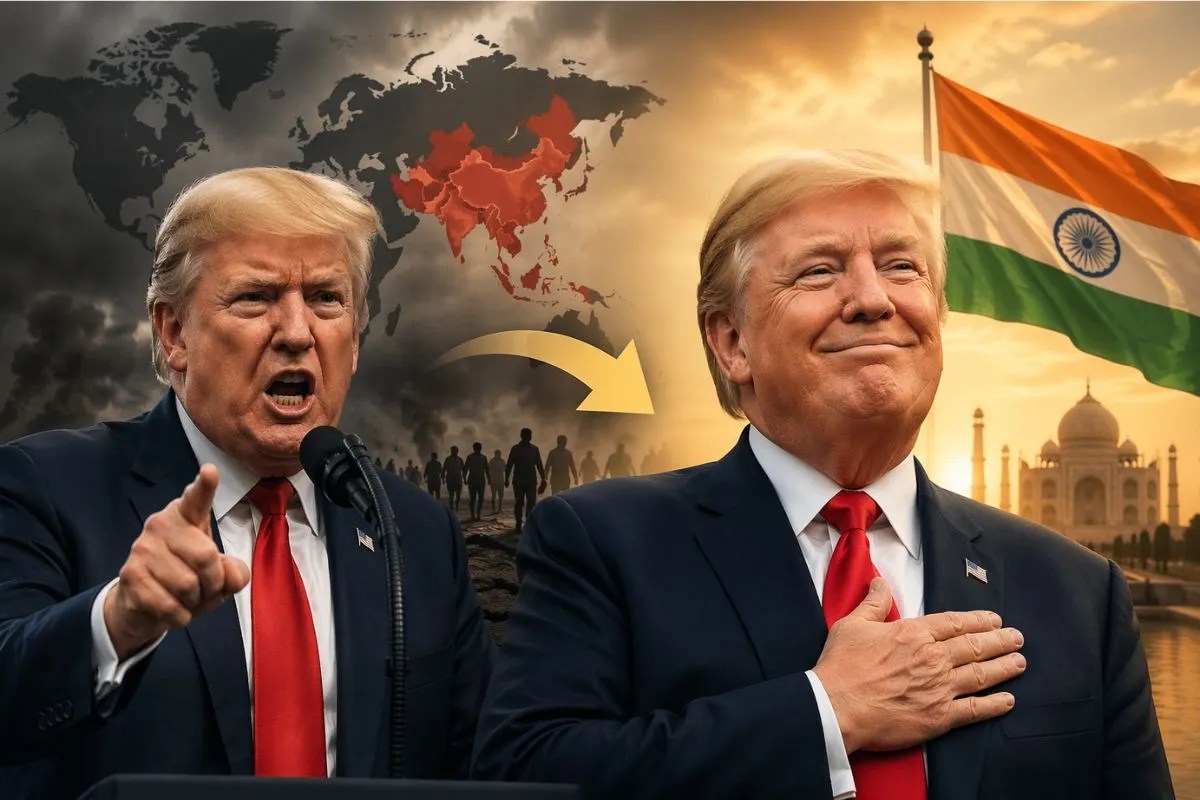
The mainstream media is tripping over its own feet trying to reconcile Donald Trump’s rhetorical gymnastics. One day he’s calling India a "filthy" environment or a "hell on earth" regarding trade protectionism; the next, he’s praising Prime Minister Modi as a "total killer" and a "great leader." The lazy consensus suggests this is just a politician "flipping" or "walking back" statements to win votes.
That analysis is shallow. It's wrong. It misses the fundamental mechanics of 21st-century geopolitical leverage. You might also find this connected coverage interesting: The RSS Branding Crisis Why Being Not the KKK is a Bar Set in Hell.
Trump isn't "changing his mind" about India. He is practicing a brutalist form of transactional diplomacy that most ivory-tower analysts are too refined to acknowledge. When he slams a nation, he’s devaluing their current standing to buy the next deal at a discount. When he praises them, he’s closing the loop. To view these shifts as a change in heart is to mistake a negotiation tactic for a personality disorder.
The Myth of the Diplomatic About-Face
The headlines claim Trump "retracted" his hell-on-earth comments. He didn't. He simply moved to the next phase of the pitch. In the world of high-stakes trade, you don’t get concessions by being polite. You get them by being a problem. As reported in detailed reports by Al Jazeera, the implications are notable.
I have spent years watching corporate raiders and distressed-asset buyers use this exact playbook. You trash the asset publicly to shake the confidence of the board. Once the price drops or the terms soften, you pivot. Suddenly, the "failing company" is a "diamond in the rough with incredible potential."
India is currently the world’s most attractive "distressed asset" from a Western supply-chain perspective. It has the scale to replace China, but it has the bureaucratic friction of a thousand rusting gears. Trump’s "hell" comment wasn't about the culture; it was a targeted strike on India’s tariff structure—specifically the 100% tax on high-end American imports.
When he pivots to calling India "great," he isn't admitting he was wrong. He is signaling that the back-channel negotiations are moving in his favor. If you think this is flip-flopping, you’ve never closed a deal worth more than a used sedan.
The Reciprocity Trap
The "People Also Ask" sections of the internet are obsessed with whether Trump "likes" India. This is the wrong question. In the current global trade environment, "liking" a country is a liability.
The real question is: Can India survive the end of the US-led security umbrella without paying a massive "protection fee" in the form of trade concessions?
India operates on a philosophy of "Strategic Autonomy." They want to buy S-400 missile systems from Russia, oil from Iran, and tech from Silicon Valley, all while keeping their domestic markets shielded by some of the highest tariffs in the G20. The "lazy consensus" says the US has to accept this because we need India to counter China.
Trump’s rhetoric disrupts this entire premise. He is the only leader willing to say out loud that the "China hedge" isn't worth a $100 billion trade deficit.
- The Old Way: Ignore the tariffs to keep the "strategic partnership" warm.
- The Trump Way: Call the house a dump until the owner lowers the rent.
The Modi-Trump Bromance is a Business Arrangement
Observers point to the "Howdy Modi" rally or the "Namaste Trump" event as proof of a deep bond. It’s theater.
Modi is a nationalist. Trump is a nationalist. Nationalists don't make "friends"; they make alliances of convenience. Modi knows that Trump’s bluster provides him with the perfect political cover at home. When Trump attacks Indian tariffs, Modi can go to his domestic industry titans and say, "Look, I have to lower these taxes or this crazy American will blow up our H-1B visa pipeline."
It is a choreographed dance of "Bad Cop/Worse Cop" where Trump plays both roles simultaneously.
Why the "Filthy" Comment Actually Mattered
Remember when Trump called India’s air "filthy" during a 2020 debate? The diplomatic core fainted. They called it a disaster for US-India relations.
They were wrong.
That comment forced a domestic conversation in India about environmental standards that years of polite "climate summits" couldn't achieve. It touched a nerve because it was a blunt truth disguised as an insult. By the time he was praising India’s "greatness" again, he had already shifted the baseline of the conversation.
If you want to understand the "nuance" the media misses, look at the Reciprocal Tax Act. Trump’s obsession with "mirror taxes" isn't about isolationism; it's about forcing a global reset to $0.00 tariffs. He uses the "hell on earth" label to describe any market that isn't a mirror of American openness.
The India Strategy: Realities vs. Delusions
Let’s look at the data the pundits ignore:
- Tariff Reality: India’s average applied tariff is roughly 17-18%. The US is around 3.4%.
- The Manufacturing Pivot: Apple, Google, and Samsung are moving production to India. They aren't doing it for the "great culture." They are doing it because the US government is making it clear that the China party is over.
- The Leverage Gap: India needs US jet engine technology (GE F414) more than the US needs Indian textiles.
Trump knows this gap exists. His "rhetorical shifts" are just him leaning his weight onto that leverage.
Imagine a scenario where a CEO tells a supplier their parts are "garbage" in a public meeting. The supplier panics, offers a 20% discount, and promises better quality control. The next week, the CEO features that supplier in the annual report as a "key strategic partner."
Did the CEO flip-flop? No. He won.
The Danger of the "Great Country" Narrative
The real risk isn't Trump’s insults; it’s the sudden pivot to praise. When Trump starts calling India "great" and "amazing," it means the bill is coming due.
He is currently setting the stage for a second-term trade war that will make the first one look like a playground spat. By buttering up the "great leader" Modi, he is removing the personal friction so he can apply maximum economic pressure. He is making it "personal" so that when he demands a total removal of Harley-Davidson tariffs or a shift in data localization laws, it’s framed as a favor between friends rather than a decree from a hegemon.
Stop Reading the Transcript, Start Reading the Ledger
If you’re waiting for a "consistent" foreign policy from a Trump-led America, you’re looking for a ghost. The consistency is in the extraction of value.
- Step 1: Devaluate the target with "Hell on Earth" rhetoric.
- Step 2: Isolate the leader with public "friendship."
- Step 3: Demand a specific, quantifiable concession (Defense contracts, tariff cuts, energy deals).
- Step 4: Return to Step 1 if the target resists.
The competitor article you read wants you to believe Trump is erratic. He isn't. He’s a price-setter. India is the buyer.
The "Great Country" comment isn't a retraction. It’s the closing argument of a high-pressure sales pitch. India’s biggest mistake would be believing the compliment. America’s biggest mistake is believing the insult mattered in the first place.
Trade isn't built on "greatness" or "hell." It’s built on the cold, hard reality of who needs whom more at 3:00 AM when the supply chains stop moving. Right now, Trump is betting India needs the US more. He’s probably right.
Stop looking for "flip-flops" and start looking for the invoice. It’s already been sent.