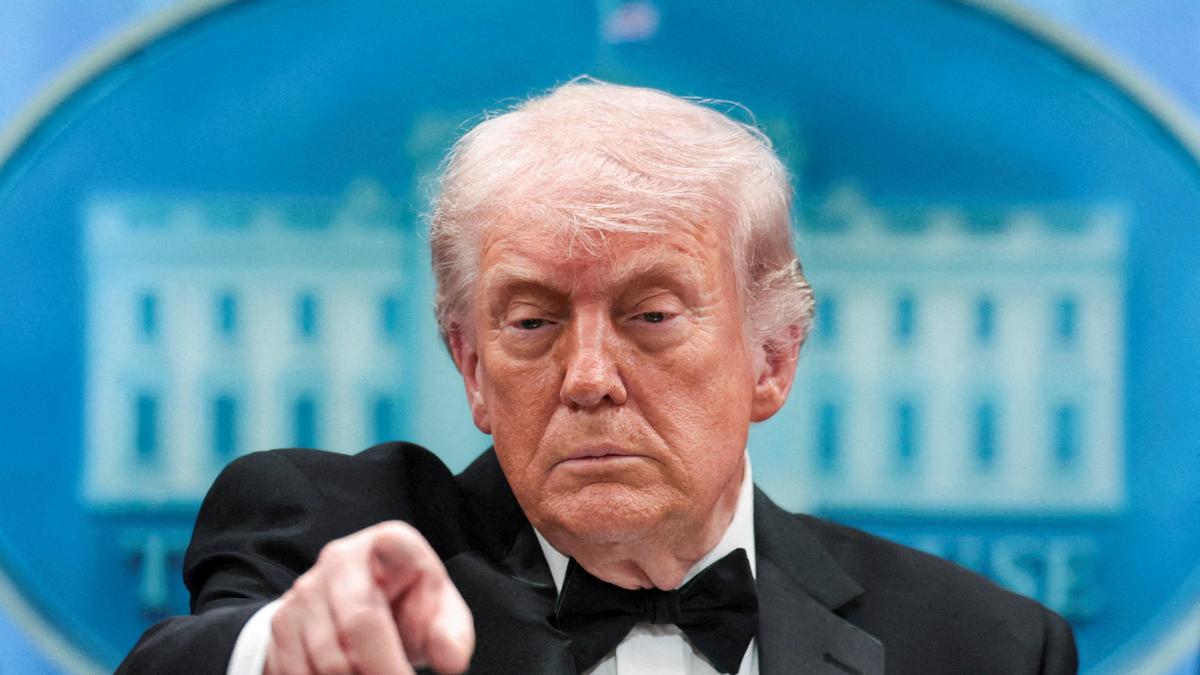
The clock isn't just ticking for Tehran; it's practically screaming. Donald Trump just fired a massive rhetorical shot across the bow, telling Iran they better "get smart soon" and sign a deal before the window of diplomacy slams shut for good. This isn't just another Truth Social rant. It's a calculated ultimatum delivered in the middle of a high-stakes blockade that has the global oil market on edge and the Iranian economy gasping for air.
If you've been following the 2026 standoff, you know the situation is messy. We’re currently in a fragile ceasefire following weeks of intense military exchanges. But don't let the lack of active bombing fool you. The U.S. has maintained a suffocating naval blockade on Iranian ports, and Trump is making it clear that he’s losing patience with the back-and-forth mediated by Pakistan and Oman. Discover more on a related issue: this related article.
The Blockade and the Breaking Point
Trump's latest warning comes right as reports surface that he’s instructed his team to prepare for an extended blockade. The strategy is simple: maximum pressure 2.0, but with more teeth. While Iran’s Foreign Minister Abbas Araghchi has been jet-setting between Islamabad, Muscat, and St. Petersburg trying to find a workaround, the U.S. position remains a brick wall.
The reality on the ground is grim for the Islamic Republic. Oil prices have hit $102 a barrel because the market is terrified that the blockade will become a permanent fixture or lead to a total shutdown of the Strait of Hormuz. For Trump, this is leverage. He’s betting that the Iranian regime will collapse under the weight of its own empty coffers before he has to order another round of airstrikes. More journalism by USA Today delves into similar perspectives on this issue.
What Getting Smart Actually Means
When Trump says Iran needs to "get smart," he’s not talking about minor concessions. He’s demanding a total overhaul of their nuclear ambitions. The sticking points are the same ones that have plagued negotiations for years, but now the U.S. has the added weight of recent combat operations to back up its demands.
- Zero Enrichment: The U.S. wants Iran to stop all uranium enrichment. Period. No "civilian" excuses.
- Material Removal: There’s a demand on the table for the U.S. to physically recover and remove existing nuclear material from Iranian soil.
- Ballistic Missile Limits: Washington wants to gut the program that Tehran considers its only real deterrent against regional rivals.
Iran’s current counter-offer is to separate the issues—reopening the Strait of Hormuz now and talking about nukes later. Trump isn't buying it. He knows that once the blockade is lifted, his leverage evaporates.
The Failed Diplomacy of 2026
We’ve already seen what happens when these two sides try to talk. In February, indirect talks in Muscat were a disaster. Secretary of State Marco Rubio openly doubted if a deal was even possible with the current Iranian leadership. Then came the Islamabad talks in April. Even with Pakistan’s Prime Minister Shehbaz Sharif acting as a middleman, the gap was too wide.
Trump’s frustration is visible. He’s publicly mocked the Iranian negotiators, saying they "don't know how to sign a non-nuclear deal." He isn't interested in the nuances of Persian diplomacy or the internal politics of the Supreme Leader’s office. He wants a signature on a piece of paper that says "No Nukes" in bold letters.
Why This Time Is Different
Unlike 2018, when the U.S. simply walked away from the JCPOA, the 2026 landscape is defined by direct military conflict. The U.S. and Israel have already hit over 4,000 targets in Iran this year. The "threat" of force is no longer theoretical; it's a demonstrated reality.
The Iranian regime is betting they can wait Trump out or find a "fair and balanced" deal through intermediaries. But they’re misreading the room. The U.S. administration is packed with hawks who see this as a once-in-a-generation chance to fundamentally "change the face of the Middle East." If Iran doesn't "get smart" by accepting the U.S. terms, the next phase won't be a blockade—it’ll be an all-out assault on their energy infrastructure and internal transport links.
The Next Steps for Tehran
The Iranian leadership has a very narrow path forward. They can continue to play the "delay and extend" game, hoping for a miracle from their allies in Moscow or a shift in U.S. public opinion. But with oil revenue at a standstill and the U.S. military already positioned in the region, that's a losing hand.
If you’re watching this play out, watch the Strait of Hormuz. That’s the trigger point. If Iran tries to break the blockade by force, the ceasefire is over. If they accept the U.S. demand for "zero enrichment," they risk a domestic uprising from their own hardliners.
Stop looking for a middle ground; there isn't one. Trump has drawn a line in the sand, and he’s clearly ready to "do what has to be done" if Iran doesn't fold. Tehran needs to decide if keeping their centrifuges is worth losing their entire economy. It’s time for them to make a choice, and fast.