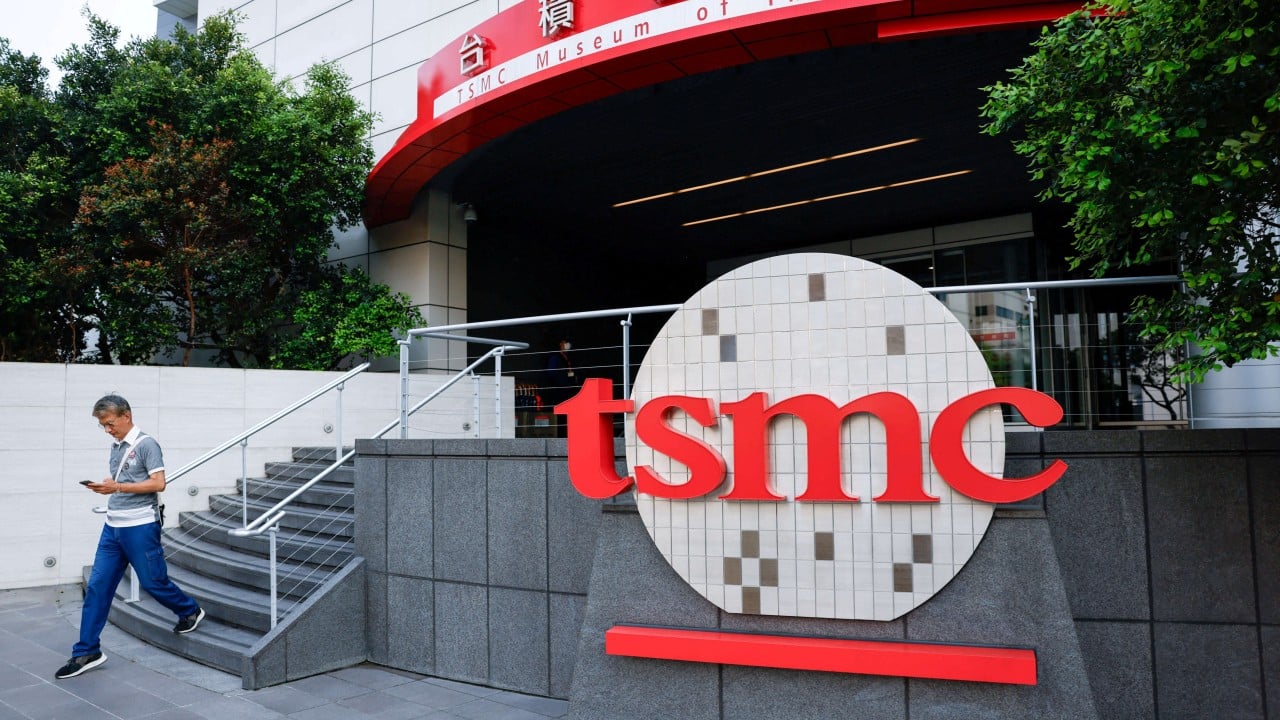
TSMC is betting the house on AI. While most people are busy talking about chatbots or image generators, the world's most important chipmaker is staring at a 2026 revenue target that would make a tech giant blush. They're aiming for a growth jump of over 30%. It’s a massive number. It’s also entirely possible if you look at how the semiconductor supply chain is currently shifting under the weight of massive data center expansions.
The strategy isn't just about selling more silicon. It’s about a fundamental pivot in how chips are designed and built. We’re moving away from the era of general-purpose computing and into a world where everything is purpose-built for AI acceleration. If you think the chip shortage of a few years ago was a wild ride, wait until you see the scramble for 2nm capacity.
TSMC isn't just reacting to the market. They're forcing it. By ramping up their capital expenditure (capex) to record levels, they’re effectively telling their competitors that catching up isn't just hard—it’s prohibitively expensive. This isn't just business as usual. It's a land grab for the foundational infrastructure of the next decade.
The 30 Percent Growth Target is a Reality Check for Competitors
Why 30%? Why now? Most semiconductor firms would kill for consistent 10% annual growth. TSMC’s confidence stems from a massive backlog of orders for their most advanced nodes. When you look at the 2026 projections, you have to realize that these aren't guesses. These are based on contracts already being signed for N2 (2-nanometer) production.
The demand for AI chips is different from the smartphone boom. Back then, people bought a new phone every two or three years. Today, cloud providers like Microsoft, Google, and Amazon are building out infrastructure that requires thousands of high-end GPUs and custom AI accelerators every single month. They can't build them fast enough.
This surge is also driven by the shift toward "chiplets." Instead of making one giant chip, companies are designing smaller pieces that get packaged together. It’s a smarter way to work, but it’s incredibly complex. TSMC's CoWoS (Chip on Wafer on Substrate) technology is the secret sauce here. They aren't just a foundry anymore; they’re a high-end packaging house. If you want the best AI hardware, you don't just go to TSMC for the silicon—you go to them because they’re the only ones who can glue it all together without the whole thing melting.
Why Capex is the Only Metric That Matters Right Now
You’ll hear analysts moan about TSMC’s spending. They’ll say the capex is too high or that it will hurt margins in the short term. They’re wrong. In the chip world, spending is a signal of intent. If TSMC isn't spending $30 billion or $40 billion a year on new equipment, they’re losing.
Building a modern fab isn't like opening a factory. It’s more like building a cathedral that also happens to be a cleanroom. A single EUV (Extreme Ultraviolet) lithography machine from ASML costs hundreds of millions of dollars. To hit that 30% revenue surge, TSMC needs dozens of these machines. They need to build out capacity in Arizona, Japan, and Germany while keeping the lights on in Taiwan.
It's a high-stakes game of chicken with the global economy. If the AI bubble bursts, TSMC is left with a lot of very expensive, very quiet factories. But honestly? The "bubble" talk misses the point. Even if consumer AI cools off, the enterprise shift toward automated workflows and data processing isn't going anywhere. The chips are the new oil. You don't stop drilling just because the price of gas fluctuates for a week.
The Arizona Factor and Geopolitical Reality
Let's be real about the US expansion. Building in Arizona has been a headache. Costs are higher, labor is different, and the regulations are a maze. But from a strategic standpoint, TSMC has no choice. They need to diversify their geographic footprint to keep their biggest customers—Apple and Nvidia—happy.
The 2026 targets reflect the fact that these overseas fabs will finally be contributing to the bottom line in a meaningful way. It won't be as profitable as their Taiwan operations—not at first. But the premiums they can charge for "locally sourced" chips are going to be a significant part of that revenue growth. People are willing to pay more for security.
The N2 Node and the End of Simple Scaling
The move to 2nm is where things get interesting. We’re moving away from the FinFET transistor architecture that’s served the industry for a decade and moving to Nano-sheet transistors (also known as Gate-All-Around). This is a massive technical hurdle.
Intel and Samsung are trying to beat TSMC to the punch here. But there’s a difference between making a working prototype and shipping millions of chips with high yields. TSMC has a track record of being "fast-followers" on tech but "world-leaders" on execution. They wait until a tech is ready for prime time, then they crush everyone on volume.
The N2 node is expected to offer a 10% to 15% speed improvement at the same power, or a 25% to 30% power reduction at the same speed. For a data center running 50,000 GPUs, a 30% power reduction isn't just a nice-to-have. It’s millions of dollars in saved electricity every year. That’s why the demand is so inelastic. Companies will pay whatever it takes to get that efficiency.
Misconceptions About the AI Chip Market
A lot of people think Nvidia is the only player that matters. While Nvidia is TSMC’s star pupil, the real growth is coming from "custom silicon."
Look at what’s happening. Google has the TPU. Amazon has Trainium and Inferentia. Meta is building its own MTIA chips. Even Microsoft is getting into the game with Maia. These companies don't want to be beholden to Nvidia forever. They want chips designed specifically for their own software stacks.
TSMC wins either way. Whether Nvidia sells a H100 or Amazon builds a custom chip, TSMC is the one actually printing the circuits. The 2026 revenue surge is built on this diversification. They’ve moved from being a partner for a few tech giants to being the sole manufacturer for an entire industry’s custom-designed future.
What Happens if the Demand Shifts
There’s always a risk of overcapacity. We saw it in the memory market recently. But logic chips are different. You can’t just swap a 2nm AI processor for a 7nm automotive chip. The machines are different. The processes are different.
If AI demand shifts from training (building models) to inference (running models), the types of chips needed will change. Training requires massive, power-hungry beasts. Inference can often run on smaller, more efficient chips. TSMC is positioned for both. Their 3nm and 2nm nodes are designed with this flexibility in mind.
The real threat isn't a lack of demand. It’s the complexity of the manufacturing itself. If yields on N2 are poor, that 30% growth disappears. But TSMC has been here before. They’ve navigated every major node transition for thirty years. Betting against them has rarely been a winning move.
Immediate Steps for Investors and Tech Observers
If you’re watching this space, don’t just look at the stock price. Look at the capex announcements. That’s the true leading indicator. When TSMC raises its spending floor, it’s because they have a high degree of certainty about future orders.
- Watch the utilization rates. If TSMC’s advanced fabs stay above 90% utilization, they have total pricing power.
- Monitor the packaging breakthroughs. Keep an ear out for updates on SoIC (System on Integrated Chips). This is the next step beyond CoWoS and will be a major revenue driver by 2026.
- Don’t ignore the legacy nodes. While everyone talks about 2nm, TSMC still makes a killing on 12nm and 16nm chips for cars and appliances. A balanced 2026 portfolio means they aren't just an "AI company."
The semiconductor industry has always been cyclical, but the AI wave feels different. It’s structural. TSMC isn't just riding the wave; they're the ones providing the water. If you want to understand where tech is going in 2026, look at the equipment being installed in Hsinchu and Phoenix today. The numbers don't lie. They’re building for a world that requires more compute than we’ve ever imagined.
Keep an eye on the quarterly earnings calls throughout the next year. If the capex numbers keep creeping up, it’s a sign that the 30% revenue target might actually be conservative. TSMC has a habit of under-promising and over-delivering. In a world obsessed with AI hype, they’re the ones providing the reality.