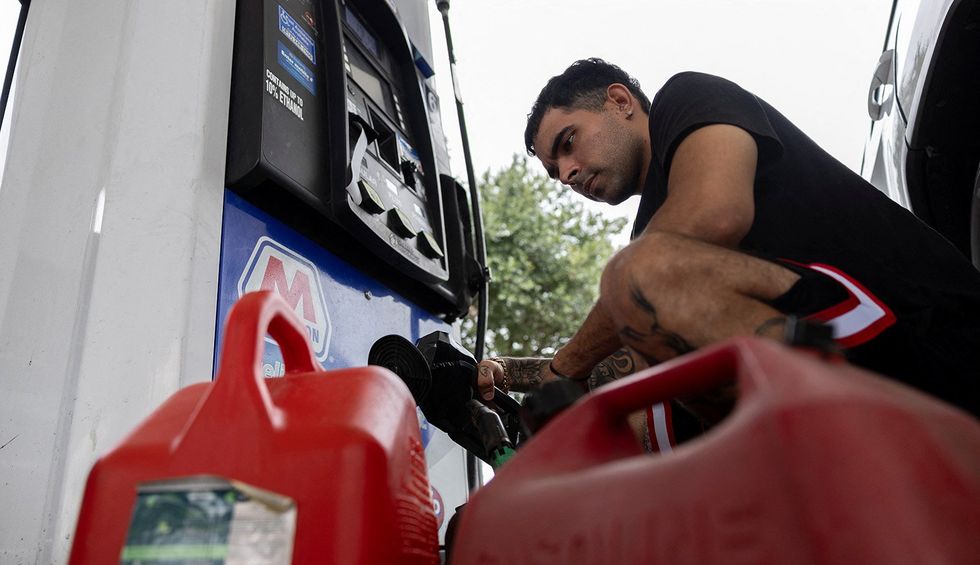
The metal handle is always colder than you expect at 6:15 AM. It’s a dull, biting chill that seeps through a thin glove, a minor indignity of the morning commute that most of us ignore. But this week, that cold metal carries a different kind of weight. You stand there, watching the digital red numbers on the pump display flicker and climb, and for the first time in months, the math doesn't just feel annoying. It feels aggressive.
Most people treat gas prices like the weather—an unpredictable act of God that you simply endure with a groan and a heavier foot. We see the headlines about "rapid surges" and "expert warnings," and we process them as white noise. We shouldn't. Behind those sterile percentages and fiscal forecasts lies a high-stakes game of geopolitical chicken, a crumbling refinery infrastructure, and the quiet erosion of the American Saturday afternoon.
Consider Sarah. She is a hypothetical person, but she is also everyone you know. She drives a 2018 crossover, works twenty-two miles from her front door, and keeps a mental spreadsheet of her checking account that would make a forensic accountant weep. Last week, filling her tank cost $48. This morning, as the sun barely crests the horizon, that same click of the shut-off valve signals a $56 hit.
Eight dollars.
In the grand halls of energy summits, eight dollars is a rounding error. In Sarah’s world, eight dollars is the difference between the "good" eggs and the ones that taste like cardboard. It’s a subscription she forgot to cancel. It’s the slow, steady leak in the hull of her monthly stability. When experts tell us to "brace" for a surge, they aren't talking about the numbers on the sign. They are talking about the bracing of the human spirit against a tide of rising costs that feels increasingly out of our control.
The Ghost in the Machine
To understand why your wallet is suddenly lighter, you have to look past the local station. We often blame the person behind the bulletproof glass at the convenience store, but they are just as much a victim of the tide as we are. The reality is a tangled web of "just-in-time" logistics that has finally run out of time.
We are currently witnessing a convergence of three distinct pressures. First, there is the seasonal shift. Every spring, like clockwork, refineries switch from "winter blend" to "summer blend" gasoline. The summer version is more expensive to produce because it's designed to be less volatile in the heat, preventing smog. It’s a noble environmental goal, but the transition is a logistical nightmare. Imagine trying to change the oil in a car while it’s doing eighty miles per hour on the interstate. That is what our refinery system does every March.
Second, we are dealing with the "maintenance debt." During the lean years of the early 2020s, many refineries pushed back their routine checkups to save cash. Now, the bill is due. Facilities across the Gulf Coast are offline for "planned turnarounds," which is a polite way of saying they are desperately scrubbing the pipes before something explodes. When supply drops and the weather warms up, the price doesn't just go up; it leaps.
Then, there is the shadow of the global stage. We live in an era where a single drone strike five thousand miles away or a localized skirmish in a shipping lane can add ten cents to a gallon of gas in Peoria by Tuesday. We are tethered to a global nervous system. When the world twitches, we pay for it at the pump.
The Psychology of the Surge
There is a specific kind of anxiety that comes with a rapid price hike. It’s different from the slow burn of general inflation. Gas prices are one of the only commodities in the world where the price is broadcast in six-foot-tall glowing numbers on every street corner. You don't see the price of milk or bread displayed on a monolith as you drive to work. Gasoline is a constant, unavoidable reminder of your purchasing power—or lack thereof.
This visibility creates a psychological feedback loop. When the "Expert" on the morning news warns of a surge, people rush to the stations. This micro-panic creates a localized spike in demand, which allows distributors to justify the very price hikes the experts predicted. It’s a self-fulfilling prophecy fueled by the fear of being the one left holding the empty tank.
I remember standing at a station in 2008, watching the numbers spin with a sort of morbid fascination. There was a man at the next pump, well-dressed but looking frayed at the edges. He stopped the pump at exactly twenty dollars. He didn't fill the tank. He couldn't. He was playing a game of tactical refueling, betting that he could make it to payday before the needle hit the red. That man isn't a statistic in a business report. He is the human reality of a "market correction."
The Invisible Stakes of the Commute
Why does this matter beyond the immediate hit to the bank account? Because the cost of gas is a tax on human connection.
When prices surge rapidly, the world gets smaller. You skip the trip to see your aging parents three towns over. You tell your kids that maybe this weekend we'll just stay home and watch a movie instead of going to the park or the museum. The "discretionary" miles are the first to go. These are the miles where life actually happens. The commute to work is mandatory; the drive to a friend’s house is a luxury.
When the price of a gallon jumps forty cents in seventy-two hours, it's not just a business headline. It's a contraction of the American social fabric. We become more isolated, more tethered to our immediate zip codes, and more resentful of the very infrastructure that is supposed to grant us freedom. The car, once the ultimate symbol of autonomy, becomes a ball and chain.
The Myth of the Simple Solution
It is tempting to look for a villain. We want to point a finger at a specific politician, a specific oil executive, or a specific foreign prince. And while policy and corporate greed certainly play their parts in the theater of energy, the truth is far more boring and far more terrifying: we are reliant on a system that is brittle.
Our energy independence is a fragile thing, built on the backs of aging pipelines and the whims of a global market that doesn't care about your grocery budget. We are told to "brace," as if we are preparing for a physical impact. In a way, we are. The impact is felt in the tightening of the chest when the total passes sixty dollars. It’s felt in the recalculated vacation plans. It’s felt in the way we look at our vehicles—not as tools of liberation, but as hungry mouths we can barely afford to feed.
There is no magic switch to flip. The "surge" is a symptom of a deeper fever. We have built a civilization that requires the constant, high-volume flow of an ancient, liquefied sunlight, and we have done so without a backup plan that includes the average person’s peace of mind.
The Ritual of the Pump
Tomorrow morning, millions of people will repeat the ritual. They will pull up to the pump, squint at the price, and perform a silent calculation. They will think about the "expert" they heard on the radio and wonder if they should have filled up yesterday. They will feel that slight, cold tremor in their hands—not from the morning air, but from the realization that their hard-earned money is being evaporated into the atmosphere just so they can earn more of it.
We shouldn't just "brace" for the surge. We should look at it for what it is: a reminder of our vulnerability. Every cent added to that total is a minute of our lives we’ll never get back, spent working to cover the cost of the movement required to work.
The pump clicks. The silence returns. You hang up the nozzle, the metal now warmed slightly by your grip. You get back in the car, check the rearview mirror, and pull out into the stream of red taillights. You are moving forward, but it has never felt more like you are standing still, watching the world get more expensive one gallon at a time.
The numbers on the sign will eventually go down. They always do, eventually. But the memory of the surge stays. It settles into the way we plan our lives, a quiet, nagging ghost that whispers that the ground beneath us isn't as solid as we thought. We aren't just paying for fuel. We are paying for the privilege of not having to admit how precarious it all really is.
The sun is fully up now. The traffic is thick. Somewhere, Sarah is deciding that the cardboard-tasting eggs aren't so bad after all.
The red numbers don't blink. They just wait for the next person to pull up, reach out, and take hold of the cold, metal handle.