The long-standing facade of the United Arab Emirates as a neutral, "business-first" sanctuary in the Middle East has finally shattered. While Abu Dhabi spent years positioning itself as the region's diplomatic bridge, recent intelligence indicates that Emirati forces have transitioned from defensive hedging to active, kinetic operations against Iranian soil. This is no longer a shadow war fought through proxies or balance sheets; it is a direct confrontation that has permanently altered the security architecture of the Persian Gulf.
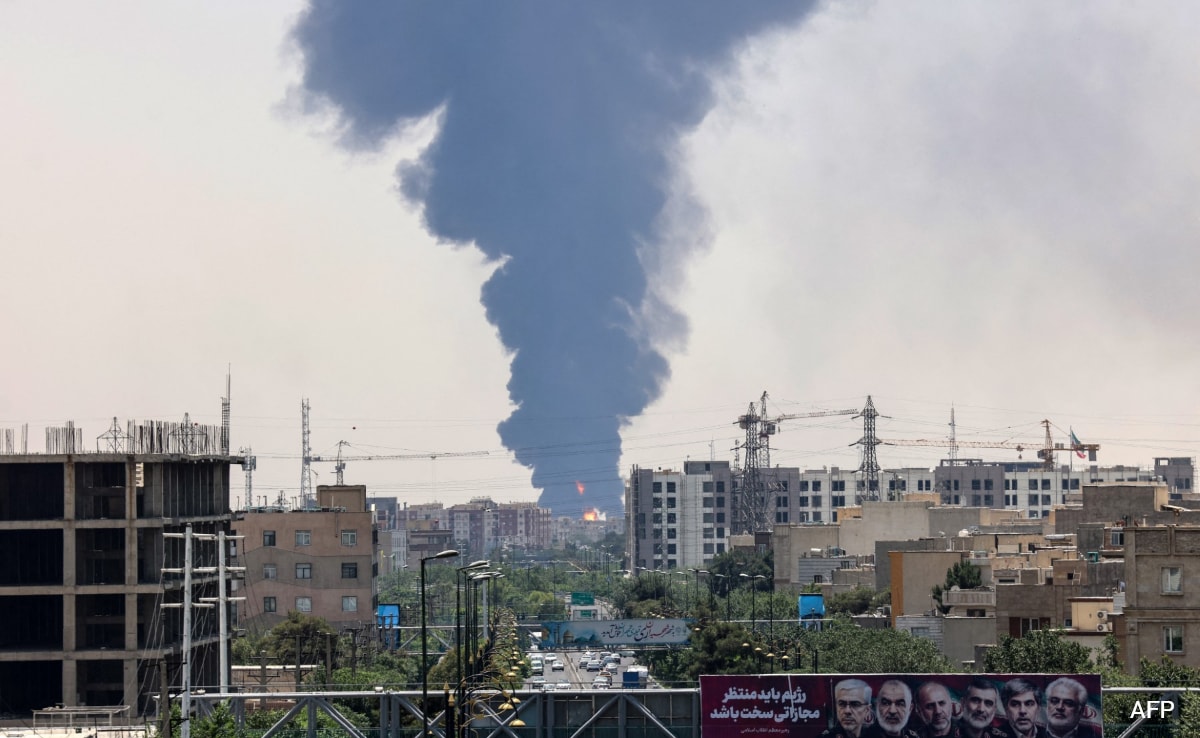
In early April 2026, Emirati forces carried out a high-stakes surgical strike against an oil refinery on Iran's Lavan Island. The operation, which disabled a significant portion of the facility’s output and triggered fires visible from satellite monitors, was never publicly claimed by the UAE government. However, it marked a definitive break from the "de-escalation" rhetoric championed by UAE officials since 2019. This strike was not an isolated incident but the culmination of a strategic pivot in which the Emirates, feeling the limits of American protection, decided to take the fight directly to Tehran.
The Lavan Island Gamble
The strike on the Lavan Island refinery was a calculated message. By hitting energy infrastructure, the UAE signaled that it could mirror the asymmetric tactics Iran has used for decades. For years, the UAE watched as Iranian-backed drones targeted its own tankers and airports. The Lavan operation was a "tit-for-tat" escalation designed to prove that the UAE is no longer a soft target.
The timing was particularly volatile. The attack occurred while the United States was attempting to broker a regional ceasefire following a five-week air campaign against Iranian assets. While Washington publicly called for restraint, the Biden and subsequent Trump administrations reportedly gave a "silent nod" to Abu Dhabi’s proactive stance. They viewed a more aggressive UAE as a necessary counterweight to Iranian regional hegemony, even if it meant risking a wider conflagration.
Tehran Strikes Back
Tehran’s response was swift, brutal, and disproportionate. Abandoning its usual reliance on groups like the Houthis or Hezbollah, Iran launched a direct barrage of over 2,800 projectiles—including ballistic missiles and sophisticated drone swarms—aimed specifically at Emirati and Kuwaiti soil. This was the most concentrated aerial assault the UAE has ever faced, dwarfing the volume of fire directed at Israel during the same period.
The damage was not merely military. It was existential for the Emirati economic model.
- Dubai International Airport: A drone swarm caused material damage to a terminal, forcing a temporary but damaging suspension of global air traffic.
- Real Estate Shock: The perceived invulnerability of Dubai and Abu Dhabi as "safe havens" evaporated overnight, with over $120 billion wiped from market capitalization across their stock exchanges.
- Tourism Fallout: Cancellation of over 18,000 flights led to mass furloughs in the hospitality sector, a pillar of the UAE’s non-oil economy.
Iran's message was equally clear: If the UAE wants to play the role of a regional military power, it must be prepared to watch its glass towers and luxury malls become the front lines.
The Failure of Defensive Hedging
For a decade, the UAE followed a policy known as hedging. It maintained deep trade ties with Iran (serving as Tehran’s primary window to the global market) while simultaneously hosting U.S. military bases and normalizing ties with Israel via the Abraham Accords. This delicate balancing act was meant to ensure that no matter who won the regional power struggle, the UAE remained open for business.
That strategy is now dead. The internal turmoil within Iran—marked by the "Winter Uprising" of 2026 and the functional decapitation of the regime's top leadership—created a power vacuum that forced Abu Dhabi’s hand. The UAE’s leadership concluded that a wounded, chaotic Iran was more dangerous than a stable, hostile one. By participating in secret strikes, the UAE effectively chose a side, betting that it could help dismantle the Iranian threat before the blowback became terminal.
The Cyber Front
While missiles flew over the Gulf, a more invisible and persistent war was being waged in the digital realm. The UAE's Cybersecurity Council reported that attacks on national infrastructure tripled in early 2026, reaching up to 700,000 attempts per day. Iranian-linked groups utilized generative AI to automate phishing and reconnaissance at a scale never before seen.
These were not just data breaches. They were attempts to sabotage water treatment plants, power grids, and the very data centers that power the UAE’s ambitious AI-driven future. Abu Dhabi has responded by deploying its own AI-based defensive systems, turning the region into a laboratory for the world's first large-scale, AI-driven cyber conflict.
A New Regional Reality
The UAE is no longer just a merchant kingdom. It is a belligerent. This shift has created a rift within the Gulf Cooperation Council (GCC). While the UAE has taken an aggressive posture, Saudi Arabia has focused on a "wartime footing" aimed at protecting its own industrial hubs, often displaying a different set of priorities than its neighbor in Abu Dhabi.
The cost of this new posture is immense. Maritime insurance premiums in the Gulf have spiked to levels that threaten the viability of the UAE as a global trade hub. The country is now faced with a stark choice: continue the secret offensive in hopes of a total Iranian collapse, or attempt to return to a status quo that no longer exists.
The Lavan Island strike proved the UAE can hit back. The 2,800 missiles that followed proved that hitting back comes with a price that may yet be too high for a nation built on the promise of stability. The era of the UAE as a neutral observer is over; the era of the UAE as a primary target has begun. Middle Eastern stability now rests on whether Abu Dhabi can manage the fallout of a war it no longer has the luxury of ignoring.