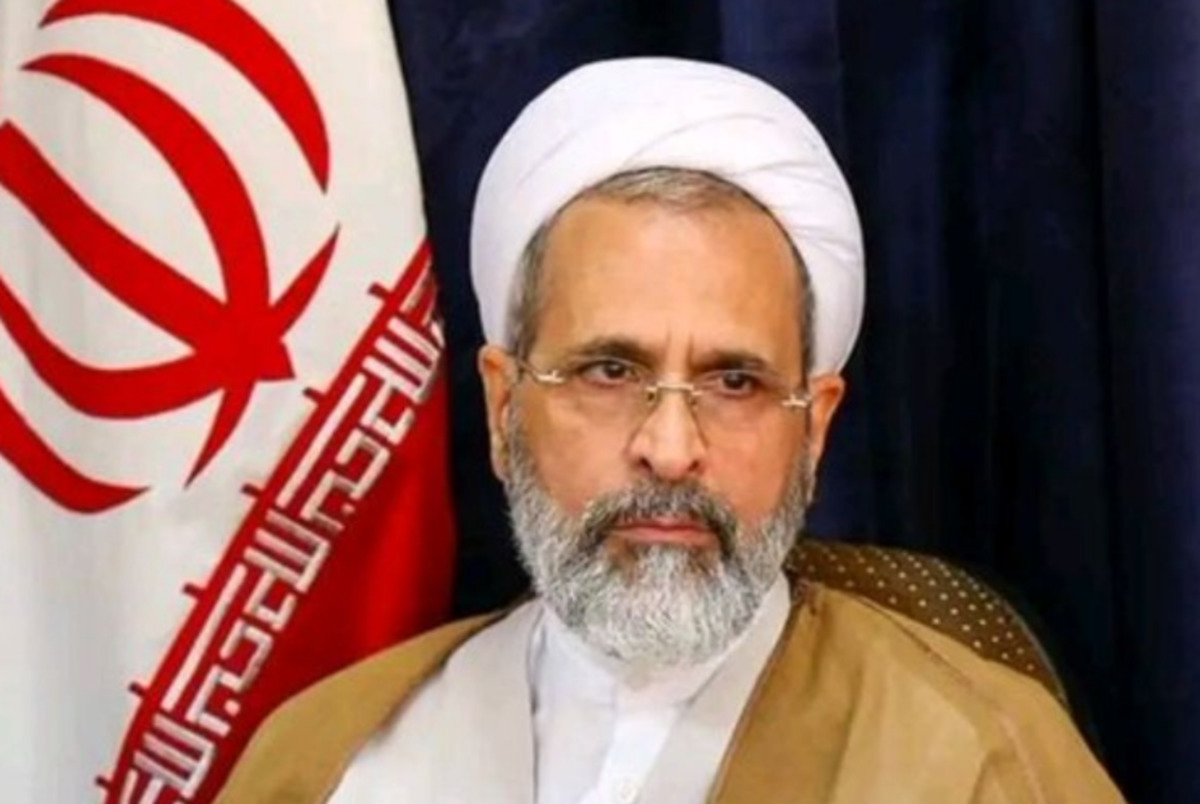
The rumors began as a ripple in the digital underground of Farsi-language Telegram channels before hitting the desks of Western intelligence analysts. The claim, bold and potentially destabilizing, suggests that the leadership transition within the Islamic Republic is not just stumbling—it is being physically dismantled. When John Bolton, a man whose career has been defined by a hawkish fixation on the Iranian regime, suggests that even an interim successor to the Supreme Leadership may have been eliminated, the geopolitical weight of the statement cannot be ignored.
This is not merely about a change in personnel. It is about the systemic collapse of a succession plan that was already under immense pressure. The sudden death of Ebrahim Raisi in a helicopter crash in May 2024 left a vacuum that the regime was unprepared to fill. If the reports of further high-level "disappearances" or assassinations are validated, Tehran is facing a decapitation strike from within or without that threatens the very foundation of the Velayat-e Faqih system.
The Fragility of the Shadow Cabinet
For decades, the path to the Supreme Leadership was seen as a carefully choreographed dance. Ali Khamenei, now octogenarian and long rumored to be in failing health, had spent years grooming a loyalist base. The goal was simple: ensure the survival of the revolutionary ideology by placing a reliable figure at the helm. Raisi was that figure. His sudden removal from the board was a catastrophic blow to the status quo.
In the immediate aftermath, the regime pivoted to an interim structure. This was a survival mechanism. By utilizing a council to manage affairs, the inner circle hoped to project an image of stability to a restive population and a watchful international community. However, an interim leader is a target. They lack the established protections and the long-ingrained security apparatus of a permanent Supreme Leader.
The claims currently circulating suggest that this interim layer is being systematically picked off. Whether through covert kinetic operations by foreign intelligence agencies or a bloody internal purge as factions scramble for power, the result is the same. The regime is losing its ability to provide a clear line of succession. This creates a feedback loop of paranoia. When the people at the top start looking over their shoulders, the lower echelons of the Islamic Revolutionary Guard Corps (IRGC) begin to question where their true loyalties should lie.
The Intelligence Breach and the Mossad Factor
One cannot discuss the elimination of Iranian leadership without addressing the elephant in the room: the sheer scale of the intelligence failure within Tehran. If these claims of an interim leader's demise are true, it indicates that the Iranian security state is a sieve.
Israel has demonstrated, time and again, an uncanny ability to strike deep within the heart of the Iranian capital. From the assassination of nuclear scientists to the daring theft of the atomic archive, the Mossad has proven that no one is truly untouchable. The psychological impact of this cannot be overstated. It forces the Iranian leadership into a defensive crouch. They spend more time hunting for moles within their own ranks than they do governing or projecting power abroad.
Total internal compromise is the only logical explanation for a series of high-profile "accidents" or targeted strikes. If the interim leader has indeed been "liquidated," as some sources suggest, it implies that his movements, his security detail, and his communication lines were all known to his enemies. This is a level of transparency that no authoritarian regime can survive for long.
The IRGC Power Struggle
While external actors are the most obvious suspects, the internal dynamics of the IRGC offer a more nuanced, and perhaps more dangerous, possibility. The Guards are not a monolith. They are a collection of economic and military interests that often find themselves at odds.
- The Pragmatists: Those who want to preserve the IRGC’s vast business empire and realize that constant escalation with the West is bad for the bottom line.
- The Ideologues: The hardliners who believe that the revolution must be exported at all costs, regardless of the economic or human toll.
- The Opportunists: Younger commanders who see the aging leadership as an obstacle to their own advancement.
In a vacuum of power, the "interim" status of a leader is an invitation for a coup. If the IRGC leadership feels that a proposed successor does not align with their specific interests, removing them becomes a matter of institutional survival. We are potentially witnessing a slow-motion civil war within the Iranian deep state.
The US Perspective and the Bolton Assertion
John Bolton’s involvement in this narrative adds a layer of calculated provocation. As a former National Security Advisor, Bolton retains connections to intelligence circles, but he is also a master of psychological warfare. By giving credence to the idea that the interim leadership has been neutralized, he is effectively pouring gasoline on the fire of Iranian internal paranoia.
The US strategy has shifted. While the official line may still involve diplomacy and sanctions, the reality on the ground is a "maximum pressure" campaign that has moved beyond economics. The objective is no longer just to bring Iran to the negotiating table, but to force a fundamental collapse of the current governing structure.
The elimination of leadership candidates is a classic tactic in regime change. If there is no clear successor, the regime enters a state of perpetual crisis. Every day spent arguing over who is in charge is a day they are not coordinating their proxies in Lebanon, Yemen, or Iraq. It is a strategy of attrition through chaos.
The Economic Ghost in the Machine
Amidst the high-stakes assassinations and intelligence games, the Iranian economy remains the most significant threat to the regime’s longevity. The rial has hit record lows, and inflation is a permanent fixture of daily life. The leadership knows that a hungry population is a dangerous one.
Succession crises exacerbate economic woes. Investors—even those from "friendly" nations like China or Russia—are hesitant to commit capital to a country where the head of state might be killed in a "helicopter accident" or a targeted strike every few months. This isolation accelerates the rot.
The regime’s response has been to double down on repression. More executions, more digital surveillance, and more crackdowns on any form of dissent. But you cannot execute your way out of a succession crisis. If the top tier of the government is being thinned out, the enforcement mechanisms will eventually lose their direction. A security force without a clear commander is just a mob with guns.
The Question of the Next Supreme Leader
The search for the next Supreme Leader has moved from a quiet deliberation to a desperate scramble. Mojtaba Khamenei, the son of the current Supreme Leader, has long been rumored as a candidate. However, the hereditary nature of such a move would be a betrayal of the very revolutionary principles the regime claims to uphold. It would also be a hard sell to the IRGC, who have no desire to see a dynastic monarchy 2.0.
If the interim leaders—the "safe" choices—are being eliminated, it leaves the regime with only two options:
- A hardline military takeover where the IRGC drops the pretense of clerical rule.
- A collapse into factional infighting that leads to a broader social uprising.
Neither of these options provides the stability the clerics crave. The "interim" phase was supposed to be a bridge to safety. Instead, it has become a killing field.
The Technical Reality of Modern Assassination
We must also consider the "how." Modern technology has fundamentally changed the risk profile for world leaders. We are no longer in the era of simple sniper shots.
$$P_{success} = 1 - (1 - p)^n$$
In this simplified probability model, the chance of a successful strike ($P_{success}$) increases exponentially as the number of attempts ($n$) or the vulnerability of the target ($p$) grows. For an Iranian leader, $p$ is currently at an all-time high. Satellite surveillance, drone technology, and signals intelligence (SIGINT) mean that a target can be tracked in real-time with terrifying accuracy.
The IRGC’s traditional counter-intelligence methods are based on 20th-century models. They are struggling to adapt to a world where a single compromised smartphone can lead a missile to a "secret" bunker. This technological gap is a death sentence for the current leadership cadre.
Beyond the Headlines
The news of an interim leader’s demise should be viewed through the lens of a broader disintegration. The Islamic Republic is a system built on the premise of divine legitimacy and absolute control. Both of those pillars are crumbling.
When the "shadow" leaders start disappearing, the shadow itself begins to vanish. What is left is a regime exposed, vulnerable, and increasingly desperate. The international community must look beyond the immediate shock of the headlines and prepare for a Middle East where the central authority in Tehran is no longer a given.
The strategy for the West should not just be to watch the house burn, but to consider what will rise from the ashes. A fragmented Iran, led by competing warlords or IRGC factions, presents a different but equally complex set of challenges for global security.
The era of the "Eternal Revolution" is reaching its terminal phase. The elimination of interim leaders is not just a series of isolated events; it is the sound of the clock ticking down. The regime is running out of names, running out of time, and most importantly, running out of people who believe in its survival.
Monitor the movement of the IRGC’s Quds Force and the activity in the corridors of the Assembly of Experts. Those who remain will be the ones forced to decide if they go down with the ship or attempt a radical pivot that the world has not seen since 1979. The next move won't be a diplomatic one. It will be a survival one.