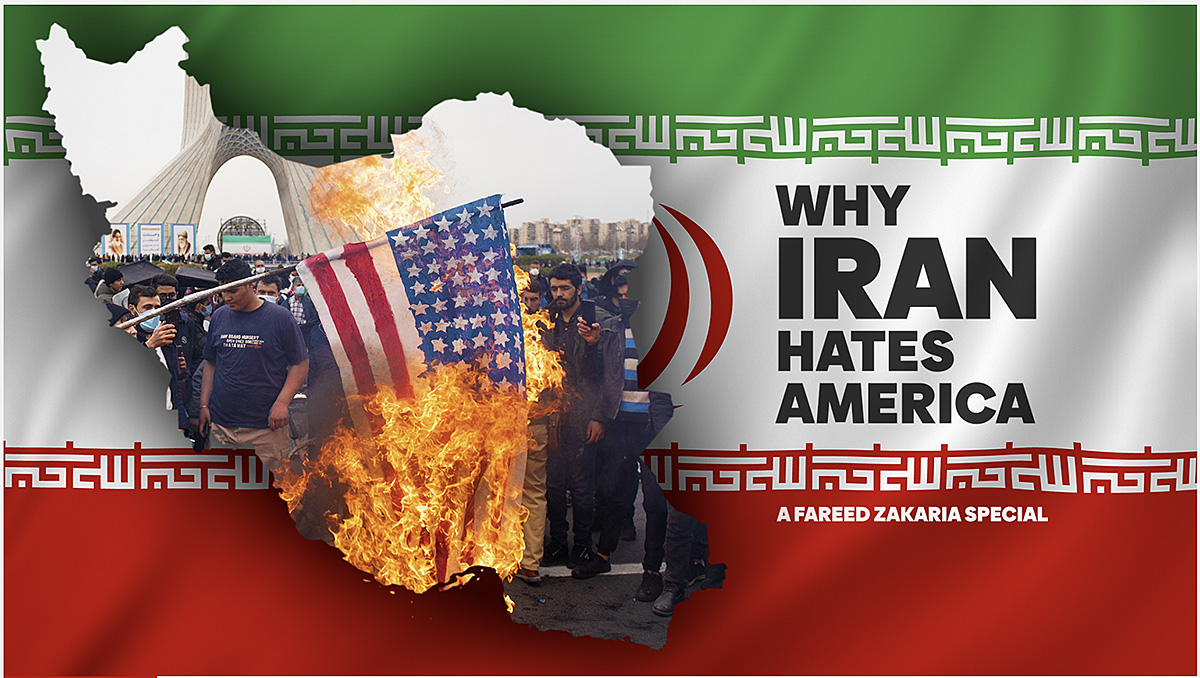
The tension between Washington and Tehran isn't some random historical fluke. It’s a deep-seated, systemic grudge that has defined Middle Eastern geopolitics for nearly half a century. If you’re looking for a simple "good guys vs. bad guys" narrative, you won't find it here. The reality is a messy, blood-soaked ledger of broken promises, covert operations, and radical ideology that keeps both nations locked in a cycle of mutual distrust.
Most people think this all started with the 1979 Hostage Crisis. While that was the point of no return, the seeds were planted way earlier. To understand why these two countries are still at each other's throats in 2026, we have to look at the wreckage of 1953. You might also find this related article useful: Strategic Asymmetry and the Kinetic Deconstruction of Iranian Integrated Air Defense.
The Original Sin of 1953
The United States often talks about spreading democracy, but in 1953, it did the exact opposite in Iran. Mohammad Mossadegh was the popular, democratically elected Prime Minister who had the audacity to suggest that Iran’s oil should belong to Iranians, not the British. The CIA and MI6 didn't like that. They orchestrated Operation Ajax, a coup that toppled Mossadegh and consolidated power in the hands of Mohammad Reza Pahlavi, the Shah.
For the next 25 years, the Shah was "our guy" in the region. He modernized the country, sure, but he did it with a brutal secret police force called SAVAK. Iranians didn't forget that the U.S. put him there. When the 1979 Revolution finally boiled over, it wasn't just against a king; it was against the foreign power holding up his throne. As discussed in detailed articles by NBC News, the implications are notable.
The 1979 Breaking Point
The Islamic Revolution changed everything. It replaced a pro-Western monarchy with a clerical theocracy led by Ayatollah Khomeini. This wasn't just a change in government; it was a total rejection of Western influence. Then came the event that scarred the American psyche: the seizure of the U.S. Embassy in Tehran.
For 444 days, 52 Americans were held hostage. It played out on nightly news across America, turning Iran into a permanent villain in the eyes of the public. For Iranians, the embassy was a "nest of spies" where they feared another 1953-style coup was being planned. The trust was gone. It hasn't come back.
A War of Proxies and Shadows
Since 1979, the two countries haven't fought a formal, declared war. Instead, they’ve spent decades killing each other’s interests through third parties. This is where the conflict gets incredibly dangerous.
- The Iran-Iraq War: During the 1980s, the U.S. supported Saddam Hussein’s Iraq with intelligence and credits, even as he used chemical weapons against Iranians. Iran remembers this as "The Imposed War."
- The "Tanker War": In 1988, the U.S. Navy and Iranian forces had several direct skirmishes in the Persian Gulf. The U.S. accidentally shot down Iran Air Flight 655, a civilian airliner, killing 290 people. Washington called it a mistake; Tehran called it a massacre.
- Regional Influence: Iran uses the "Axis of Resistance"—groups like Hezbollah in Lebanon, various militias in Iraq, and the Houthis in Yemen—to project power. The U.S. sees these as terrorist proxies. Iran sees them as a forward defense against American "imperialism."
The Nuclear Headache
The biggest flashpoint right now is Iran’s nuclear program. Iran says it’s for power and medical research. The U.S. and Israel are convinced it’s for a bomb. The 2015 JCPOA (the Iran Nuclear Deal) was supposed to fix this. It was a landmark moment where both sides actually sat down and talked.
Then the U.S. pulled out in 2018.
This move reinforced the hardliners in Tehran who always said the U.S. couldn't be trusted. Now, Iran’s enrichment levels are higher than ever. We’re in a standoff where nobody wants a full-blown war, but nobody knows how to back down without looking weak.
It’s Not Just Politics, It’s Identity
The U.S. views itself as the "indispensable nation," the guarantor of global order and maritime trade. Iran views itself as a historic civilization that refuses to be bullied by "the Great Satan." These are two nations with massive egos and very different ideas of how the world should work.
Domestic politics also play a huge role. In Washington, being "tough on Iran" is a bipartisan requirement. In Tehran, "Death to America" remains a foundational slogan for the ruling elite, even if much of the younger Iranian population is desperate for a normal relationship with the world.
Why it Matters to You Right Now
You might wonder why you should care about a feud happening thousands of miles away. It's simple: oil and stability.
- Gas Prices: Iran sits right on the Strait of Hormuz. About 20% of the world's liquid petroleum passes through that narrow waterway. If a hot war breaks out, your wallet feels it immediately.
- Cyber Warfare: Both countries are constantly hacking each other. These digital skirmishes often spill over into private sectors, affecting businesses and infrastructure far beyond the Middle East.
- Global Security: A nuclear-armed Iran would likely trigger a nuclear arms race in the Middle East, with Saudi Arabia and others looking to get their own. That’s a world nobody wants to live in.
Is there a way out?
Realistically? Probably not anytime soon. The baggage is too heavy. Both governments use the other as a convenient "bogeyman" to distract from internal problems. For the U.S., Iran is a useful villain to justify military spending and regional alliances. For the Iranian leadership, the "American threat" is the only thing keeping their revolutionary narrative alive.
If you want to stay ahead of this, stop looking for a peace treaty and start looking for "de-confliction." The best we can hope for is a series of small, quiet agreements that keep the ships moving and the missiles in their silos.
If you're tracking this situation, pay attention to three things:
- Reports from the International Atomic Energy Agency (IAEA) on Iran's uranium enrichment levels.
- The frequency of drone strikes on U.S. bases in Iraq and Syria.
- Any direct "back-channel" talks mediated by countries like Oman or Qatar.
These are the real indicators of whether we're heading toward a quiet stalemate or a loud explosion. The history is written, but the next chapter is being typed out in real-time through proxy skirmishes and late-night diplomatic cables. Don't expect a handshake on the White House lawn anytime soon. Expect more of the same: a tense, dangerous, and very expensive status quo.


