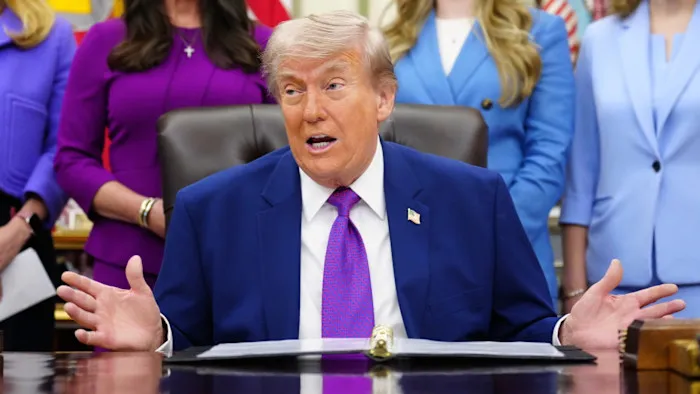
Donald Trump wants to add a 51st star to the American flag, and he has his sights set on the world’s largest oil reserves. In a move that has sent shockwaves from Caracas to The Hague, the U.S. President recently confirmed he is "seriously considering" the annexation of Venezuela. The justification is simple, transactional, and classic Trump: the country is sitting on $40 trillion worth of crude, and in his view, "to the winner belong the spoils."
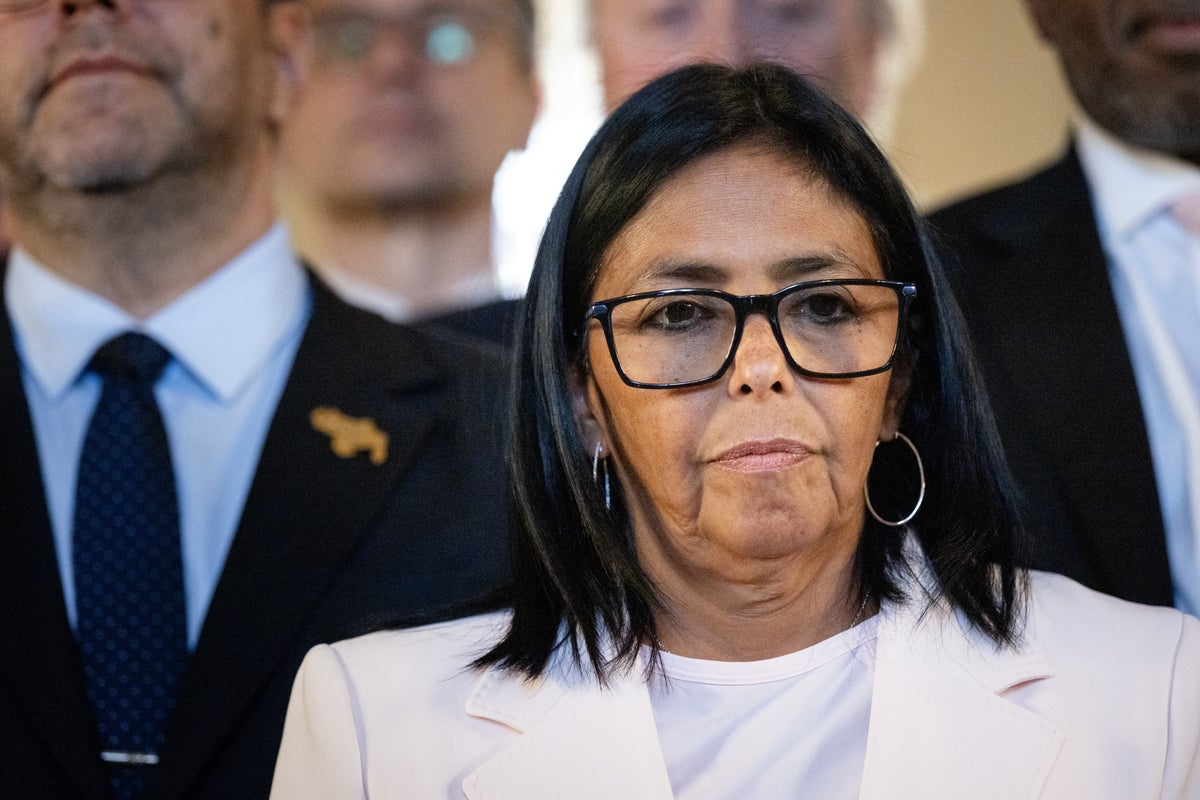
Acting Venezuelan President Delcy Rodríguez, currently navigating the aftermath of a U.S. military operation that removed Nicolás Maduro in January, has been forced into a delicate rhetorical dance. Speaking from the International Court of Justice in The Hague on Monday, Rodríguez dismissed the notion of statehood, insisting that Venezuela is "not a colony, but a free country." Yet, her rejection carries a hollow ring when contrasted with the reality on the ground—a nation where U.S. oil rigs are returning in force and where the acting administration exists largely by the grace of Washington’s "stability phase."
The Spoils of Absolute Resolve
The current crisis is the direct result of "Operation Absolute Resolve," the January 3 mission that saw U.S. special forces seize Nicolás Maduro and whisk him to New York to face drug trafficking charges. Since then, the political vacuum has been filled not by the democratic opposition led by María Corina Machado, but by a pragmatic, if uneasy, partnership between the U.S. and the remnants of the Chavista establishment.
Trump’s interest in Venezuela is openly extractive. He has cited the country's massive offshore oil deposits—currently producing nearly a million barrels a day—as the primary reason for a permanent U.S. presence. For a president who views foreign policy through the lens of a balance sheet, the math is irresistible. By bringing Venezuela into the union, the U.S. would not just secure its energy future; it would control the pricing levers of the global economy.
The Statehood Gambit
The logistics of making Venezuela the 51st state are, to put it mildly, a constitutional nightmare. It would require the consent of a U.S. Congress that is already deeply polarized over the cost of the January intervention. Furthermore, it would necessitate a level of integration that neither the American public nor the Venezuelan people have shown a desire for.
However, Trump’s rhetoric serves a more immediate purpose. By floating the idea of statehood, he exerts maximum leverage over the Rodríguez administration. It is a "good cop, bad cop" routine played by one man. On one hand, he praises Rodríguez for being "cooperative"; on the other, he threatens to erase her country’s sovereignty entirely if the flow of oil or the "stability" of the region is compromised.
The geopolitical implications are equally messy.
- Regional Sovereignty: Latin American neighbors like Brazil and Colombia, already wary of U.S. "imperialism," view the talk of annexation as a return to the 19th-century Monroe Doctrine.
- The Essequibo Factor: Rodríguez was in The Hague to defend Venezuela's claim to the Essequibo region, an oil-rich territory currently held by Guyana. Trump’s statehood comments complicate this claim; if Venezuela becomes the 51st state, does the U.S. inherit a border war with Guyana?
- The Opposition Snub: By backing Rodríguez and floating statehood, Trump has effectively sidelined the democratic movement led by María Corina Machado. Despite her Nobel Peace Prize and her likely victory in the disputed 2024 election, she remains in exile, watching as Washington prioritizes "beautiful rigs" over the ballot box.
The Business of Stability
Inside Caracas, the "stability phase" looks less like a transition to democracy and more like a corporate takeover. U.S. energy giants are already preparing to invest upward of $100 billion to rebuild crumbling infrastructure. The goal is to push production back toward the 3 million barrels per day mark seen in the 1990s.
For the average Venezuelan, the choice is increasingly between the familiar authoritarianism of the past and a future as a de facto U.S. protectorate. The economy has stabilized slightly since Maduro’s removal, but the promised "freedom" remains elusive. When asked about a timeline for new elections, Rodríguez’s response was telling: "Someday."
Trump’s "51st state" talk may be a negotiation tactic or a genuine imperialist ambition, but for the people of Venezuela, it signifies a transition from one form of control to another. The oil is flowing, the rigs are "beautiful," and the sovereignty of the nation is being traded for a seat at a table where they may never be allowed to sit.
The American flag has not added a star since 1959. If Trump gets his way, the 51st star will be fueled by Venezuelan crude, regardless of whether the people of Caracas ever get to vote on it.