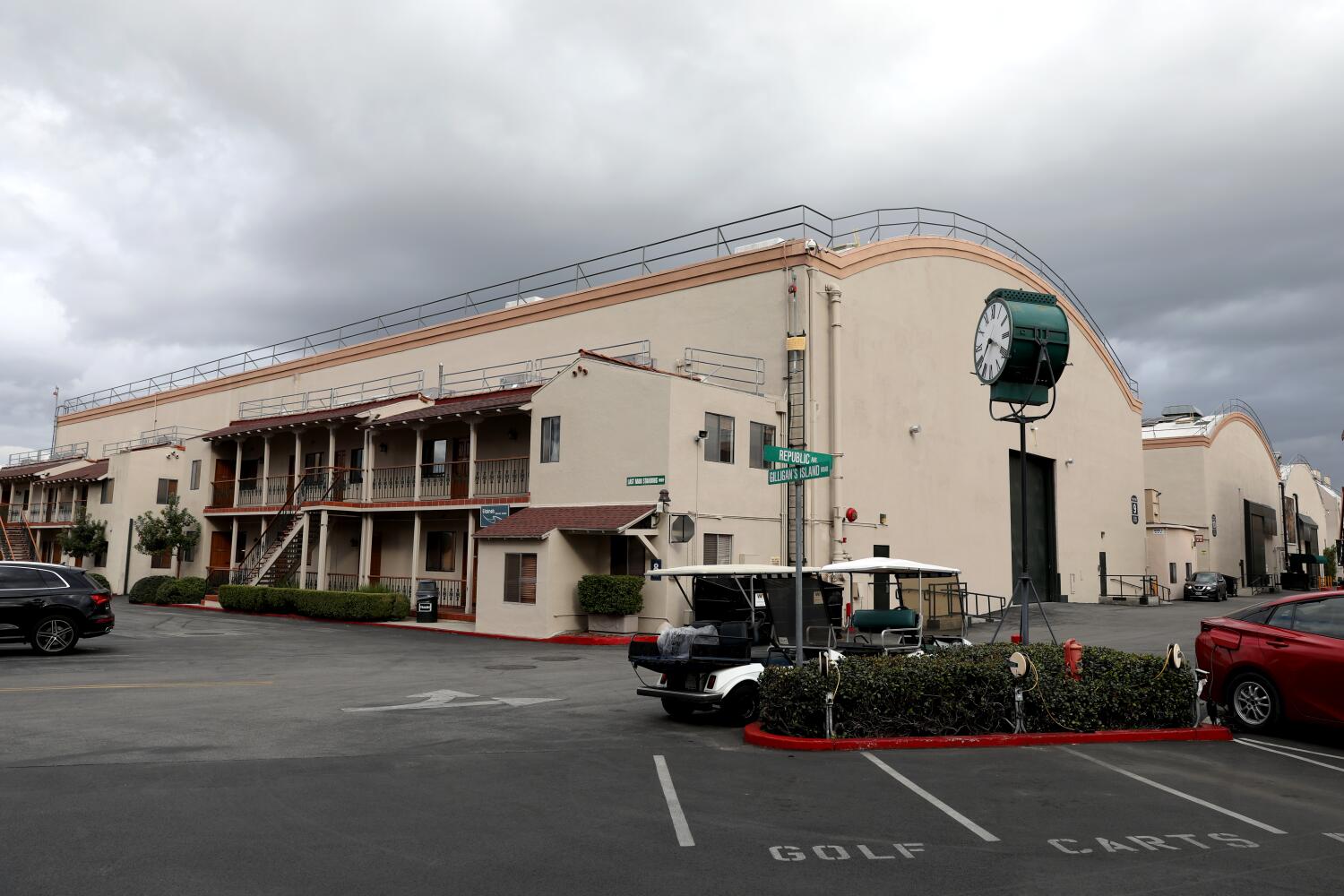
Netflix’s shift from a content aggregator to a primary infrastructure owner represents the final stage of its evolution into a legacy-style studio conglomerate. The acquisition of the Radford Studio Center—a historic 40-acre site in Studio City—is not a vanity play for Hollywood heritage; it is a calculated move to de-risk production pipelines and internalize the escalating costs of physical space in a supply-constrained market. By transitioning from a tenant to a landlord, Netflix is addressing a structural bottleneck that has plagued the streaming industry since the 2020 production surge: the scarcity of soundstage "turnaround" time.
The Production Infrastructure Deficit
The primary driver behind this acquisition is the decoupling of content demand from physical capacity. While digital distribution scales infinitely, the physical production of high-fidelity scripted content remains tethered to a finite number of soundstages within the Los Angeles "Thirty-Mile Zone" (TMZ). The Radford Studio Center provides 18 soundstages and over 200,000 square feet of production office space. In an environment where stage occupancy rates in Los Angeles have historically hovered above 90%, owning the asset eliminates the "rent premium" paid to third-party operators like Hackman Capital Partners or Hudson Pacific Properties.
This move addresses three distinct operational variables:
- Schedule Elasticity: When Netflix rents a stage, it is bound by rigid lease terms. If a production is delayed by a month due to talent availability or reshoots, the daily burn rate includes the opportunity cost of the next tenant waiting in the wings. Ownership allows Netflix to absorb these delays without external penalties.
- IP Proximity: Radford’s location in the San Fernando Valley places it at the geographic heart of the industry's labor force. Reducing commute times for "Above-the-Line" (ATL) talent and "Below-the-Line" (BTL) crews reduces the per-diem and transportation costs baked into every production budget.
- Ancillary Monetization: Owning a historic lot allows for the consolidation of post-production suites, prop storage, and wardrobe facilities, which are typically fragmented across the city.
The Unit Economics of Ownership vs. Leasing
To understand the strategic value of Radford, one must examine the capital expenditure (CapEx) vs. operating expenditure (OpEx) trade-off. Traditionally, Netflix functioned as a light-asset company. However, as interest rates shifted and the cost of debt increased, the recurring OpEx of leasing soundstages became a permanent drag on free cash flow.
Purchasing Radford allows Netflix to capitalize its production costs. Instead of millions in non-recoverable lease payments, the company is building equity in prime Los Angeles real estate. This asset serves as a hedge against inflation in the local property market and provides a collateralized base for future corporate financing.
The financial logic follows a specific cost function:
$$C_{total} = (L \times R) + E$$
Where $L$ is the length of the production, $R$ is the daily rental rate of the stage, and $E$ is the external logistical overhead. By owning the facility, Netflix effectively reduces $R$ to the cost of maintenance and taxes, while significantly lowering $E$ through centralized management.
Strategic Moats and Competitor Displacement
The acquisition is also a defensive maneuver. For decades, Radford Studio Center (formerly CBS Studio Center) served as a neutral ground where multiple networks and streamers produced content. Shows like Seinfeld, The Mary Tyler Moore Show, and more recently, various Marvel productions, utilized this space.
By taking Radford off the open market, Netflix creates a "Capacity Moat." It is not just about where Netflix will film; it is about where Disney+, Amazon Prime, and Apple TV+ can no longer film. In the high-stakes world of prestige television, forcing a competitor to move their production to a secondary market (like Santa Clarita or the Inland Empire) or an out-of-state hub (like Atlanta or Albuquerque) imposes a "friction tax" on that competitor. This friction manifests as higher travel costs, difficulty in securing top-tier local crew, and reduced oversight capabilities for LA-based executives.
The Legacy Studio Blueprint
Netflix is effectively recreating the Paramount/Warner Bros. model of the mid-20th century. This vertical integration allows for a "factory floor" approach to content. When a studio owns the lot, they control the entire ecosystem:
- Security and Leaks: In-house facilities allow for tighter control over physical sets, preventing the unauthorized photography of high-profile IP.
- Technological Integration: Netflix can outfit Radford with proprietary "Volume" technology (LED walls for virtual production) without needing permission from a landlord or having to tear down the tech at the end of a lease.
- Talent Retention: Offering a stable, high-end working environment in a prestigious location is a non-monetary perk that can tip the scales when competing for showrunners.
The risk, however, is the "Goldman Sachs effect" of real estate: the risk of over-leveraging during a period of content contraction. As the "Streaming Wars" pivot from growth-at-all-costs to a focus on profitability, maintaining a 40-acre campus requires significant ongoing investment. If Netflix’s production volume ever dips significantly, Radford could transition from a strategic asset to a "stranded asset"—a massive fixed cost that cannot be easily scaled down.
Technological Transformation of Radford
The next phase for Radford under Netflix ownership will likely involve a massive digital overhaul. Existing soundstages are often decades old, designed for the multicam sitcom era. Netflix’s requirement for 4K, HDR, and Atmos-ready environments necessitates a structural upgrade of the power grids and data infrastructure within these buildings.
We can expect the integration of:
- Direct-to-Cloud Workflows: Hardwiring the stages with high-speed fiber that connects directly to Netflix’s AWS-based post-production pipeline. This eliminates the "sneakernet" of physically moving hard drives from the set to the edit suite.
- Sustainability Mandates: Retrofitting the lot with solar arrays and EV charging infrastructure to meet corporate ESG goals, which is significantly easier when the company owns the deed.
The Real Estate Micro-Market Impact
The Radford acquisition signals a permanent shift in the Studio City and North Hollywood micro-markets. Historically, these areas served as affordable alternatives to Hollywood or Burbank. With Netflix anchoring a permanent, high-tech workforce at Radford, we will see an inevitable "gentrification of production." This includes the development of boutique hotels, high-end catering, and specialized equipment rental houses orbiting the Radford gate.
While this creates a localized economic boom, it further raises the barrier to entry for independent filmmakers and smaller production companies who previously relied on Radford’s flexibility. The "democratization of content" through streaming has met its match in the "monopolization of space."
Strategic Recommendation
Netflix must resist the urge to use Radford exclusively for its own productions during the transition phase. To maximize the asset's utility, the company should maintain a "dual-use" protocol: prioritizing high-priority internal IP while leasing out underutilized stages to third-party productions on short-term, high-margin contracts. This ensures the facility remains cash-flow positive even during seasonal lulls in Netflix’s own production cycle. Furthermore, the company should immediately begin the entitlement process for vertical expansion on the site. In the Los Angeles land-use environment, the ability to add square footage—whether through multi-story soundstages or high-density office space—is the only way to future-proof the investment against the rising cost of land. Ownership is the first step; densification is the second. All future capital allocations regarding physical infrastructure should prioritize "proximity to talent" over "lower land cost" in secondary markets, as the efficiency gains of the TMZ far outweigh the tax incentives of distant locales.