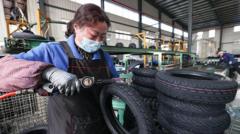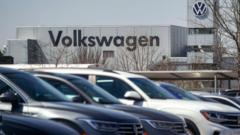
Volkswagen isn't just trimming the fat anymore; it's cutting into the bone. The news that Europe’s largest automaker will slash 50,000 jobs by 2030 marks a desperate pivot for a giant that's historically been too big to fail. This isn't a minor seasonal adjustment. It’s a full-blown admission that the old way of building cars in Germany is broken.
If you’ve been following the industry, you know the numbers are ugly. VW's operating profit for 2025 basically fell off a cliff, dropping over 50% to roughly €8.9 billion. For a company that brings in over €320 billion in revenue, walking away with a measly 2.8% margin is embarrassing. It means for every €40,000 car they sell, they're only keeping about €1,120 before taxes. You can't run a global empire on those kinds of scraps. Also making news lately: The Jurisdictional Boundary of Corporate Speech ExxonMobil v Environmentalists and the Mechanics of SLAPP Defense.
The Perfect Storm Hits Wolfsburg
The collapse didn't happen in a vacuum. It’s the result of three massive, simultaneous hits that management simply didn't see coming—or at least didn't prepare for.
- The China Problem: China used to be VW's ATM. Now, it’s a battlefield. Local brands like BYD are eating VW's lunch with cheaper, tech-heavy electric vehicles. VW's sales in China dropped 6% last year, and their EV sales there plummeted by over 40%.
- The Tariff Trap: U.S. import tariffs of 27.5% slapped a €2 billion tax bill on the company’s exports. When your margins are already thin, a multibillion-euro hit from Washington is a knockout blow.
- The Luxury Meltdown: Usually, when the "People’s Car" brand struggles, Porsche and Audi save the day. Not this time. Porsche’s operating profit virtually evaporated in 2025, falling 98% because they had to pause their aggressive EV transition due to sluggish demand.
CEO Oliver Blume is calling this a "fundamentally different environment," which is corporate-speak for "the world changed and we're late." Further details on this are detailed by Harvard Business Review.
Why the 50,000 Number Matters
Initially, the plan was to cut 35,000 jobs. Raising that target to 50,000 tells us the "Zukunft Volkswagen" (Future Volkswagen) plan needs more aggressive surgery. These cuts are focused on Germany, where labor costs and energy prices are some of the highest in the world.
The strategy here is "natural attrition." They aren't doing mass layoffs in the traditional sense yet. They're using early retirement and voluntary buyouts to let the workforce shrink as people leave. It’s a softer touch designed to keep the powerful German unions from burning the house down, but it also means the restructuring will take years to fully realize.
Breaking Down the Savings Plan
VW needs to find €16 billion in annual savings. Here is where they expect the money to come from:
- Labor Costs: Trimming the headcount and freezing wage hikes should save about €1.5 billion a year.
- Productivity: Closing symbolic plants like the "Transparent Factory" in Dresden—which is being turned into an AI and robotics hub—signals an end to expensive "prestige" projects.
- Complexity: They’re killing off low-volume models and focusing on a massive "product campaign" to win back China.
What This Means for You
If you're an investor, the market actually liked this news. Shares jumped nearly 4% after the announcement. Why? Because the market hates uncertainty more than it hates job cuts. Seeing management finally grab the scalpel provides a glimmer of hope that the 2026 forecast of a 4% to 5.5% margin is actually reachable.
If you’re a consumer, expect fewer "weird" VW models and a more aggressive push into affordable EVs. The company knows it can't survive selling €50,000 electric SUVs that nobody wants. They need to get back to the "Volkswagen" name—the People’s Car—by making tech that's actually accessible.
The Strategy for 2026 and Beyond
The goal for 2026 isn't world domination; it's survival and stabilization. They’re launching 30 new models this year to try and spark some life into their showrooms. But the real test will be whether they can fix their software issues. The subsidiary CARIAD has been a disaster, burning billions on buggy code that delayed key Audi and Porsche launches. Blume has essentially surrendered on building everything in-house, moving toward a model where VW acts as an integrator for external tech partners.
Honestly, the next 24 months will determine if Volkswagen remains a top-tier global player or becomes a regional European legacy brand. They have the cash—about €34.5 billion in net liquidity—but they're burning through it fast.
Next Steps for Tracking the VW Recovery
- Watch the China Monthly Sales: If VW can't stabilize their 10% market share in China, the 50,000 job cuts will just be the beginning.
- Monitor the Dresden Transition: The conversion of the Dresden plant into an AI hub is a litmus test for whether VW can actually pivot from "hardware company" to "tech company."
- Check Porsche’s Q2 Earnings: If the luxury margins don't bounce back to double digits, the entire Group's R&D budget for EVs will stay under heavy pressure.