The map on the wall of a high-level briefing room in Washington or Brussels doesn't look like the map on your phone. On those maps, Iran is often shaded in a singular, ominous color, framed by arrows representing pressure, sanctions, and "maximum impact." For years, the prevailing logic in these rooms was mathematical. If you subtract enough oil revenue, divide the society by internal pressure, and multiply the isolation, the result must be a zero. Total collapse.
But mathematics is a poor tool for measuring the human spirit.
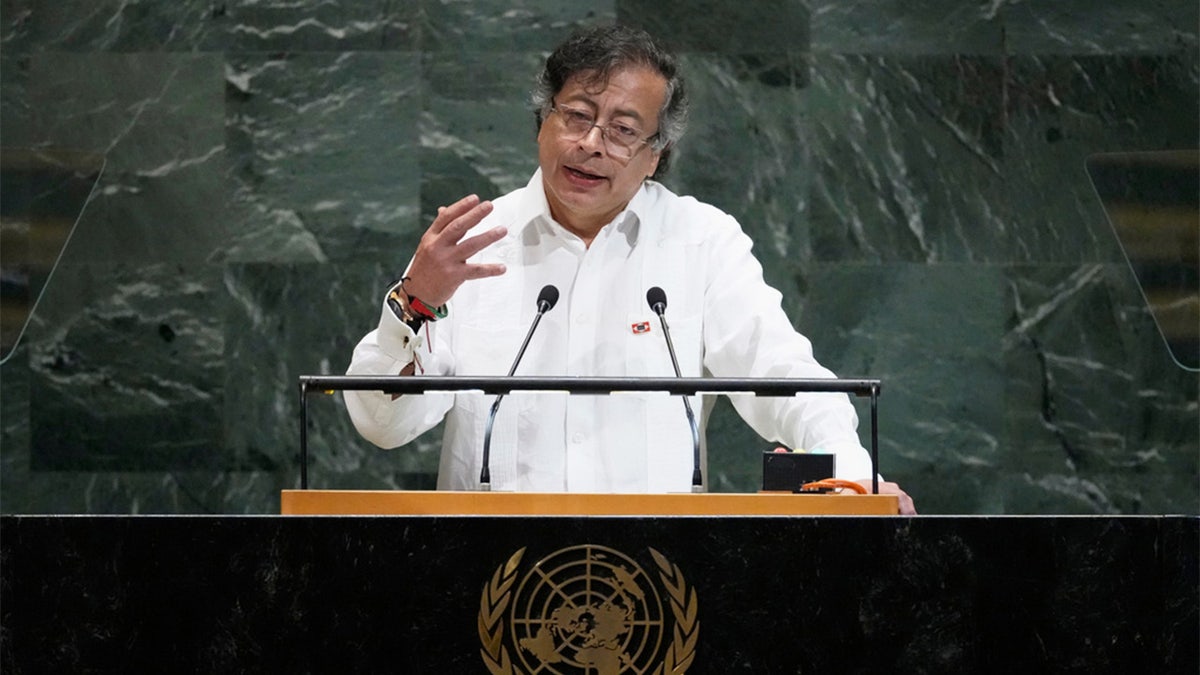
Masoud Pezeshkian, standing before a crowd of veterans and officials recently, spoke of a "dream." It wasn't a hopeful dream, but the specific, calculated fantasy of Iran’s adversaries: the belief that the nation was a house of cards waiting for a stiff breeze. He spoke of "national resistance," a term that sounds like dry political jargon until you see it through the eyes of a shopkeeper in Isfahan or a nurse in Tehran.
To understand why the predicted collapse never came, we have to look past the headlines and into the grit of daily survival.
The Weight of the Invisible Hand
Imagine a father named Reza. He is not a politician. He is a craftsman who works with metal. For a decade, Reza has watched the price of raw materials climb like a mountain goat. Every time a new headline flashes about "crippling sanctions," he feels a phantom weight on his shoulders. The world outside wants him to break. They want him to look at his empty workbench and blame his own geography, his own history, his own leaders until he takes to the streets in a desperate, final rage.
This is the psychological architecture of modern warfare. It isn't fought with lead, but with the cost of bread.
Yet, Reza didn't break. He adapted. He found local suppliers. He fixed old machines that should have been scrapped. He participated in what Pezeshkian calls the "shattering" of the enemy's dream. When the President speaks of resistance, he isn't just talking about missiles or centrifuges. He is talking about the stubborn, quiet refusal of millions of Rezas to let their lives become a footnote in a foreign policy white paper.
The strategy of "maximum pressure" was built on the assumption that a population under duress will eventually turn inward and tear itself apart. It is a cynical view of humanity that suggests loyalty and identity are merely products of economic comfort. But as history shows us repeatedly, external pressure often acts as a kiln. It hardens the clay.
The Calculus of Defiance
The collapse was supposed to be a mathematical certainty. By 2024, the Iranian economy was meant to be a hollow shell. Instead, the country began weaving itself into new tapestries of trade, looking East when the West slammed the door. They built a "resistance economy," a term that essentially means learning how to bleed without fainting.
Pezeshkian’s recent remarks serve as a victory lap for a specific kind of survival. He noted that the very forces meant to isolate the nation ended up forcing it to become a self-contained ecosystem. Necessity didn't just mother invention; it birthed a hardened sense of self-reliance.
Consider the aerospace industry or the medical sector. When you cannot buy the part, you must learn to forge the part. When you cannot import the vaccine, you must code the sequence. These are not just industrial achievements; they are psychological anchors. Every time a domestic jet engine roars to life or a locally produced pharmaceutical hits the shelf, the "dream" of a collapsed Iran loses a little more of its luster.
The Human Cost of the Ghost War
It would be dishonest to suggest this resistance has been painless. It hasn't. The cost is etched into the faces of the elderly who struggle to find specific cancer medications and the young graduates who see their purchasing power evaporate before their first paycheck. The "shattering" of the enemy's dream was paid for in the currency of human struggle.
The stakes are invisible because they are emotional. If the collapse had happened, it wouldn't have just been a change in government. It would have been the dissolution of a social fabric that has existed for millennia. Pezeshkian’s rhetoric leans heavily on this: the idea that the "enemy" didn't just want a policy change; they wanted the erasure of an identity.
By framing the struggle as a "national resistance," the Iranian leadership transformed economic hardship into a moral crusade. They moved the goalposts from "can we afford this?" to "can we be defeated?"
Once a struggle becomes about identity, the standard rules of economics no longer apply. People will endure things for their sense of self that they would never endure for a mere profit margin. This is the blind spot of the strategist who only looks at spreadsheets. They see the falling Rial, but they don't see the rising pride.
A New Geography of Power
The world is currently witnessing a shift in how power is projected. For decades, the "sanction" was the ultimate weapon—a way to win a war without firing a shot. But Iran’s survival has provided a blueprint for other nations. It has shown that if a country is large enough, resource-rich enough, and stubborn enough, it can create a parallel reality.
The "dream" of collapse relied on a unipolar world where there was only one bank and one market. That world is dead. By pivoting toward the BRICS nations and strengthening ties with neighbors who are also tired of being told who they can trade with, Iran didn't just survive; it remapped its future.
The walls were built high, but the people learned to grow gardens in the shade.
Pezeshkian’s message wasn't just for the domestic audience. It was a signal to the world that the era of the "quick collapse" is over. He stood there as a representative of a system that was supposed to be a memory by now. His presence alone is a rebuttal.
The Silence After the Storm
There is a specific kind of silence that follows a failed siege. It is the sound of the besiegers realizing the city has plenty of grain and the walls are thicker than they thought. This is the current state of the "Iran question." The rhetoric of "all options on the table" sounds increasingly hollow when the table itself has been moved to a different room.
The human element remains the most unpredictable variable in history. You can calculate the calorie intake of a population, the inflation rate of their currency, and the range of their missiles. But you cannot calculate the point at which a person decides that their dignity is worth more than their comfort.
The story of the last few years in Iran isn't just about geopolitics. It’s about the fact that "maximum pressure" met maximum resilience. The dream of a collapse has been replaced by the reality of a stalemate, one where the underdog has learned to thrive in the dark.
As the sun sets over the Alborz mountains, the lights of Tehran flicker on—millions of them. Each one is a small, glowing defiance. Each one represents a family that found a way to keep the current running when the world tried to cut the wires. The dream of their disappearance was just that—a dream. They are still here, and they are not going anywhere.