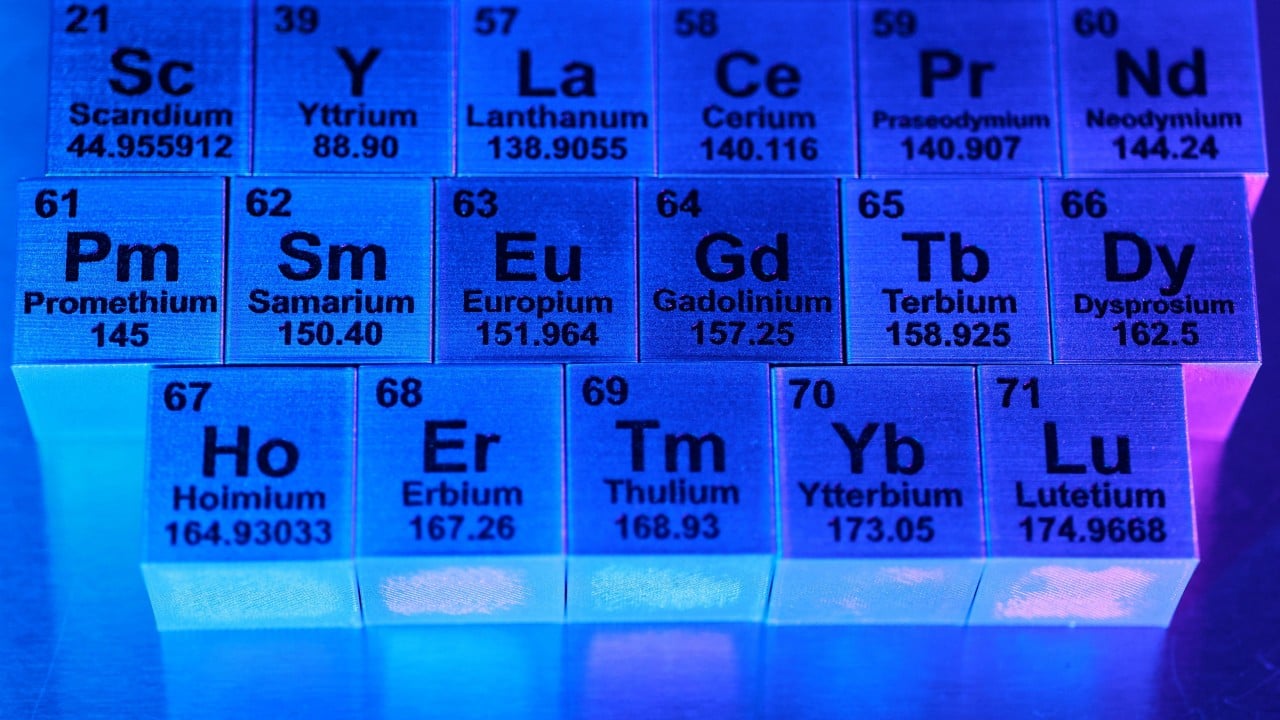
The United States is finally moving to dismantle China’s decades-long stranglehold on the critical minerals required for high-tech defense and energy. While the popular narrative focuses on simply digging more holes in the ground, the real shift is happening in the chemistry labs and processing facilities where the U.S. is betting on radical technical shifts to bypass traditional mining. By funding modular processing units and synthetic alternatives to rare earth elements, the Department of Defense and the Department of Energy aim to collapse the supply chain lead held by Beijing. This strategy focuses on domestic high-yield refinement rather than competing for raw ore in the global south.
For thirty years, the West played a dangerous game of outsourcing the dirty work. We let China handle the caustic, environmentally devastating process of refining rare earth elements because it was cheaper and easier to ignore the ecological bill. Now, that bill has come due in the form of a geopolitical bottleneck. China currently controls roughly 60% of global mineral production but a staggering 85% to 90% of the refining capacity. If you cannot refine the ore, the ore is just expensive dirt. Don't miss our previous coverage on this related article.
The Refining Bottleneck and the Pivot to Direct Extraction
The problem was never a lack of rocks. Rare earth elements, despite their name, are relatively abundant in the Earth's crust. The crisis lies in the separation. These elements are chemically "sticky," often found clustered together in complex mineral deposits that require massive amounts of acid and water to pull apart. China’s dominance is built on a willingness to tolerate the environmental fallout of traditional solvent extraction and a massive investment in infrastructure that the U.S. simply cannot replicate overnight using 20th-century methods.
The U.S. response is to skip the 20th century entirely. Instead of building massive, multi-billion-dollar refineries that take a decade to permit, the focus has shifted toward Direct Lithium Extraction (DLE) and modular "micro-refineries." DLE technology, for example, acts like a high-tech filter that can pull lithium directly from geothermal brines or wastewater from oil and gas operations. This bypasses the need for massive evaporation ponds that take up miles of land and months of time. If you want more about the background here, Business Insider offers an informative breakdown.
If these technologies scale, they transform the American Heartland from a rust belt into a literal gold mine of battery-grade material. We are seeing the first real-world applications of ion-exchange resins and selective membranes that can grab specific molecules out of a chemical soup with surgical precision. This is the difference between using a sledgehammer and a scalpel.
The Magnet War and the End of Neodymium Dependence
The most critical vulnerability isn't just in the batteries of electric cars; it is in the permanent magnets that power everything from F-35 fighter jets to offshore wind turbines. These magnets rely heavily on neodymium and dysprosium, two elements that China has used as a diplomatic cudgel in the past.
The Pentagon is currently pouring hundreds of millions into companies like MP Materials and Lynas to ensure that at least some of the "heavy" rare earth processing happens on American soil. But the true disruption is the push for iron-nitride magnets. Researchers are attempting to create high-performance magnets that use zero rare earth elements. It sounds like alchemy, but it is actually a matter of advanced metallurgy and computational physics.
By restructuring the atomic lattice of common iron and nitrogen, scientists are attempting to mimic the magnetic properties of rare earths. If this succeeds, the "China advantage" evaporates. You cannot hold a monopoly on elements that are no longer required for the finished product.
The High Cost of the Clean Energy Transition
We must be honest about the trade-offs. There is no such thing as a "green" supply chain that doesn't involve moving millions of tons of earth. Even with advanced processing, the demand for copper, nickel, and cobalt is projected to increase by 400% to 600% over the next two decades.
The U.S. is currently attempting to re-shore this industry while maintaining the highest environmental standards in the world. This creates a massive price discrepancy. It costs significantly more to produce a ton of processed cobalt in Idaho than it does in the Democratic Republic of Congo using unregulated labor and zero environmental oversight.
To bridge this gap, the federal government is using the Defense Production Act to guarantee floor prices for domestic producers. This is a wartime footing for a peacetime economy. The goal is to insulate American companies from "predatory pricing"—a tactic where China floods the market with cheap minerals to bankrupt emerging Western competitors before hiking prices back up once the competition is dead.
Circularity and the Urban Mine
One of the most overlooked factors in this race is the "urban mine"—the millions of tons of discarded electronics, old EV batteries, and industrial scrap sitting in warehouses. We currently export our electronic waste, effectively shipping our critical minerals back to Asia.
New developments in hydrometallurgical recycling are changing this. Unlike traditional smelting, which burns away valuable materials and produces toxic smoke, hydrometallurgy uses water-based solutions to dissolve and recover nearly 100% of the metals in a spent battery.
Think of it as a closed loop. A battery produced today should provide the raw materials for a battery produced in 2035. This reduces the pressure to open new mines in sensitive wilderness areas and creates a domestic reserve that is immune to foreign export bans.
The Geopolitical Chessboard
This is not just about economics; it is about the fundamental ability to project power. Without a secure supply of gallium and germanium, the semiconductor industry grinds to a halt. Without cobalt, the aerospace industry cannot build high-temperature jet engines.
China’s recent export restrictions on gallium and germanium were a warning shot. It was a clear signal that the era of "globalization at any cost" is over. The U.S. and its allies in the "Minerals Security Partnership"—which includes Australia, Canada, and the UK—are now building a "China-plus-one" strategy. They are diversifying sources so that no single point of failure can cripple the global economy.
Australia provides the raw ore; the U.S. provides the advanced processing technology; Japan provides the high-end manufacturing. This tripartite alliance is the new backbone of the Western industrial base.
The Reality of the Timeline
We cannot lie to ourselves about how fast this happens. A new mine in the United States takes an average of 16 years to go from discovery to production. The bureaucratic hurdles are immense, and the local opposition to mining is often fierce.
The government’s attempt to fast-track "nationally significant" projects is a start, but it faces constant legal challenges. The tension between the desire for a "green" future and the "not in my backyard" reality of mining is the single greatest hurdle to American mineral independence.
Technological breakthroughs in processing and recycling can shorten the timeline, but they cannot eliminate it. The next five to ten years will be a period of extreme vulnerability. We are in a race to build the infrastructure before the next major supply shock hits.
The shift toward a domestic mineral supply chain is a fundamental restructuring of the American economy. It requires a level of coordination between private industry and the federal government not seen since the Cold War. The focus must remain on the high-end chemical processing where the actual value and security lie.
Audit your current procurement contracts for any tier-one or tier-two reliance on refined Chinese minerals. If your supply chain relies on "market price" for these materials without a domestic backup, you are effectively operating at the mercy of the Chinese Ministry of Commerce. Start vetting domestic recycling partners and direct extraction startups now, before the next round of export quotas turns a supply squeeze into a total shutdown.