The air at the Baikonur Cosmodrome doesn’t just get cold; it turns brittle. It is a dry, biting chill that crawls through the layers of a heavy wool coat and settles deep into the marrow. On the morning of the Soyuz-5 test launch, the sky held that bruised, pre-dawn purple that seems unique to the Kazakh steppe. For the engineers standing on the cracked asphalt, breath came out in ragged ghosts of steam. They weren't just looking at a machine. They were looking at a decade of survival packed into a cylinder of oxidizer and kerosene.
Russia’s space program has long lived in the shadow of its own ghosts. The ghosts of Korolev, of Gagarin, of the massive N1 rockets that once tore themselves apart in the desert silence. For years, the narrative has been one of stagnation, of aging hardware held together by the sheer stubbornness of the Russian spirit. But the Soyuz-5, known in development as the Irtysh, represents a sharp intake of breath. It is a move away from the toxic hypergolic fuels of the past and a desperate, calculated sprint toward the future of heavy-lift capability.
Consider an engineer we will call Mikhail. He is a composite of the men I’ve sat with in dusty offices in Samara, men whose fingers are permanently stained with machine oil and who remember when the ruble collapsed but the work never stopped. Mikhail doesn’t care about the geopolitical posturing of the Kremlin. He cares about the pressure sensors on the RD-171MV engine. This engine is a beast of a different pedigree. It is the most powerful liquid-fuel rocket engine in the world, a four-chambered heart capable of generating over 800 tons of thrust.
When that engine ignites, the world stops being a place of logic and becomes a place of vibration.
The test launch wasn't just a box to be checked on a government ledger. It was the physical manifestation of a transition. The Soyuz-5 is designed to carry roughly 17 tons into Low Earth Orbit. To the casual observer, that’s just a number. To the industry, it’s a direct challenge to the commercial dominance of Western privateers. It is the backbone of the planned Russian Orbital Service Station. It is the heavy lifter that must succeed if Russia is to remain a seafaring nation on the cosmic ocean.
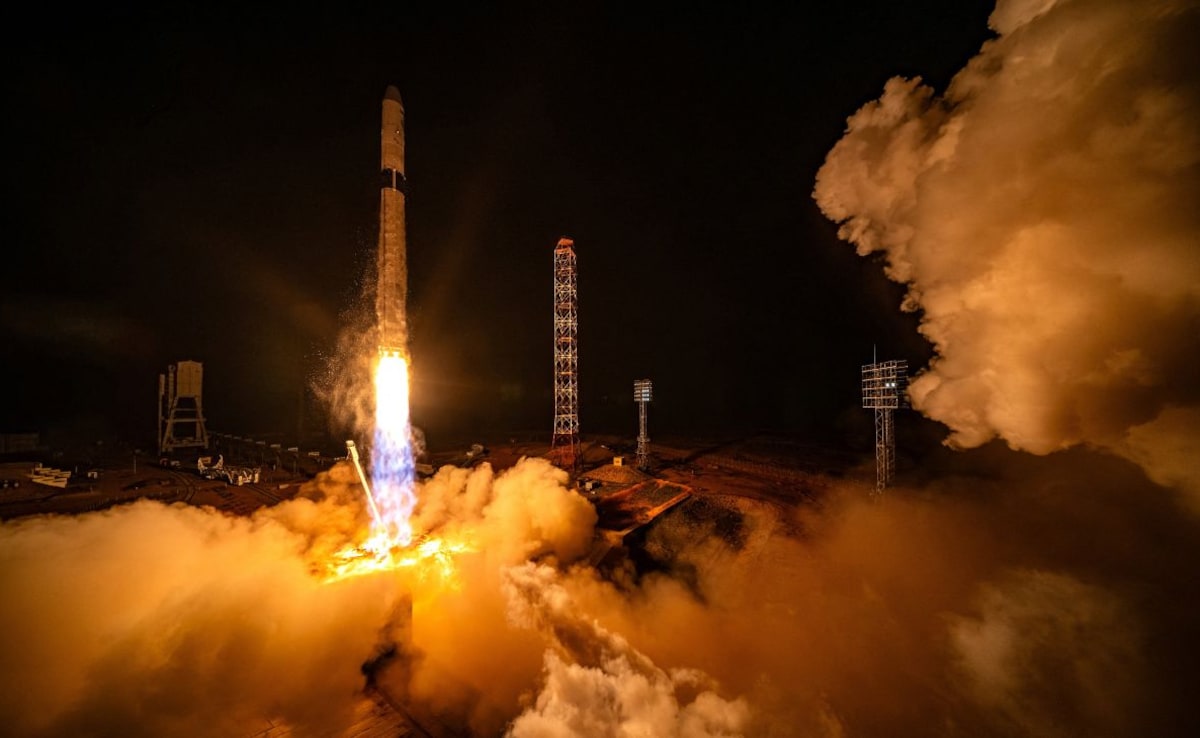
The fire came first.
A blooming, orange-white flower of heat that defied the Kazakh winter. The sound followed—not a roar, but a physical wall of pressure that flattened the grass for miles. As the Soyuz-5 cleared the tower, the collective breath of thousands of people across the Roscosmos infrastructure seemed to hitch. Every weld, every line of code, every bolt tightened by a hand weary from twelve-hour shifts was being tested by the unforgiving physics of gravity.
Gravity is a cruel auditor. It doesn't care about heritage. It only cares about the $9.8 m/s^2$ of resistance it demands from anything trying to leave the dirt.
The rocket climbed, a needle of light stitching the purple sky to the blackness above. This wasn't the old Soyuz, the reliable workhorse that had been the world’s taxi for decades. This was something sleeker, built on the bones of the Zenit program but refined for a new era of competition. The use of kerosene and liquid oxygen is a nod to environmental necessity and cost-efficiency, but more than that, it’s a return to the fundamentals of power.
The stakes for this launch were largely invisible to the public eye. If the Soyuz-5 failed, the entire roadmap for the next twenty years of Russian spaceflight would have crumpled. The planned Orel spacecraft—the vehicle meant to take cosmonauts beyond the tether of the International Space Station—depends on this lift capacity. Without a working Irtysh, the Orel is a flightless bird. The engineers in the bunkers knew this. They watched the telemetry screens with the intensity of gamblers who had bet their entire lives on a single roll of the dice.
Data flickered in green and white. Velocity climbing. Altitude surging. The first stage separation—the moment where the rocket sheds its skin like a cicada—happened with surgical precision.
But why does this matter to someone sitting in a coffee shop in London or a high-rise in New York? It matters because the monopoly of space is a dangerous thing. The Soyuz-5 ensures that the conversation about the stars remains a dialogue rather than a monologue. It keeps the pressure on. It forces innovation across the globe. When one nation masters a new way to throw iron into the sky, every other nation has to look at their own blueprints and ask if they are doing enough.
The technical brilliance of the RD-171MV engine cannot be overstated. It is a masterpiece of closed-cycle design. In simple terms, it recycles its own exhaust to drive the pumps, ensuring that almost no energy is wasted. It is the height of thermodynamic efficiency. If you were to stand next to it while it was running—though you would be vaporized instantly—you would feel the raw, concentrated will of human mathematics overcoming the stubbornness of matter.
As the second stage took over, the tension in the control room didn't dissipate; it transformed. It became a quiet, vibrating hope. The rocket reached the edge of the atmosphere, where the blue of the world fades into the velvet dark. There, in the vacuum, the Soyuz-5 proved it wasn't just a prototype. It was a reality.
The success of this launch clears the path for the joint ventures that still exist despite the fractures in global politics. It ensures that the specialized knowledge of the Russian space sector—knowledge bought with decades of trial, error, and tragedy—isn't lost to the creeping rot of obsolescence. We often talk about technology as if it is something that exists in a vacuum, but every line of code in that rocket’s computer was written by someone who probably worries about their heating bill or their daughter’s grades.
Mikhail and his colleagues stayed at their stations long after the craft had reached its intended trajectory. There were no champagne corks popping, no Hollywood cheers. Instead, there was the quiet nodding of men who had seen enough failures to distrust a single success. They checked the thermal readings. They analyzed the vibration data. They looked for the tiny anomalies that might hide a future disaster.
The Soyuz-5 is not a "game-changer" in the way marketing departments use the word. It is a stabilizer. It is a bridge. It is a message sent from a freezing desert to the rest of the world: We are still here. We can still build things that reach the light.
The fire eventually faded from the sky, leaving only the vast, silent Kazakhstan morning. The engineers walked out of the bunkers, their faces illuminated by the rising sun. They looked like any other group of tired workers heading home, but their shadows were long, stretching across the concrete towards the launch pad where the scorch marks were still warm.
Gravity had been paid its due. For today, the iron had won.
The true weight of the Soyuz-5 isn't measured in tons or thrust. It’s measured in the persistence of a dream that refuses to die, even when the wind on the steppe screams that it’s time to give up and come inside. The rocket is gone now, tucked away in the silence of orbit, but the people who built it are already looking at the next set of blueprints. They know that the sky doesn't grant permanent residence. You have to fight for every inch of the height you gain, and then you have to fight even harder to stay there.
The silence returned to Baikonur. The ghosts went back to their watch. Somewhere in the distance, a lone bird banked against the wind, a tiny speck of life against the immense, indifferent blue.