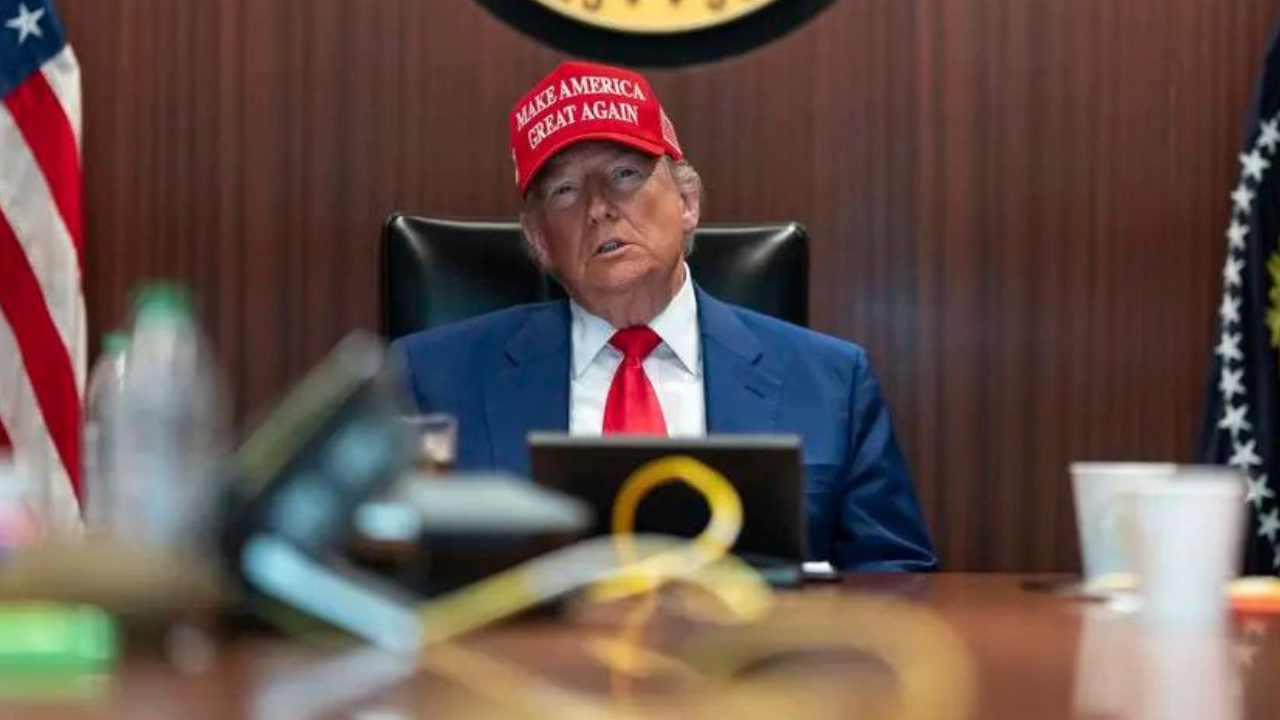
The air in the Situation Room doesn't just feel recycled; it feels heavy. It is the kind of atmospheric pressure that comes from knowing that a single signature or a solitary, pride-fueled tweet can alter the molecular composition of a city thousands of miles away. We often talk about nuclear proliferation as a series of data points—centrifuge counts, enrichment percentages, and delivery systems. But for those watching the flickering monitors, it isn't about the math. It is about the ticking clock of human ego.
Donald Trump operates on a frequency of absolute leverage. In his world, there is no such thing as a stalemate; there is only the winner and the one who hasn't folded yet. When he looks at Iran, he doesn't see a complex theological state with centuries of pride. He sees a negotiation that hasn't been squeezed hard enough. This belief is the engine behind a geopolitical strategy that has moved from "maximum pressure" to something far more volatile. It is a gamble where the chips are made of plutonium.
Consider a hypothetical family in Isfahan. Let’s call the father Reza. He is an engineer, a man who understands the precise mechanics of how things break. He watches the news not for political inspiration, but to gauge the price of bread and the stability of his children’s future. To Reza, the rhetoric coming out of Washington isn't a "strategy." It is a tightening noose. Every time a new sanction is announced or a fresh threat is leveled, the walls of his reality move inward. He is the human collateral in a game of global chicken.
The core of the current tension lies in a fundamental misunderstanding of defiance. When the U.S. withdrew from the Joint Comprehensive Plan of Action (JCPOA), the logic was simple: starve the regime of resources, and they will crawl back to the table for a "better" deal. But logic is a fragile thing when it meets the furnace of nationalism. Instead of folding, Iran accelerated. They didn't just break the limits on their uranium stockpiles; they began enriching at 60%, a hair’s breadth away from the 90% required for a weapon.
This isn't just a policy failure. It is a biological reaction.
When a person—or a nation—is backed into a corner where their survival feels contingent on their submission, they rarely choose the path of quiet compliance. They choose to sharpen their teeth. Trump’s return to the spotlight has brought this dynamic into a sharp, painful focus. His language has grown darker, more apocalyptic. He speaks of "glowing" results and "total destruction" with a casualness that masks the terrifying reality of what those words actually mean.
We are no longer debating a "breakout time" of months or years. We are talking about weeks.
The technical reality is a nightmare of spinning metal. Uranium enrichment happens in cascades of centrifuges, thousands of them humming in underground bunkers designed to withstand conventional bunker-busters. These machines are the heartbeat of the crisis. To the scientists in Tehran, they are symbols of sovereignty. To the hawks in D.C., they are the countdown to a global catastrophe.
The disconnect is total.
Trump’s approach relies on the "Madman Theory"—the idea that if your opponent believes you are unpredictable and volatile enough to do the unthinkable, they will give you whatever you want. It worked, to some extent, with real estate deals in Manhattan. It is a different beast entirely when applied to a country that views its nuclear program as the ultimate insurance policy against the fate of Muammar Gaddafi or Saddam Hussein.
History is a cruel teacher, and the lesson it offers here is one of unintended consequences. Every time the rhetoric escalates, the moderate voices within Iran are silenced. The hardliners, those who always argued that the West could never be trusted, find their theories validated. They point to the shredded remains of previous agreements as proof that the only true security is found in the glow of a core.
But the real problem lies elsewhere. It’s not just about the bombs themselves; it’s about the collapse of the language of diplomacy. We have replaced dialogue with digital shouting matches and nuanced treaties with "red lines" drawn in shifting sand. When communication dies, the only thing left is the interpretation of movement. A routine naval exercise in the Strait of Hormuz becomes a provocation. A technical glitch in a power plant becomes an act of cyber-warfare.
In this environment, a mistake isn't just a mistake. It’s a spark in a room filled with gas.
Think about the sailors on a destroyer in the Gulf. They are twenty-year-olds from places like Ohio and Florida, living in a pressurized tube of steel. They spend their days watching radar pips that represent Iranian fast boats. They aren't thinking about the grand strategy of the 45th President. They are thinking about the rules of engagement. They are wondering if today is the day a misunderstanding turns into a funeral.
The invisible stakes are the ones that keep the world's intelligence agencies awake at 3:00 AM. It isn't just that Iran might get a bomb. It’s the regional domino effect that follows. If Tehran goes nuclear, Riyadh won't be far behind. Suddenly, the most volatile region on the planet is populated by leaders with their fingers on buttons they can never un-press. The nuclear umbrella, once a cold war relic, becomes a tattered shroud.
Trump's defiance is met with Iranian defiance, creating a feedback loop of escalating stakes. He bets on their fear; they bet on his hesitation. It is a game played by men who will never have to live with the fallout, while people like Reza in Isfahan—and families in Tel Aviv, Riyadh, and Washington—wait for the wind to change.
The tragedy of this specific moment in history is the illusion of control. We like to believe that "strong" leadership can bend the will of physics and the pride of nations. We want to believe that there is a deal just around the corner, a grand bargain that will settle the score once and for all. But the centrifuges don't care about deals. They only care about the electricity that feeds them and the physics of the isotopes they separate.
We are witnessing the slow-motion collision of two irreconcilable forces: an American leader who views the world as a series of hostile takeovers, and an Iranian leadership that views survival as a form of holy resistance.
Between them lies the rest of us.
We watch the headlines, we see the threats, and we try to look away from the "glow" that Trump speaks of so frequently. But you cannot un-see the shadow of a mushroom cloud once it has been invoked. You cannot un-hear the sound of a clock that has run out of ticks. The darkness isn't just coming; it is being invited in, one tweet, one enrichment cycle, and one broken promise at a time.
Imagine the silence that follows a flash of light. It isn't the silence of peace. It is the silence of an empty room where a conversation should have been happening. We are currently standing in that room, the door is locking from the outside, and we are still arguing about who gets to hold the key.
The shadow is growing longer. The air is getting thinner. And the only thing harder than the metal in those centrifuges is the hearts of the men who refuse to be the first to blink.
The sunset over the Persian Gulf used to be a thing of beauty. Now, it just looks like a warning.