The air in the Situation Room doesn't just feel recycled; it feels heavy. It is the kind of atmosphere where the scent of expensive coffee and floor wax mingles with the metallic tang of high-stakes anxiety. On the screens, a jagged line of coastline represents the Strait of Hormuz—a narrow, twenty-one-mile-wide throat of water through which the world’s pulse beats in barrels of crude.
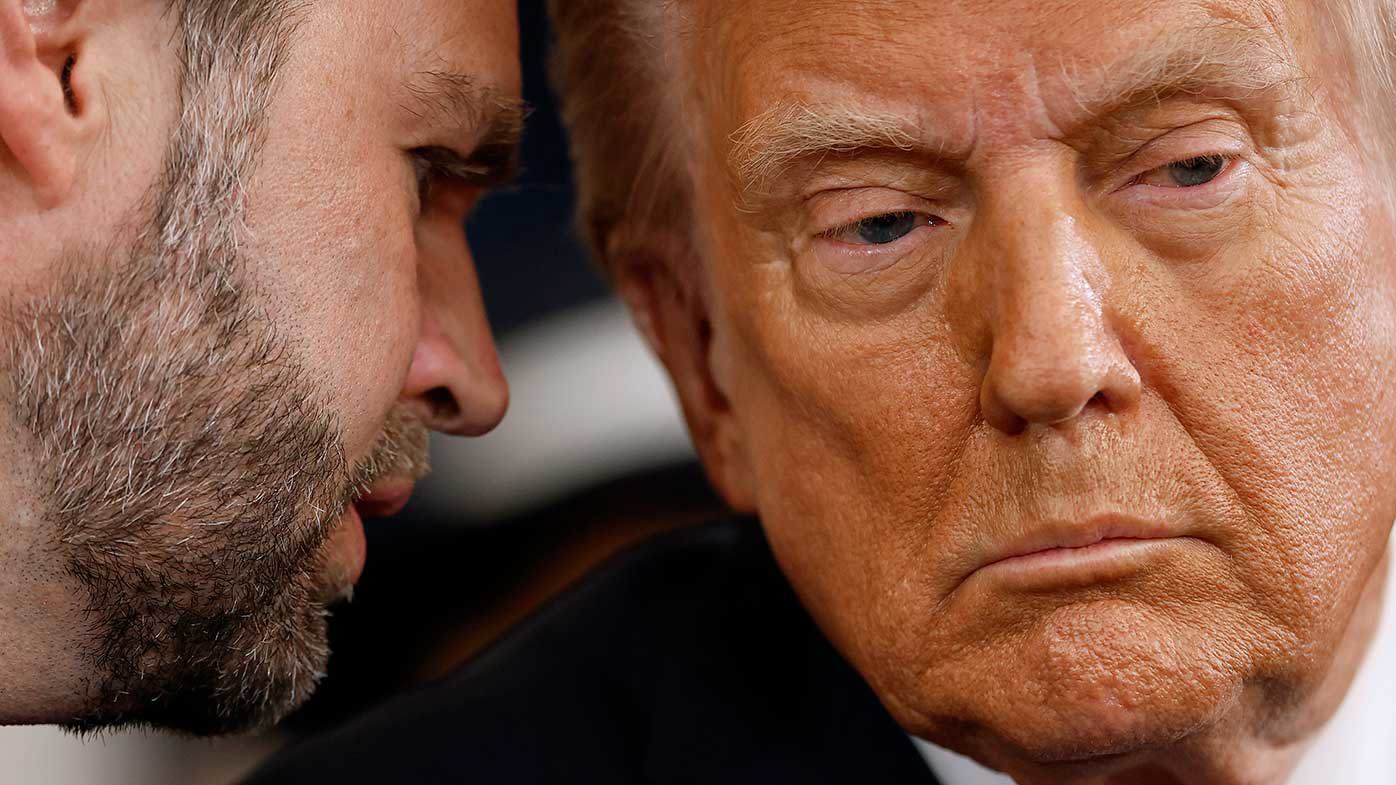
Donald Trump stares at a map. He isn't looking at troop movements or naval coordinates in the way a general might. He is looking at a deal. To him, the world is a series of ledgers, some written in ink, others in blood, and right now, the Persian Gulf is deep in the red. The "Peace Plan" resting on the mahogany table is more than a diplomatic document. It is a gamble to see if the architecture of global energy can be redesigned without pulling the trigger.
Consider a crane operator in a port in Rotterdam. He doesn't know the specifics of the briefing in Washington. He doesn't care about the nuances of the United Nations’ latest plea for "restraint." But he knows that if those twenty-one miles of water close, the ship he is currently unloading becomes a relic of a previous era. The price of the fuel powering his crane will spike. The cost of the bread he buys on his way home will climb. The world is a web, and someone just started plucking the most sensitive string.
The Geography of a Chokepoint
The Strait of Hormuz is not a deep, vast ocean. It is a hallway. At its narrowest point, the shipping lanes are only two miles wide in either direction. Imagine driving a truck carrying the world’s economy through an alleyway where the neighbors are throwing rocks.
Iran knows this. They have always known it. For decades, the threat to "close the Strait" has been the ultimate geopolitical equalizer. It is the gun on the table during every negotiation. When the UN calls for the waterway to remain open, they aren't just making a polite request for maritime safety. They are shouting into a vacuum, trying to prevent a cardiac arrest in global commerce.
If the tankers stop moving, the silence will be deafening.
We often talk about war in terms of "theater," as if it’s a play we are watching from the safety of the balcony. But for the sailors on a Maersk freighter, the theater is a steel deck under a blistering sun, scanning the horizon for the low-profile wake of a fast-attack craft. These are not soldiers. They are merchant mariners. They are fathers from Manila and engineers from Mumbai who find themselves at the center of a game played by men in suits thousands of miles away.
The Art of the New Deal
Trump’s review of the peace plan represents a shift from the traditional "wait and see" diplomacy of the past decade. It is aggressive. It is transactional. It views the Iranian Clerical establishment not just as a rogue regime, but as a failing business that needs to be brought to the table through a combination of extreme pressure and the promise of a golden bridge.
The plan purportedly involves a tiered lifting of sanctions in exchange for a permanent cessation of enrichment and a dismantling of the regional proxy network. It sounds clean on paper. But peace is never clean. It’s a messy, grinding process of trading things you love for things you can live with.
The invisible stakes here aren't just about who controls the flow of oil. They are about the credibility of a superpower. If the peace plan is ignored, the next step isn't a letter from the UN. It is the "kinetic" option. That’s the word the analysts use. Kinetic. It sounds like physics. It sounds like energy in motion. It’s a polite way of saying explosions that can be seen from space.
The United Nations and the Architecture of Hope
While Washington weighs the plan, the United Nations remains in its perennial role: the voice of a conscience that has no army. Their call to reopen the Strait is grounded in international law, specifically the UN Convention on the Law of the Sea. But law is only as strong as the person willing to enforce it.
The Secretary-General’s office issued a statement that reads like a plea for sanity in a room where everyone is high on adrenaline. They warn of "catastrophic humanitarian consequences." This isn't hyperbole. If the Strait closes, the first people to suffer aren't the billionaires in Manhattan or the oil sheiks in Riyadh. It’s the families in nations that rely on imported grain and affordable energy to survive the winter.
War is a thief. It steals the future to pay for the grievances of the past.
The Human Cost of a Statistical Spike
Let’s look at the numbers, but let’s look at them through a different lens. If oil jumps thirty dollars a barrel in a week, what does that actually look like?
It looks like a small business owner in Ohio deciding he can’t afford to keep his second delivery truck on the road. It looks like a manufacturer in South Korea pausing a production line because the cost of raw materials has outpaced his margins. It looks like a spike in the cost of plastic, of fertilizer, of life itself.
We are addicted to the flow. We have built a civilization on the assumption that the hallway in the Persian Gulf will always be open. We have forgotten that the walls of that hallway are lined with batteries of missiles and the long memories of a thousand years of conflict.
The peace plan being reviewed today is an attempt to buy time. But time is a commodity that is running low. On the Iranian side, the pressure is internal. The Rial is a ghost of a currency. The streets have echoed with the footsteps of protesters who are tired of being told that their poverty is a sacrifice for a grander cause. The leadership in Tehran is looking at the same map Trump is, but they see a different story. They see a world that has tried to erase them, and they see the Strait of Hormuz as their only way to write themselves back into the narrative.
The Invisible Ghost in the Room
There is a third player in this story, one that doesn't get a seat at the table in the Situation Room. It’s the shadow of 1979. It’s the memory of the hostage crisis, the tanker wars of the 1980s, and the long, cold shadow of a forty-year grudge.
When Trump reviews these plans, he isn't just dealing with the Iran of 2026. He is dealing with the ghost of every failed policy that came before him. He wants the "Grand Bargain," the one that eluded Obama, Bush, and Clinton. He wants the deal that sticks.
But can you strike a deal with a ghost?
The UN’s insistence on keeping the Strait open is a reminder that there are certain "global commons" that should be above the fray of national ego. The oceans, the air, the flow of information. But the reality is that the world is being carved into spheres of influence again. The idea of a "global community" is being replaced by a series of bilateral trades and regional alliances.
The Moment of Impact
The news cycle will tell you that the market is "volatile." It’s a dry word. Volatility is the sound of a trader’s heart rate hitting 120 beats per minute. It’s the flicker of red numbers on a terminal that represent billions of dollars in value evaporating in a afternoon.
If the peace plan fails, and if the Strait is challenged, we aren't just looking at a "conflict." We are looking at a fundamental reordering of how we live. We have spent the last century moving toward a world of frictionless trade. A war in the Strait is the ultimate friction. It is the grit in the gears that brings the whole machine to a grinding, screaming halt.
Trump’s decision—to push the plan or to pull back—is the pivot point. It is the moment where the narrative shifts from "what if" to "what now."
In a small village on the coast of the Gulf, a fisherman pushes his boat into the water. He doesn't have a television. He doesn't read the UN's press releases. But he sees the gray shapes of destroyers on the horizon. He sees the way the water churns when the big ships pass. He knows the weather is changing, not because of the wind, but because of the tension in the air.
He feels the weight of the world on his shoulders, even if he can’t name the men who put it there.
The peace plan sits on the desk. The pen is nearby. The Strait remains a narrow, precarious ribbon of blue in a world that is seeing red. Every ship that passes through today is a victory of hope over history. But history has a way of catching up.
The world waits for a signature, or a spark.