The headlines are screaming about a "crisis" again. If you read the standard financial press, you’re being fed a diet of panic regarding the West Asia conflict, rising freight rates, and the supposed doom of the Indian economy. They want you to believe that every ripple in the Strait of Hormuz is a direct threat to your portfolio and India’s GDP.
They are wrong. In fact, they are missing the forest for the trees.
The "lazy consensus" suggests that high oil prices and disrupted shipping lanes are an unmitigated disaster for emerging markets. This narrative is a relic of the 1970s. It ignores the structural shifts in how India consumes energy, how its central bank manages volatility, and how global trade actually functions under pressure. Stop looking at the crude ticker and start looking at the balance sheet of the nation.
The Myth of the $100 Barrel Boogeyman
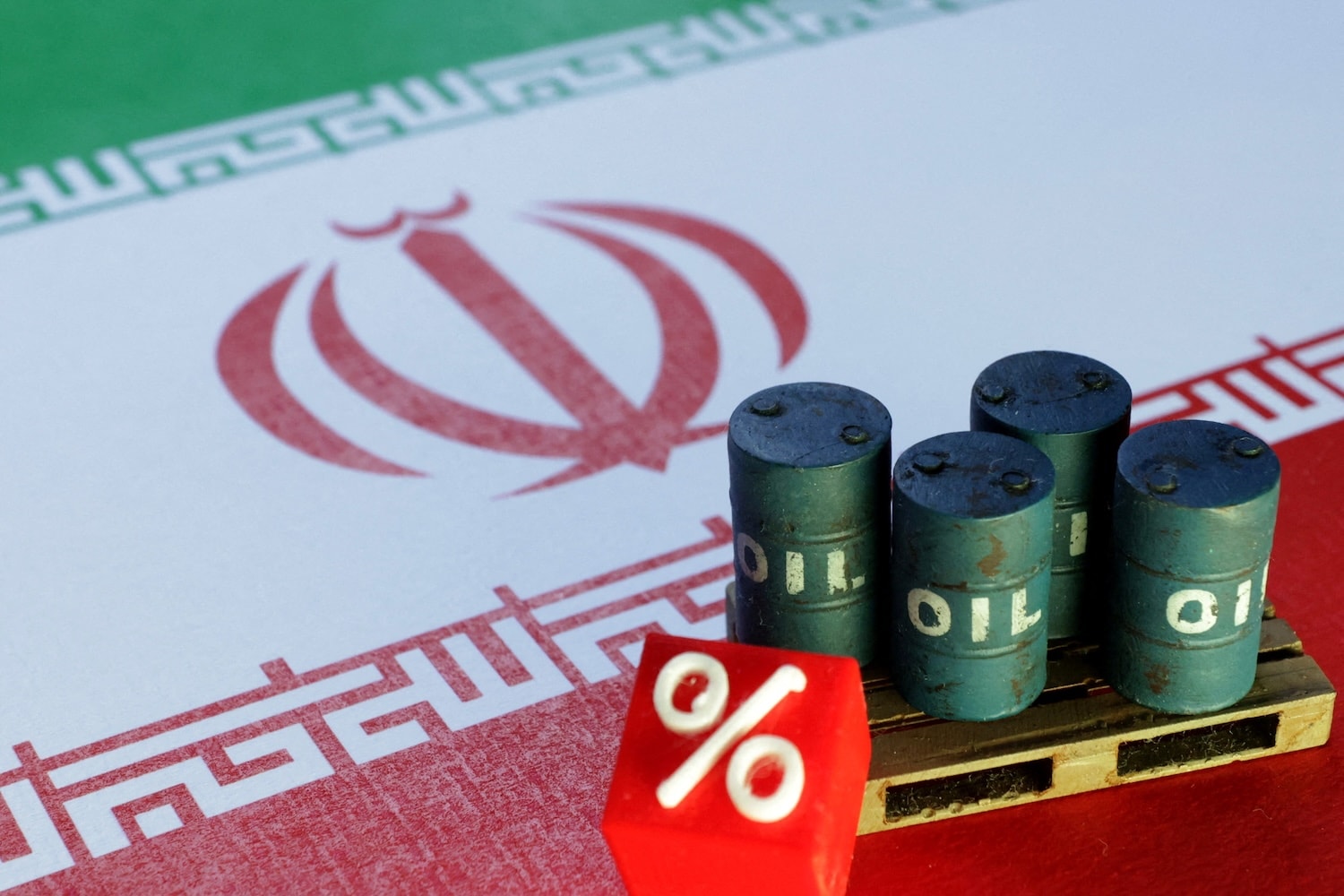
For decades, the magic number of $100 per barrel has been used to scare investors. The logic is simple and flawed: India imports roughly 85% of its crude, so higher prices mean a ballooning current account deficit (CAD) and a tanking Rupee.
But here is the reality: India has spent the last five years decoupling its growth from the sheer price of a barrel.
- The Discount Arbitrage: While the West focuses on Brent benchmarks, India has mastered the art of "opportunistic sourcing." By pivoting to Russian Urals and other discounted grades, India has effectively insulated its landed cost of oil from the headline spikes you see on CNBC. The "Brent" price is a signal, not a sentence.
- Taxation as a Buffer: The Indian government treats oil prices like a shock absorber. When prices are low, they hike excise duties to build a war chest. When prices spike, they have the fiscal room to cut those duties, preventing a total pass-through to the consumer. The inflation "crisis" is often managed before it ever hits the petrol pump.
Why High Freight Rates are a Stress Test You Want to Pass
The Red Sea disruptions and the subsequent spike in freight rates are being treated as a systemic failure. Shipping costs are up, insurance premiums are soaring, and the Cape of Good Hope is getting crowded.
I’ve seen logistics firms burn through millions trying to "wait out" these cycles. The ones who survive are the ones who realize that high freight rates are a filter. They flush out the inefficient, low-margin players who shouldn't have been exporting in the first place.
If your business model collapses because shipping costs went from 3% to 7% of your COGS, you didn’t have a business; you had a subsidized hobby. The current "crisis" is forcing Indian exporters to move up the value chain. We are seeing a pivot from low-value bulk commodities to high-precision engineering and specialized chemicals where the shipping cost is a rounding error compared to the intellectual property.
The Red Sea Diversion: A Lesson in Geometry
The "consensus" mourns the extra 10 to 14 days it takes to circumnavigate Africa. They call it a delay. I call it an inventory buffer.
In a world of "Just-in-Time" manufacturing, a slight elongation of the supply chain forces companies to hold more "Just-in-Case" stock. This builds national resilience. We are moving away from a fragile, hyper-optimized global grid to a sturdier, more redundant one. Yes, it’s more expensive. Stability isn't free.
The Rupee Isn't "Falling"—Everything Else is Just Distorted
Whenever oil goes up, the "experts" predict the Rupee's demise. They ignore the fact that the Reserve Bank of India (RBI) is sitting on a mountain of foreign exchange reserves—over $600 billion.
The RBI isn't trying to keep the Rupee "strong." They are trying to keep it stable. A slow, controlled depreciation is actually a gift to Indian exporters who are competing with China and Vietnam.
- Fact: A weaker Rupee makes Indian software and services cheaper for global clients.
- Fact: A weaker Rupee acts as a natural tariff against cheap Chinese imports.
- Fact: The correlation between oil spikes and permanent Rupee devaluation has weakened significantly as India’s service exports (the "invisible" trade) continue to hit record highs.
We need to stop asking "When will the Rupee hit 85?" and start asking "Why are we still measuring our worth against a weaponized US Dollar?"
The "West Asia Conflict" is a Geopolitical Constant, Not a Variable
The competitor article treats the tension in West Asia as a new, shocking development. This is historical illiteracy.
The Middle East has been in various states of "conflict" for eighty years. Markets have already priced in the "Permanent Instability Premium." The real risk isn't a skirmish in the Levant; it’s the transition to a multipolar energy world where the US is no longer the guarantor of the sea lanes.
India is already solving for this. Look at the strategic petroleum reserves. Look at the aggressive push into green hydrogen and solar. Every time oil hits $90, the ROI on a solar farm in Rajasthan gets better. High oil prices are the single greatest catalyst for India's energy independence. If oil stayed at $40, we would be addicted to carbon forever. $100 oil is the bitter medicine that forces the transition.
Stop Asking the Wrong Questions
The press asks: "How much will this hit India's GDP?"
The real question: "How much faster will this accelerate India's move toward energy sovereignty?"
The press asks: "Will freight rates stay high?"
The real question: "Which Indian companies are profitable enough to ignore freight rates entirely?"
We are witnessing the birth of a "Hardened India." This is an economy that can absorb a regional war, a shipping blockade, and a price spike without breaking its 7% growth trajectory.
The volatility is the point. It separates the fragile from the antifragile. While the pundits wring their hands over the "rising costs," the smart money is betting on the fact that India has already learned how to thrive in the chaos.
If you’re waiting for "stability" to return before you invest, you’ll be waiting forever. The chaos is the new baseline. Buy the dip, ignore the doom-mongers, and recognize that a world on fire only makes the resilient shine brighter.
The era of cheap, easy, peaceful global trade is dead. Good riddance. It made us soft.
Now the real work begins.