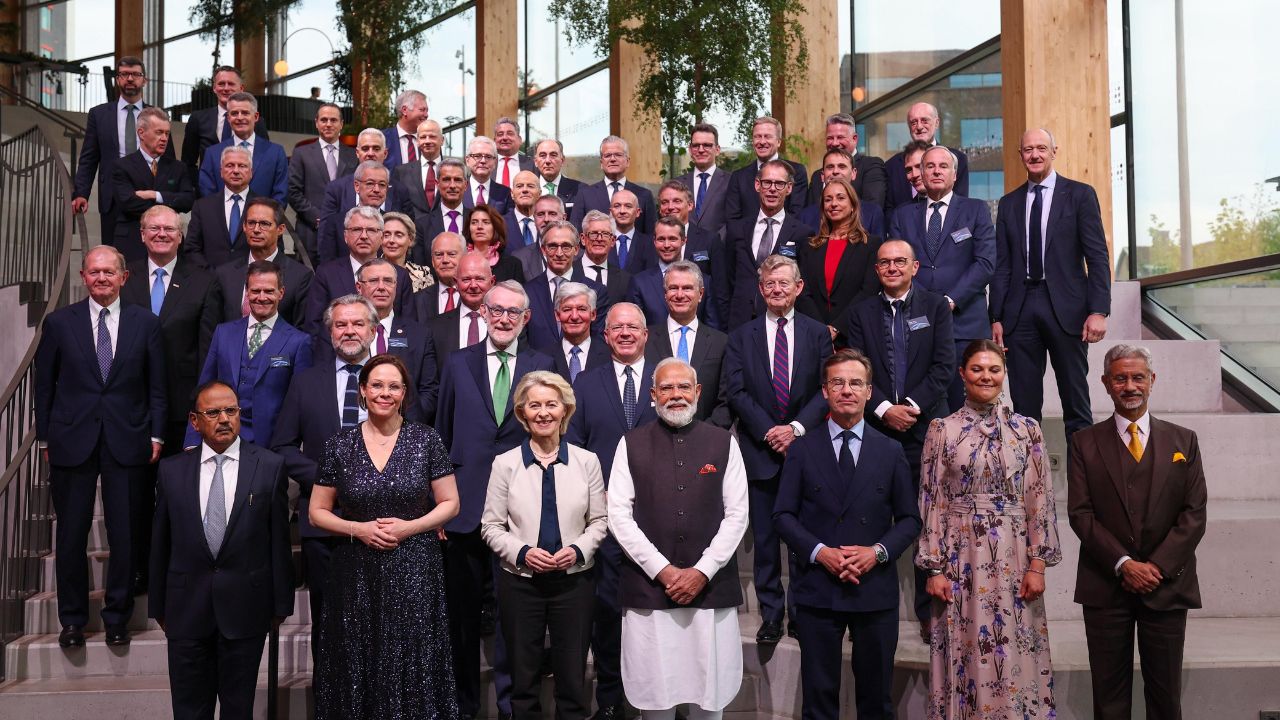
The global business press loves a predictable narrative. Right on cue, the coverage of Prime Minister Narendra Modi’s latest pitch to European CEOs follows a tired script: India is the inevitable, frictionless replacement for China, and any board room hesitating to deploy billions there is simply missing the boat. The official rhetoric urges "bold" investments, promising red-carpet treatment, a massive young workforce, and a deregulated haven for Western capital.
It is a beautiful narrative. It is also a trap.
I have spent two decades analyzing capital allocation across emerging markets, watching Western multinationals burn billions by confusing macroeconomic marketing with operational reality. The lazy consensus among European and American boards is that India’s headline GDP growth automatically translates into corporate profitability. It does not.
Chasing top-line growth in a country with a notoriously fractured domestic market, persistent protectionist instincts, and a regulatory apparatus that can shift overnight is a recipe for value destruction. If you are blindly packing your bags for New Delhi because your competitors are doing it, you are asking the wrong questions entirely.
The Illusion of the Single Unified Market
The most dangerous assumption a European executive can make is treating India as a single, homogenous economic entity akin to the Eurozone or the United States.
The pitch deck version of India highlights 1.4 billion consumers. The reality on the ground is a hyper-fragmented collection of regional economies, each with its own political dynamics, linguistic nuances, and bureaucratic hurdles. When a foreign company tries to scale operations, they quickly realize that interstate logistics, local compliance, and regional tax interpretations turn a simple supply chain into an administrative nightmare.
Consider the physical reality of moving goods. Despite massive infrastructure spending on high-profile national highways, internal logistics costs in India hover around 13% to 14% of GDP. In contrast, advanced economies operate at roughly 8%. You are paying a structural inefficiency premium the moment you break ground.
Then there is the myth of the uniform consumer base. The purchasing power of India is heavily concentrated in a tiny sliver of the population—often referred to by economists as "India One." This top 10% drives nearly all discretionary spending for premium foreign goods. The remaining 90% is highly price-sensitive, intensely loyal to local incumbents, and entirely out of reach for a standard Western margin structure. If your financial models assume a linear expansion into a billion-person middle class, your Excel spreadsheet is lying to you.
Why Easy Doing Business Rankings Don't Match Reality
Proponents of the "Make in India" initiative point triumphantly to past jumps in the World Bank’s Ease of Doing Business index. What they fail to mention is how those metrics are collected.
Historically, those rankings measured compliance in just two major municipal hubs: Mumbai and Delhi. They captured the paperwork required to register a business or get an electricity connection in a highly monitored sandbox. They did not—and cannot—measure the daily operational friction of managing a manufacturing plant in Tamil Nadu, Gujarat, or Maharashtra.
Foreign investors face a gauntlet of structural realities:
- Retroactive Regulatory Shifts: Western capital requires predictability. Yet, India has a track record of shifting tax policies, e-commerce regulations, and data localization laws abruptly to protect domestic champions.
- The Land Acquisition Bottleneck: Buying land for large-scale industrial projects remains an absolute quagmire. Local political resistance, disputed titles, and shifting state-level environmental clearances can stall a project for years, draining capital while your internal rate of return plummets.
- Enforcement of Contracts: This is the achilles' heel of the Indian business environment. India ranks near the bottom globally for contract enforcement. If a local partner, distributor, or supplier defaults on an agreement, your legal recourse is a judicial system backed up by over 40 million pending cases. A dispute that takes eighteen months to resolve in Europe can easily drag on for a decade in Indian courts.
The China Plus One Fantasy
The current geopolitical playbook dictates that every major manufacturer must adopt a "China Plus One" strategy to diversify supply chains. India is routinely positioned as the default winner of this migration.
This view ignores basic industrial physics. Vietnam, Mexico, and even parts of Eastern Europe are winning the actual flight of manufacturing capital for a simple reason: they plug into existing ecosystems far better than India does.
China’s dominance was not built just on cheap labor; it was built on deeply integrated, hyper-efficient component ecosystems. If you build a factory in Shenzhen, your sub-assembly suppliers, toolmakers, and raw material providers are down the street. If you build that same factory in India, you often have to import the vast majority of your intermediate components from—ironically—China.
This creates a bizarre operational paradox. You set up shop in India to de-risk from China, only to find your Indian facility entirely dependent on Chinese supply chains, burdened by Indian import tariffs on components, and choked by local port congestion. You haven't diversified your risk; you have simply added a layer of geographic and bureaucratic complexity to it.
Dismantling the Talent Premium Misconception
Every pitch to European companies highlights India’s demographic dividend: millions of engineering and business graduates entering the workforce every year.
Let us be brutally honest about the quality of that supply. Studies by employability assessment firms like Aspiring Minds have consistently shown that over 80% of Indian engineering graduates are unemployable in product or core engineering roles without extensive, foundational retraining.
The top tier of talent—the graduates of the Indian Institutes of Technology (IITs) and Indian Institutes of Management (IIMs)—is world-class. But that elite talent pool is fiercely contested. You are not competing against local firms for them; you are competing against Google, Apple, and McKinsey, all of whom pay global-rate silicon valley compensation packages.
The middle and lower tiers of the graduate pool require massive corporate investment in basic remediation, communication training, and technical upskilling. The "cheap, highly skilled labor" promised in Davos conferences vanishes the moment you factor in the fully loaded cost of training, high attrition rates, and the management overhead required to supervise under-prepared teams.
Navigating the Terrain If You Must Invest
This is not an argument for a total boycott of the Indian market. It is an argument for stripping away the romanticism. If your board insists on deploying capital into India, you must discard the standard corporate expansion playbook and adopt three contrarian principles.
1. Stop Trying to Build out of the Box
Do not attempt to replicate your domestic operating model. If you are a European manufacturer, do not assume you can import your high-spec, high-cost machinery and run it the same way. You must engineer your products and your processes specifically for the market. This means designing for frugality, durability, and extreme cost-efficiency from day one. If your product cannot compete on price with a nimble domestic competitor who understands the local regulatory grey areas, you will lose.
2. Treat State Governments as the Real Sovereign
The federal government in New Delhi makes the headlines, but the state governments control your daily existence. Treat India as a continent of distinct nations. Choose your location based on state-level bureaucratic efficiency, political stability, and specific labor dynamics rather than national-level incentives. A change in the ruling party at the state level can completely rewrite your operational reality, regardless of what promises were made to you in New Delhi.
3. Price in the Cost of Strategic Patience
If your investment thesis requires a positive cash flow within three to five years, take your money elsewhere. India is a market that devours impatient capital. The companies that have successfully scaled—such as Suzuki or Hyundai—did so by committing decades to building localized supply chains, absorbing years of regulatory volatility, and accepting low initial margins to secure market share.
The Real Question Boards Dare Not Ask
The competitor articles and political press releases want you to ask: How do we get a piece of India's growth story?
The correct, cold-blooded question you should be asking is: Can we actually repatriate profitable dollars from this growth story, or are we just funding a high-topline, zero-margin black hole?
Global giants like Vodafone, Carrefour, and Harley-Davidson all entered India with grand ambitions and backing from the highest political levels. They all eventually exited, bloodied by regulatory whiplash, tax disputes, and structural roadblocks. Their failures were not caused by a lack of capital or poor branding. They failed because they believed the macro marketing instead of auditing the micro reality.
Stop listening to the political cheerleading. Stop letting fear of missing out dictate your capital allocation. India is not a plug-and-play substitute for your global supply chain, and it is not a gold mine waiting for anyone with a bold checkbook. It is a highly complex, fiercely competitive, and deeply protectionist market that rewards only those who ignore the hype and prepare for a long, grinding war of attrition.