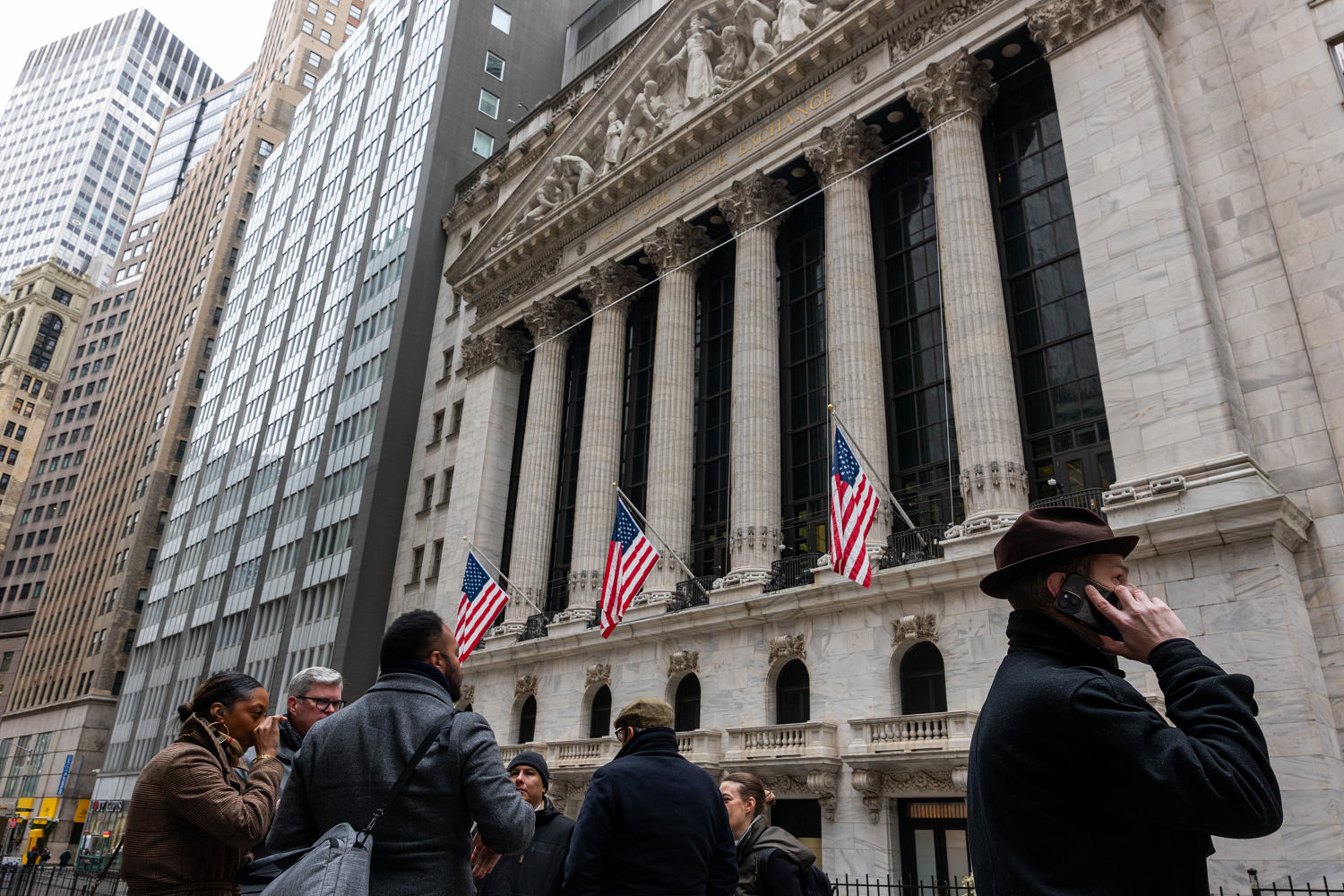
The sudden relief felt across trading floors in New York and London this morning wasn't driven by a sudden burst of economic productivity or a stellar earnings report. It was driven by a single phone call and a strategic retreat from the brink of a regional inferno. When the White House signaled a pivot away from targeting Iran’s electrical infrastructure and power grid, it effectively removed a massive "geopolitical risk premium" that had been baked into every barrel of oil for the last seventy-two hours. This shift did more than just soothe the nerves of energy traders; it signaled to the global markets that the current administration is prioritizing domestic inflation and global supply chain stability over a total-war approach in the Middle East.
Wall Street responded with the kind of immediate, reflexive upward swing we haven't seen in months. Crude prices plummeted as the threat of a massive supply disruption evaporated. For an economy still sensitive to the price at the pump, this isn't just a political win—it’s a temporary reprieve from a stagflationary nightmare.
The Calculated Math of Modern Warfare
Targeting a nation’s power grid is no longer just a military maneuver. In 2026, it is an act of economic suicide for the global community. When the rhetoric from the Trump administration first leaned toward hitting Iranian energy infrastructure, the markets didn't just worry about Iran's local output. They worried about the retaliation. Iran’s ability to choke the Strait of Hormuz remains the ultimate "black swan" event that every major investment bank keeps in its back pocket as a worst-case scenario.
By backing off the threat to the grid, the administration isn't showing weakness. It is showing a sophisticated understanding of the interconnected energy loop. If Iran’s domestic power goes dark, the incentive for them to play by the rules of international shipping vanishes. You cannot expect a cornered adversary to allow the world's oil to flow freely while their own citizens sit in the dark.
The drop in oil prices—roughly 4.5% in early trading—reflects a market that is breathing a sigh of relief that the "worst-case" kinetic scenario has been downgraded to a "persistent-friction" scenario. Friction we can handle. A total blackout of the Middle Eastern energy corridor? That leads to $150 oil and a global recession that no amount of interest rate cutting can fix.
Why the Grid Became the Red Line
Military analysts have long debated the efficacy of hitting "dual-use" infrastructure. The power grid feeds the military, but it also feeds the hospitals, the water pumps, and the basic survival mechanisms of tens of millions of people. For the U.S. to target the grid would have meant a departure from the "targeted strike" philosophy that has defined Western intervention for decades. It would have moved the conflict into the realm of total economic warfare.
From a business perspective, the risk was too high. The Brent Crude benchmark is a sensitive instrument. It tracks not just current supply, but the fear of future supply loss. When the threat to the Iranian grid was credible, that fear was worth a $10 to $15 premium per barrel. Now that the threat has been walked back, that "fear tax" has been refunded to the market.
- Supply Stability: Iran produces roughly 3 million barrels of oil per day. While under sanctions, much of this flows to China. A strike on the grid would have halted this production, forcing China to compete more aggressively for the remaining global supply.
- Logistics Safety: The Strait of Hormuz carries 20% of the world’s liquid energy. Any escalation that targets Iranian civilian infrastructure makes the Strait a primary target for Iranian sea mines and fast-attack craft.
- Domestic Inflation: High energy prices are the fastest way to kill a political honeymoon period. The administration knows that $5 per gallon gasoline at home is a larger threat to their power than a recalcitrant regime in Tehran.
The Market's Short Memory and Long Fears
Equity markets love a pivot. The S&P 500 and the Dow Jones Industrial Average surged because certainty returned to the room. Investors hate ambiguity more than they hate bad news. Knowing that the U.S. will focus on military targets rather than total infrastructure allows analysts to build more accurate models.
However, the veteran analyst knows that this is a "wait and see" rally. While the threat to the grid is off the table for now, the underlying tension remains. We are seeing a shift from destructive escalation to managed containment. This means that while oil prices are falling today, the floor is much higher than it was three years ago. We are living in an era of "permanent volatility."
The tech sector, in particular, responded with vigor. Companies that rely on global logistics and manufacturing—firms that are sensitive to the cost of shipping and the price of plastics (a petroleum byproduct)—saw their valuations jump. When energy costs stabilize, the entire supply chain becomes more predictable.
Dissecting the Strategy of Rhetoric
There is a school of thought in Washington that believes the threat to the grid was never meant to be carried out. It was a "madman" tactic—set the stakes so high that any subsequent "reasonable" demand seems like a concession. By threatening the Iranian power supply and then "graciously" backing off, the administration may be attempting to force Iran to the negotiating table on other issues, such as their nuclear enrichment levels or their support for regional proxies.
If this was the plan, the market played its part perfectly. The initial spike in oil prices served as a warning shot to the world: Look at how much this will hurt if we actually do it. Now that the pressure has been lowered, the administration can claim it is the "adult in the room," maintaining global stability while still keeping the military option on the table for specific, high-value assets.
The Hidden Cost of the Deescalation
Nothing in geopolitics comes for free. While the markets are cheering today, the long-term cost of backing off might be a emboldened Iran. If Tehran perceives that the U.S. is "too afraid" of oil prices to hit them where it hurts, their regional maneuvers might become more brazen.
This is the tightrope the modern analyst must walk. You have to balance the immediate market liquidity against the long-term strategic deterrent. For now, the "Liquidity Bulls" are winning. They see a path forward where energy stays cheap enough to fuel a domestic manufacturing boom. But the "Geopolitical Realists" are looking at the same map and seeing a region that is still a single miscalculation away from a catastrophe.
The Role of Domestic Production
One factor that allowed the U.S. to even consider such a bold threat is the record-breaking level of domestic oil and gas production. The U.S. is currently the largest producer of crude oil in the world. This gives the White House a "cushion" that previous administrations didn't have.
However, even with record production, the U.S. is not an island. Oil is a globally traded commodity. If the Iranian grid goes down and the Middle East erupts, U.S. producers can't simply "turn on a tap" to replace that volume overnight. The infrastructure—the refineries, the pipelines, the tankers—is already running near capacity. The administration’s realization of this physical reality is likely what led to the walk-back.
The Infrastructure Vulnerability Paradox
By choosing not to hit the Iranian grid, the U.S. is also subtly protecting its own interests. We live in an age of cyber-warfare. If the U.S. sets a precedent that civilian power grids are fair game in a regional conflict, it invites the same treatment in return.
Our own grid is famously fragile. A retaliatory cyber-strike on the Texas or Eastern interconnects would cause more economic damage than a $200 barrel of oil ever could. The decision to back off wasn't just about Iranian civilians or global oil; it was about the sovereign security of the American domestic economy.
This is the "investigative why" that many surface-level reports miss. The administration didn't just "change its mind." It consulted with the Department of Energy and the Cybersecurity and Infrastructure Security Agency (CISA) and realized that the "boomerang effect" of a strike on Iranian power could be catastrophic for the American tech and banking sectors.
The Immediate Impact on Your Portfolio
For the average investor, this week is a masterclass in the "Beta" of geopolitics.
- Defense Stocks: Expect a slight cooling as the immediate threat of a major regional war subsides, but keep an eye on long-term contracts for missile defense systems. The tension isn't gone; it’s just changed shape.
- Transportation and Logistics: These are the big winners. Lower fuel costs translate directly to better margins for trucking companies and airlines.
- Emerging Markets: Countries that are net importers of energy—like India and Japan—have just been given a massive gift. Their currencies should stabilize as their energy import bills shrink.
The narrative that "Trump backed off" is too simple. The truth is that the administration performed a cold-blooded assessment of the Cost-Benefit Ratio of Chaos. They realized that the "benefit" of a dark Iran was outweighed by the "cost" of a broken global economy.
Watch the oil tankers. They are the true indicators of peace in the 21st century. As long as they are moving through the Strait without increased insurance premiums, the market will continue to climb. But the moment those premiums start to tick up again, you’ll know that the "grid threat" was just the opening act in a much longer, much more dangerous play.
Move your capital into sectors that thrive on lower energy costs, but keep a significant portion of your portfolio in "anti-fragile" assets. The world didn't become safer today; it just became slightly less expensive for the next quarter.