The dust in Algiers has a way of clinging to everything—the white-washed walls of the Casbah, the suits of anxious diplomats, and the heavy velvet of history itself. It is a city that knows the price of silence. For decades, the Mediterranean breeze has carried the scent of salt and the faint, metallic tang of old grievances. But today, the air feels different. It carries the weight of a man in white, an aging shepherd stepping into a storm that has been brewing thousands of miles to the east.
Pope Francis does not walk with the vigor he once had. Every step seems a calculated negotiation with gravity. Yet, as he arrived on African soil, his presence felt like a physical interruption to the logic of modern warfare. The backdrop isn't just the local politics of North Africa; it is the long, jagged shadow of the escalating tension between Iran and its adversaries. While the world watches missiles trace arcs over the Persian Gulf, the Pope came to Algeria to talk about the quiet, agonizing work of staying human when the machinery of war demands we become ghosts.
Consider a woman named Amina. She is hypothetical, but she represents the millions living in the crosshairs of global instability. She sits in a small apartment in Algiers, watching the news on a flickering screen. She hears talk of enrichment levels, proxy strikes, and regional hegemony. To the planners in Tehran or the strategists in Washington, Amina is a data point. To the Pope, she is the entire reason for the journey. He is here because when empires breathe fire, the smoke always settles in the lungs of people like her.
The conflict involving Iran is often framed as a game of chess, played with cold precision. But chess pieces don't bleed. They don't have children who jump at the sound of a car backfiring. By choosing this moment to visit Africa and call for peace, the Vatican is performing a sort of geopolitical alchemy. It is trying to turn the "inevitable" march toward escalation into a choice.
Peace is a grueling, unglamorable process. It is not the absence of noise; it is the presence of justice.
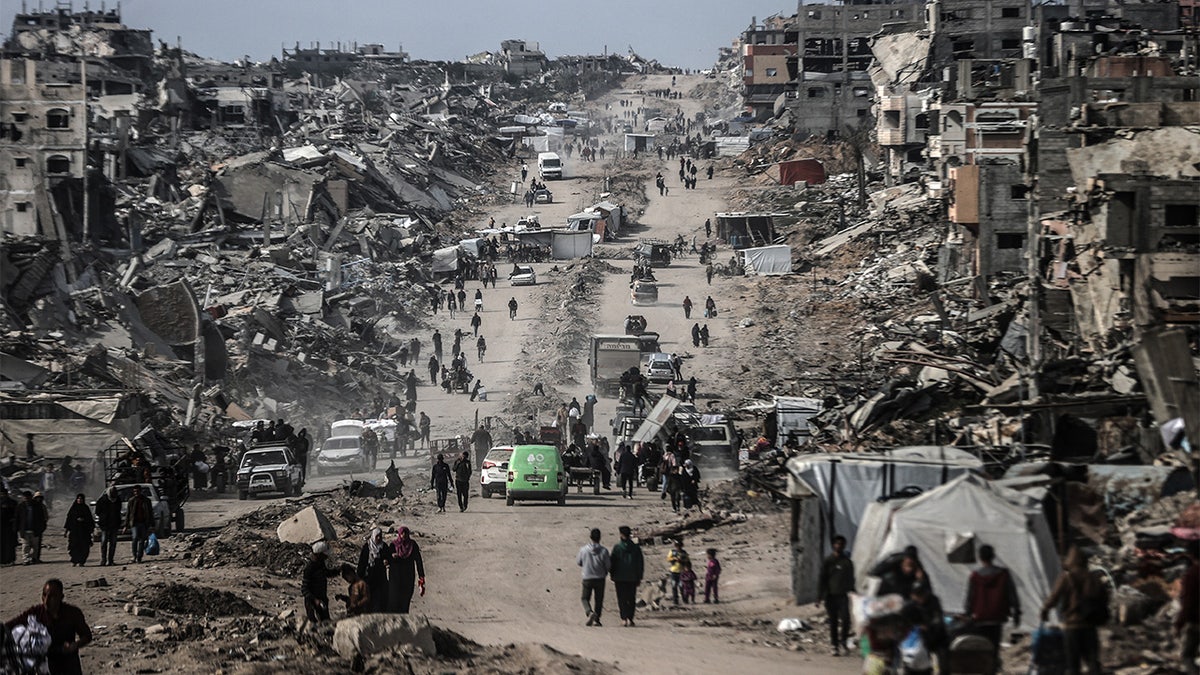
In the grand halls of Algiers, the Pope’s message was stripped of the usual diplomatic fluff. He spoke of the "madness of war," a phrase that sounds simple until you realize it is a direct indictment of the world’s most powerful leaders. He wasn't just talking about the immediate threat of a wider conflict involving Iran. He was addressing the way we have allowed ourselves to become addicted to the language of force. Algeria, a nation that birthed its own identity through a long and bloody struggle for independence, understands this better than most. The soil here is soaked in the memory of what happens when dialogue fails.
The tension between Iran and the West has turned the Middle East and North Africa into a giant tinderbox. Every shipment of arms, every provocative tweet, and every broken treaty is a match struck in a dark room. The Pope’s visit is an attempt to blow those matches out before the floor catches fire. He isn't bringing a policy paper or a new set of sanctions. He is bringing a reminder that the "backdrop" of war is made of flesh and blood.
There is a specific kind of exhaustion that comes from living in a world that feels like it’s constantly on the brink. You can see it in the eyes of the young people in Algiers, who want jobs and futures, not front-row seats to a global catastrophe. They are tired of being the collateral damage of ideologies they didn't choose. When the Pope calls for peace, he is speaking for them. He is validating their right to exist without the constant overhead hum of a potential strike.
Critics often argue that these visits are purely symbolic. They point out that a man in a white robe cannot stop a hypersonic missile. This is true, in a literal sense. But symbols are the only things that have ever truly changed the world. If you change the narrative—if you move the focus from the "strategic interests" of a few to the "human interests" of the many—you start to erode the foundation that war is built upon.
War requires us to see the "other" as a problem to be solved. Peace requires us to see them as a mirror.
The connection between the Iranian crisis and the African continent is deeper than it appears on a map. Global energy markets, migration patterns, and extremist recruitment all shift when the heart of the Middle East starts to beat with the rhythm of war. Algeria sits at a crossroads, a gateway between the Mediterranean and the Sahel. It is a place where the ripples of a conflict in the Gulf turn into waves that can capsize entire economies.
During one of his addresses, the Pope looked out over a crowd that included Christians, Muslims, and those of no faith at all. He didn't speak of dogmas. He spoke of the "common home." It is a concept that is easy to dismiss as idealistic until you consider the alternative. The alternative is a fragmented world where we all die defending our own little corners of the wreckage.
Think about the silence that follows a massive explosion. It is a heavy, ringing vacuum. That is the silence the world is flirting with right now. The Pope’s voice, thin and occasionally wavering, is trying to fill that space before the explosion happens. He is asking Algeria—and the world—to remember that peace is a muscle. If you don't use it, it withers.
We have spent trillions of dollars perfecting the art of killing from a distance. We can steer a drone from an air-conditioned room halfway across the globe. But we have yet to find a way to manufacture the courage required to sit across a table from an enemy and admit that we are both afraid. That is the "invisible stake" of this visit. It is a plea for the return of the human face to the center of our politics.
The shadows are long in Algiers today. As the sun sets over the Mediterranean, the white buildings glow with a pale, ghostly light. The Pope will eventually leave, his plane disappearing into the clouds, heading back to the walled city of Rome. But the questions he left behind remain, hanging in the air like the dust of the Casbah.
We are at a point where the "backdrop" is becoming the main event. We are watching the stage being set for a tragedy that no one wants but everyone seems powerless to stop. The call for peace in Algeria isn't a suggestion. It is a desperate, final warning. It is the sound of a bell ringing in a high tower, telling us that the tide is coming in, and the sand we are standing on is much softer than we thought.
In the end, the missiles and the rhetoric are just noise. The reality is a mother in Algiers, a father in Tehran, and a child in a village we’ve never heard of, all breathing the same air, all hoping that tonight, the sky stays dark and the silence remains unbroken.
The man in white has done his part. He has stood in the wind and pointed toward the horizon. Now, the rest of us have to decide if we are willing to look.