The Pakistani military’s decision to launch targeted airstrikes into Afghan provinces like Khost and Paktika marks the definitive collapse of a decades-old geopolitical gamble. For years, Islamabad operated under the assumption that a friendly, Taliban-led government in Kabul would provide "strategic depth" against India and a compliant partner in securing the 2,640-kilometer Durand Line. Instead, the border has become a sieve for militants, a theater for high-altitude skirmishes, and the primary source of a domestic security crisis that is spiraling out of control.
This is no longer a localized border dispute. It is a fundamental breakdown of the patron-client relationship between the Pakistani state and the Afghan Taliban. When Pakistani jets cross the border to hit Tehrik-i-Taliban Pakistan (TTP) hideouts, they aren't just targeting insurgents. They are signaling to the world that they can no longer control the monster they helped nurture. The TTP, often called the "Pakistani Taliban," shares an ideological DNA and a blood-oat bond with the Afghan Taliban. Expecting the latter to dismantle the former was always a fantasy rooted in desperation rather than data.
The Myth of the Controlled Border
The Durand Line remains one of the most contested and poorly understood demarcations in the world. Kabul has never formally recognized it, viewing the British-era line as an artificial wound through the Pashtun heartland. While Pakistan has spent billions on fencing and surveillance, the physical barriers are failing to stop the flow of tactical expertise and weaponry.
Intelligence reports suggest that the TTP has not only found sanctuary in Afghanistan but has gained access to sophisticated hardware left behind during the 2021 U.S. withdrawal. Night-vision goggles, thermal optics, and M4 carbines are now standard kit for militants who previously relied on rusted AK-47s. This technological upgrade has shifted the "how" of the conflict. Militants no longer need to mass in large numbers for frontal assaults; they use precision snipers and IEDs to bleed the Pakistani Frontier Corps in a war of attrition.
The "why" behind these strikes is equally grim. Pakistan’s internal security has deteriorated to a point where the state feels it must project strength externally to mask internal fragility. With the domestic economy in a tailspin and political polarization at an all-time high, the military is under immense pressure to show results. However, kinetic action in a sovereign neighbor’s territory rarely produces long-term stability. It usually produces more recruits for the insurgency.
The Broken Promise of the Doha Era
During the negotiations that led to the U.S. exit, the narrative was that a Taliban-led Afghanistan would never again allow its soil to be used for international terrorism. Pakistan was the primary guarantor of this narrative. Today, that guarantee looks like a bad check. The Afghan Taliban’s refusal to crack down on the TTP isn't just about incapacity; it is about identity.
The Afghan Taliban view the TTP as brothers-in-arms who supported them during their twenty-year insurgency against NATO forces. To turn on them now would be seen as a betrayal of jihadi ethics and could risk a mass defection of their own fighters to more radical groups like ISIS-K. From Kabul’s perspective, the TTP is a leverage point. As long as the TTP can strike inside Pakistan, Islamabad has to keep coming to the negotiating table with concessions.
This creates a paradox. Pakistan needs a stable Afghanistan to ensure its own security, but its primary tool for achieving that stability—military pressure—is exactly what destabilizes the relationship. Every airstrike is met with defiant rhetoric from Kabul and increased mortar fire across the border. We are seeing the birth of a permanent state of "gray zone" warfare where neither side can win, and neither side can afford to walk away.
The Economic Cost of Kinetic Failures
War is expensive, and Pakistan is broke. The cost of maintaining a massive military footprint along the western border is cannibalizing the national budget. Beyond the direct military expenditure, the instability has choked off the promise of regional connectivity.
The Trans-Afghan Railway and various pipeline projects that were supposed to link Central Asian energy to South Asian markets are now pipe dreams. No investor will put capital into a region where the two primary stakeholders are trading airstrikes. The border crossings at Torkham and Chaman, vital for trade, are frequently closed due to security concerns, costing millions in lost revenue every day.
For the average resident in the tribal districts, the "war on terror" never really ended. It just changed names. The displacement of civilians and the destruction of local markets create a vacuum that the TTP is more than happy to fill with shadow courts and protection rackets. The state’s inability to provide basic services in these "settled" districts is the primary driver of radicalization. You cannot bomb an ideology out of existence when you are simultaneously providing the grievances that sustain it.
A Failure of Intelligence and Diplomacy
The current crisis highlights a staggering failure of the Pakistani intelligence apparatus. For decades, the policy was built on the idea that "good Taliban" (those who fight in Afghanistan) could be separated from "bad Taliban" (those who fight in Pakistan). This binary has proven to be a lethal delusion. The two groups are integrated at the operational, financial, and matrimonial levels.
On the diplomatic front, Pakistan finds itself increasingly isolated. Its traditional allies in the Gulf are more interested in economic diversification than in funding a perpetual border war. China, while concerned about the security of the China-Pakistan Economic Corridor (CPEC), is wary of getting bogged down in the Afghan quagmire. Beijing’s approach is transactional; they want security for their engineers and their investments, and they are losing patience with Islamabad’s inability to provide it.
The Inevitability of the Blowback
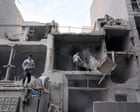
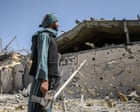
The airstrikes in Khost and Paktika were intended to be a surgical solution to a systemic problem. They were anything but. By hitting targets inside Afghanistan, Pakistan has given the Taliban a nationalist rallying cry. It allows the leadership in Kabul to frame themselves as defenders of Afghan sovereignty against a "foreign aggressor," a narrative that resonates deeply in a country defined by its resistance to outside interference.
Meanwhile, the TTP has moved its operations deeper into the urban centers of Pakistan. The focus has shifted from the border regions to KP (Khyber Pakhtunkhwa) and northern Balochistan. The frequency of suicide bombings and targeted killings in cities like Peshawar and Quetta is a clear indicator that the militants are no longer confined to mountain caves. They are part of the social fabric, making them nearly impossible to extract through conventional military means.
The Pivot to Nowhere
There is no "fix" for the Afghanistan-Pakistan border crisis that involves only drones and artillery. The problem is structural. Pakistan’s foreign policy has been hostage to its security doctrine for so long that it has lost the ability to engage in nuanced diplomacy. It views its neighbors through the lens of threat perception rather than mutual benefit.
Until there is a fundamental shift in how Islamabad views its role in the region, the cycle will continue. The strikes will happen, the militants will retreat, the Taliban will protest, and then the militants will return. It is a carousel of violence that serves no one but the arms dealers and the extremist recruiters.
The era of using proxy groups as tools of statecraft is over. The proxies have become the players, and the players have their own agendas. Pakistan is currently learning the hardest lesson in geopolitics: when you play with fire on your neighbor's porch, the wind eventually shifts, and your own house starts to burn.
Stop looking at the border and start looking at the policy. The fire isn't coming from across the line; it was sparked by the very hands trying to put it out.