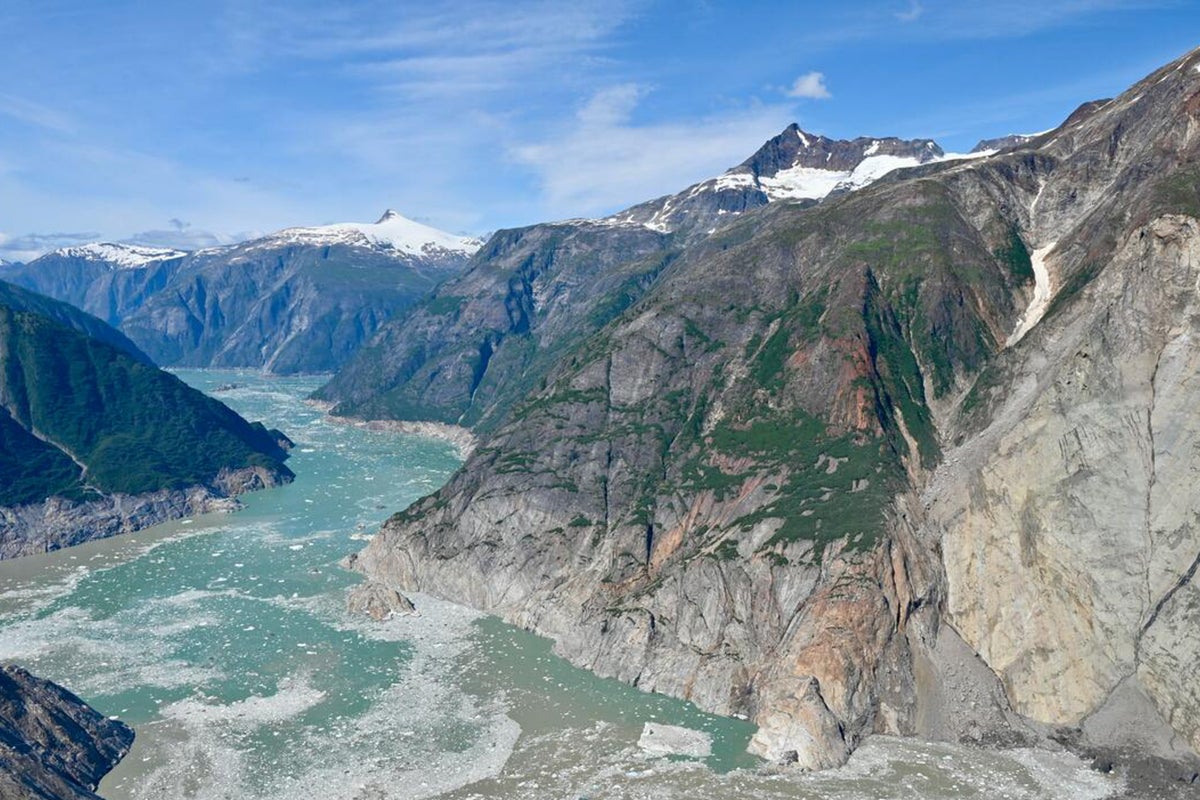
The water in Northwest Georgia doesn’t look like poison. It flows through the Conasauga River, shimmering under the heavy Southern sun, moving past the rolling hills of Dalton with a deceptive, silver grace. If you grew up here, that water was life. It was the spray from the garden hose on a July afternoon. It was the ice cubes in your sweet tea. It was the steam rising from the bath where you scrubbed the red clay off your children’s knees.
But for years, that water carried a passenger. It was invisible. Odorless. Tasteless. And according to the people running the state, it was a secret.
Dalton, Georgia, is the "Carpet Capital of the World." It is a place built on the grit of the working class and the ingenuity of the mills. If you have walked on a carpet in an American office building or a suburban living room, there is a massive chance it was born here. For decades, that industry thrived on a specific miracle of chemistry: PFAS. These "forever chemicals" were the magic ingredient that made carpets stain-resistant. They allowed a spilled glass of red wine to bead up and roll off the fibers like water off a duck's back.
But chemistry doesn't just vanish. When those carpets were washed, treated, and processed, the chemicals washed away into the wastewater. From there, they traveled into the rivers. From the rivers, they entered the intake pipes. From the pipes, they came out of the kitchen tap.
The Paper Trail of Silence
In 2016, the Environmental Protection Agency issued a health advisory. They warned that exposure to certain PFAS chemicals—specifically PFOA and PFOS—could lead to a terrifying list of health problems: kidney cancer, testicular cancer, thyroid disease, and developmental issues in children.
The officials in Georgia didn't need to guess if their water was affected. They already knew.
Internal documents and emails later revealed a chilling timeline. State environmental officials had been tracking high levels of these chemicals in the blood of the water supply long before the public was ever told to stop drinking. While families in Summerville and Rome were filling up their pots for pasta, the people in charge were staring at spreadsheets that showed the "safe" limits had been breached.
They chose a strategy of quiet management over public alarm. They moved behind the scenes, talking to mill owners and municipal water boards, trying to "address the source" without "causing a panic." But a panic is just another word for the truth when your children are drinking floor cleaner.
Consider a hypothetical family in Chattooga County. Let’s call them the Millers. They aren’t activists. They are people who work hard, pay their taxes, and trust that when they turn on the faucet, the liquid coming out won't eventually require an oncologist to explain. For years, the mother drinks the water through two pregnancies. She mixes the baby formula with it. She watches the news, and she hears about the economy, about the local high school football scores, and about the booming success of the carpet industry.
She is never told that the state has data showing her tap water contains chemicals that never leave the human body. She is never told that the very industry providing the jobs in her town is slowly, molecularly, compromising her family's future.
The Chemistry of Forever
To understand why this matters, you have to understand the bond. PFAS is built on the carbon-fluorine bond. In the world of organic chemistry, this is the equivalent of a blood oath. It is one of the strongest bonds in existence. It does not break down in the sun. It does not dissolve in the soil. It does not leave your bloodstream through natural filtration.
Once it is in, it stays. Forever.
http://googleusercontent.com/image_content/211
The water treatment plants in these small Georgia towns weren't built for this. Most municipal systems are designed to kill bacteria and filter out sediment. They are 20th-century solutions for 19th-century problems. They are utterly defenseless against a 21st-century synthetic miracle. To scrub PFAS from the water, you need incredibly expensive carbon filtration systems or reverse osmosis technology that costs millions—money these small towns simply didn't have.
So, the officials waited. They hoped the levels would drop on their own. They hoped the mills would switch to "safer" alternatives—which often turned out to be just different, less-studied versions of the same chemical family.
The betrayal isn't just in the pollution itself. Industry happens. Accidents happen. The betrayal is in the hoarding of the knowledge. When an official knows that a community is being poisoned and decides that the "economic climate" or the "complexity of the data" justifies silence, they are making a cold calculation on the value of a human life.
A Town Under the Surface
When the truth finally began to leak out—much like the chemicals themselves—it didn't come as a grand announcement. It came in fragments. A local news report here. A cryptic letter from the water department there, tucked into a bill, written in the kind of dense, bureaucratic prose designed to be ignored.
"The water meets all current regulatory standards," the letters would say.
Technically, that was a half-truth. Because the EPA hadn't yet set "enforceable" limits, only "advisories," the state could claim they weren't breaking the law. It was a legal loophole used as a shield against a moral catastrophe.
In Summerville, the realization hit like a physical blow. The town had to suddenly switch to bottled water. Imagine the logistical nightmare of a modern American town suddenly losing its most basic utility. Pallets of plastic bottles stacked in gymnasiums. Elderly residents lugging heavy crates into their trunks. The sudden, haunting realization that the "clean" mountain water they bragged about was a myth.
But the fear goes deeper than a trip to the grocery store. It’s the retroactive fear. It’s the father looking at his ten-year-old daughter and wondering if the clusters of illness he’s seeing in the neighborhood are a coincidence or a preview.
The Invisible Stakes
We often talk about pollution in terms of "parts per trillion." It is a measurement so small it feels abstract. It’s a drop of water in an Olympic-sized swimming pool. It sounds like nothing.
But biology doesn't care about our sense of scale. Your endocrine system—the delicate hormonal balance that tells your body how to grow, how to process energy, and how to stay healthy—operates in parts per trillion. Your body is a finely tuned instrument, and PFAS is a sledgehammer to the gears.
The mills in Georgia eventually started to move away from the most notorious versions of these chemicals. Pressure from global retailers like Home Depot and Lowe's did more to change the chemistry of Dalton than the state government ever did. When the big buyers said they would no longer stock carpets treated with PFAS, the industry pivoted.
Money talked. The people's health shouted, but the officials had their earplugs in.
Even now, with some filtration systems being installed and lawsuits winding their way through the courts, the legacy remains. The chemicals are still in the sludge that was spread on local farm fields as "fertilizer." They are still in the sediment of the rivers. They are still in the blood of the people who call the Carpet Capital home.
The story of the Georgia water crisis is a story of what we are willing to sacrifice for the sake of a stain-resistant life. We wanted floors that were easy to clean. We wanted white rugs that stayed white even if we were messy. We traded the sanctity of our internal chemistry for the convenience of our external environment.
And the people who knew the price of that trade decided we didn't need to see the bill until it was far too late to refuse the delivery.
The next time you walk across a plush, soft carpet, feel the fibers beneath your feet. It feels like comfort. It feels like home. But in the hills of Georgia, that comfort was bought with a currency that can never be minted again: the simple, quiet trust that the water from the tap is exactly what it appears to be.
The Conasauga River still flows. It still shimmers. It still looks perfect.
That is the most terrifying thing about it.