The air in the Situation Room doesn’t circulate like the air in a normal office. It feels heavy, filtered, and perpetually chilled, as if the very atmosphere is trying to keep the tempers of powerful men from boiling over. On the monitors, the maps of the Middle East glow with a predatory hum. Green icons represent assets. Red ones represent threats. Somewhere in the Persian Gulf, a young sailor is likely gripping a railing, staring at a horizon that looks exactly like it did yesterday, unaware that his life is currently a data point in a high-stakes timeline.
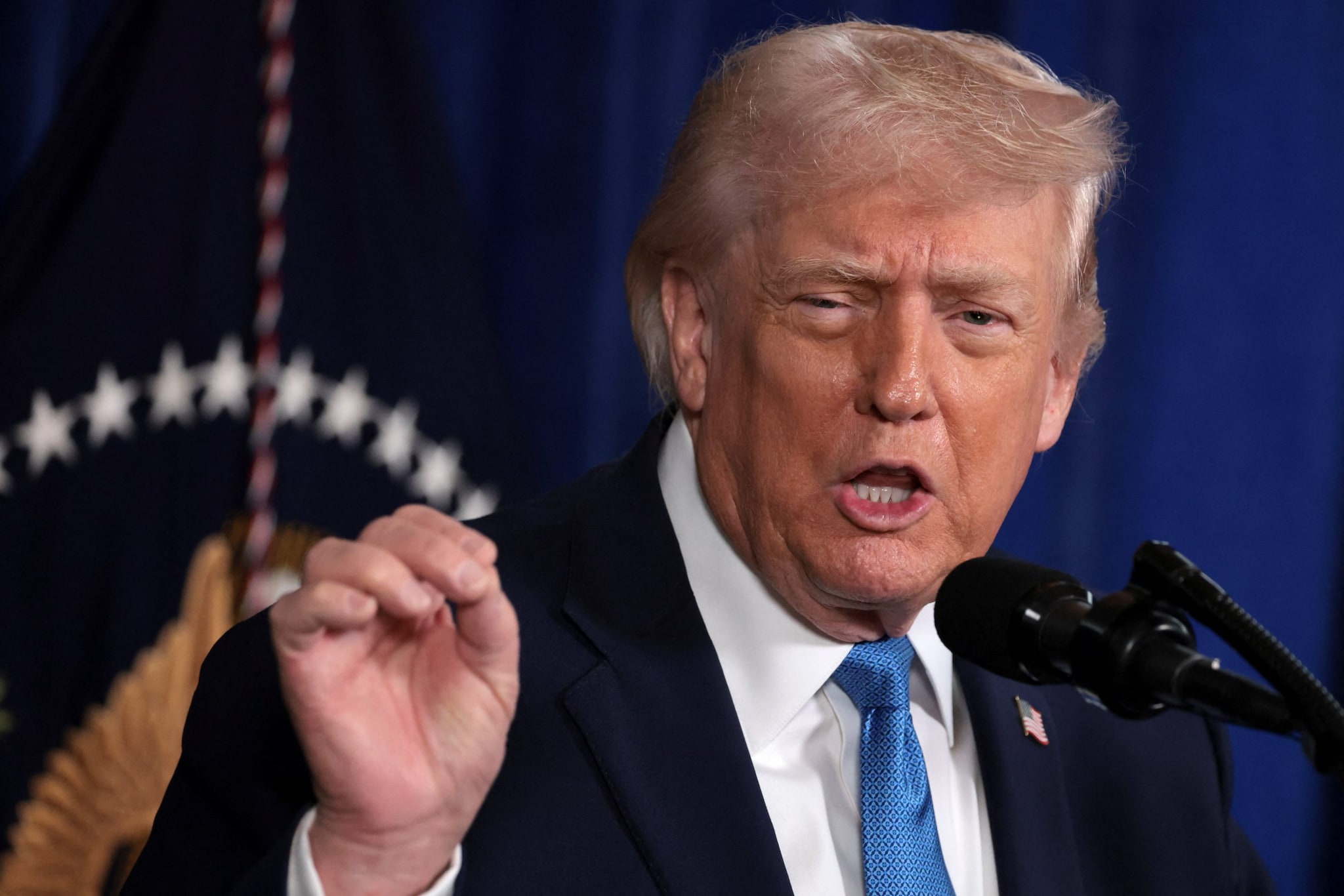
Military operations are usually sold to the public as math. We are told about surgical strikes, logistical chains, and "projected windows of engagement." But war is never math. It is a living, breathing organism that eats schedules for breakfast. When President Trump announced that the current U.S. operation against Iranian interests is "ahead of schedule," he wasn't just giving a status report. He was attempting to defy the oldest law of combat: that once you pull the pin on a grenade, you no longer own the clock.
The projection was four to five weeks. A month. Long enough to break something, but short enough to promise the American public that it won't become another "forever" entanglement. Yet, in the same breath, the administration signaled that the window is elastic. If needed, the operation can stretch. This is where the dry press releases fail to capture the reality of what "stretching" actually looks like for the people caught in the gears.
Consider a hypothetical intelligence officer named Elias. He isn't a hero in a movie. He’s a guy who hasn't slept more than four hours a night in three weeks. His job is to interpret the "ahead of schedule" rhetoric into actionable targets. When the mission is moving fast, the pressure to maintain that momentum becomes a drug. If you’re ahead of schedule, you’re winning. If you’re winning, you don't want to stop. But speed in the desert often leads to a specific kind of blindness. You start seeing what you want to see on the thermal imaging. You start believing that the enemy is as tired of the timeline as you are.
The "ahead of schedule" claim serves a dual purpose. Domestically, it’s a sedative. It suggests a level of competence and technological superiority that borders on the supernatural. It whispers to the voter that this is a tidy, professional affair. Internationally, it’s a psychological hammer. It tells Tehran that their defenses are crumbling faster than anticipated, that the American machine is working with a terrifying, frictionless efficiency.
But the friction always arrives. It’s the invisible tax on every military movement.
The Iranian landscape isn't just a collection of nuclear facilities and drone launch pads. It is a sprawling, mountainous terrain inhabited by people who have spent decades perfecting the art of asymmetrical waiting. While Washington looks at a calendar, Tehran looks at a century. To an American administration, five weeks is a political cycle. To the Revolutionary Guard, five weeks is barely a heartbeat.
When the President says the operation can extend beyond the projected window, he is acknowledging a fundamental truth that most leaders try to hide: the exit is always harder to find than the entrance. The fourth week becomes the sixth. The sixth becomes the tenth. Each day the "ahead of schedule" clock ticks, the definition of success shifts.
What does "ahead of schedule" actually mean in this context? It likely means the suppression of air defenses happened faster than the simulations predicted. It means the supply lines are holding. It means the drones are returning to base with high-value footage. But tactical success is not the same as a strategic conclusion. You can destroy every radar dish from the border to the capital and still find yourself stuck in a conflict that refuses to end because the "enemy" isn't a building you can level. It’s an idea, a grievance, and a geographical reality.
The human cost of an elastic timeline is measured in more than just casualties. It’s measured in the corrosive uncertainty of the families waiting at home. When a mission is "four to five weeks," a spouse can hold their breath. They can mark the days on a fridge calendar. They can tell the kids that Daddy or Mommy will be home by the time the leaves start to turn. When that window becomes "extendable," the breath stays held until the lungs ache. The calendar becomes a taunt.
History is littered with "short" operations that outlived the men who planned them. We have seen this movie before, though we hate to admit it. The rhetoric of efficiency is often the precursor to the reality of exhaustion. The administration’s confidence is a mask, necessary perhaps for the theater of geopolitics, but a mask nonetheless.
Beneath the mask is the cold calculation of the "if needed."
That phrase is the trapdoor. It allows for an infinite expansion of the mission's scope. If the primary objectives are met ahead of schedule, the temptation to add "just one more" objective becomes irresistible. Why not take out that warehouse? Why not push back that border patrol? This is how a targeted operation becomes a campaign, and how a campaign becomes a war.
The invisible stakes are found in the silence between the President's sentences. The stakes are the stability of global oil markets, the fragile alliances with Gulf neighbors who are watching this "ahead of schedule" movement with a mixture of hope and pure, unadulterated terror. They know that if the U.S. breaks the glass and then decides to stay in the room for an extra month, they are the ones who have to live with the shards.
Imagine the conversation in a small apartment in Isfahan. A family hears the roar of a jet they cannot see. They don't know about the four-to-five-week projection. They don't know about the "ahead of schedule" press briefing. They only know that the sky has become a source of dread. For them, the timeline isn't a matter of political optics. It is the boundary between life and the end of it. Their "schedule" is dictated by the whims of a power they will never meet, operating on a logic they will never understand.
The genius of the "ahead of schedule" narrative is that it preemptively silences critics. If you complain that the war is dragging on, the administration can point to the early "successes" as proof of their plan's validity. If the operation extends into its second or third month, they can argue that they are simply "finishing the job" that they started so efficiently. It is a rhetorical win-win that ignores the messy, bloody reality of the ground.
Logic dictates that if an operation is truly ahead of schedule, it should end sooner.
But power rarely walks away from a table when it thinks it has a winning hand. It stays for one more round. Then another. The "projected" window is merely a suggestion, a polite fiction used to gain entry into a room. Once the door is kicked in, the original reasons for being there often become secondary to the reality of presence. We are there because we are there. We stay because leaving would mean admitting that the "schedule" was a lie from the beginning.
The sailors in the Gulf and the pilots in the sky are not thinking about the five-week mark. They are thinking about the next thirty seconds. They are thinking about the vibration in the engine, the flicker on the radar, and the heat of the sun. They are living in the eternal present of the mission. The politicians are the ones living in the future, trying to manage the narrative of a clock they don't actually control.
We want to believe in the tidy war. We want to believe that someone, somewhere, has a spreadsheet that accounts for every bullet and every soul. But the "ahead of schedule" boast is a reminder that even in the age of satellite-guided precision and instant communication, the fog of war is as thick as it was at Gettysburg.
The clock in the Situation Room keeps ticking, but it doesn't measure time. It measures the distance between what we are told and what is actually happening in the dark.
The operation might end in four weeks. It might end in four years. But for the people on both sides of the sights, the schedule died the moment the first shot was fired. Everything after that is just a story we tell ourselves to make the chaos feel like a plan.
The sun sets over the Gulf, casting long, distorted shadows across the decks of the carriers. The water is a deep, bruised purple. Somewhere, a phone rings in a darkened house, and a person picks it up, hoping for a voice that says "it’s over." But the voice on the other end is silent, and the clock on the wall just keeps moving, indifferent to the projections of men in suits.