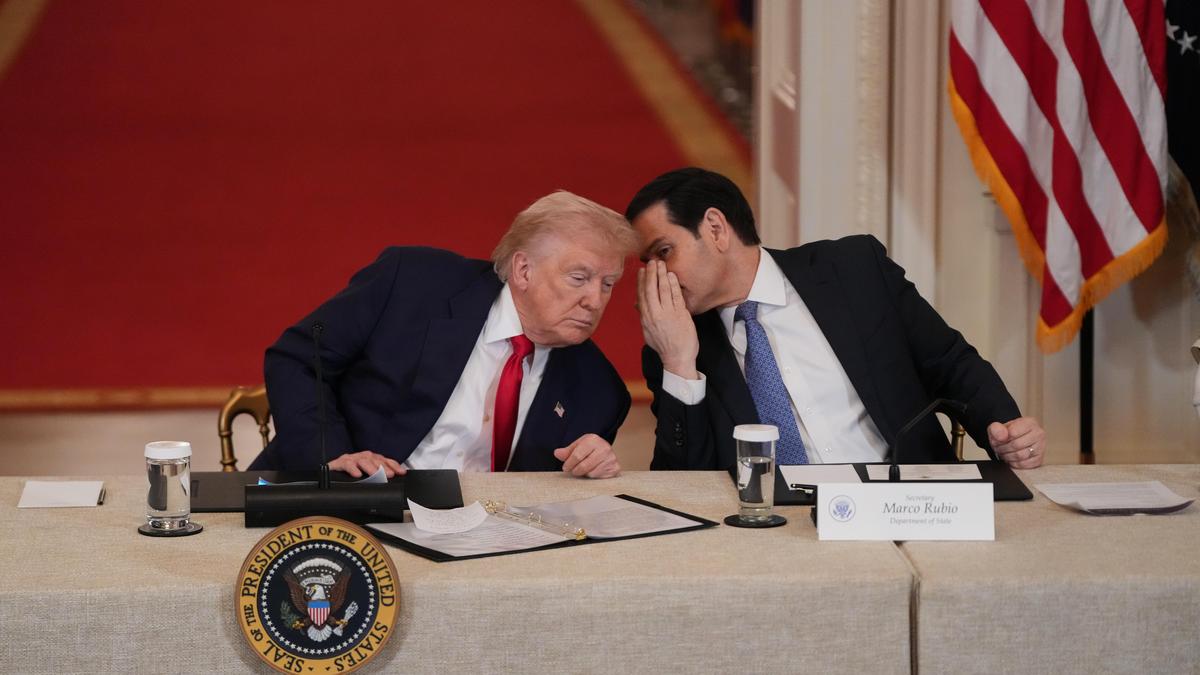
The lights went out in Havana, and the usual suspects in Washington reached for their favorite script. Rubio calls for "new leadership." Trump points to a "failed system." They see a blackout and smell a revolution. They’ve been smelling that same phantom revolution since 1959.
They are wrong. They are missing the structural reality of how resilient, isolated economies actually function.
What the "lazy consensus" views as a terminal collapse is actually a brutal, calculated transition. Cuba isn't "breaking"; it is being force-mutated into a hybrid state-capitalist survival cell. If you think a grid failure equals a regime change, you don't understand the physics of power in a closed system. You're looking at the symptoms—the dark streets, the food queues—and ignoring the immune system that has kept this specific political organism alive through the Special Period, the fall of the USSR, and sixty years of sanctions.
The Grid Fallacy
The narrative pushed by Western media is simple: The lights go out, the people get angry, the government falls. It’s a clean, linear logic that ignores the history of modern authoritarianism.
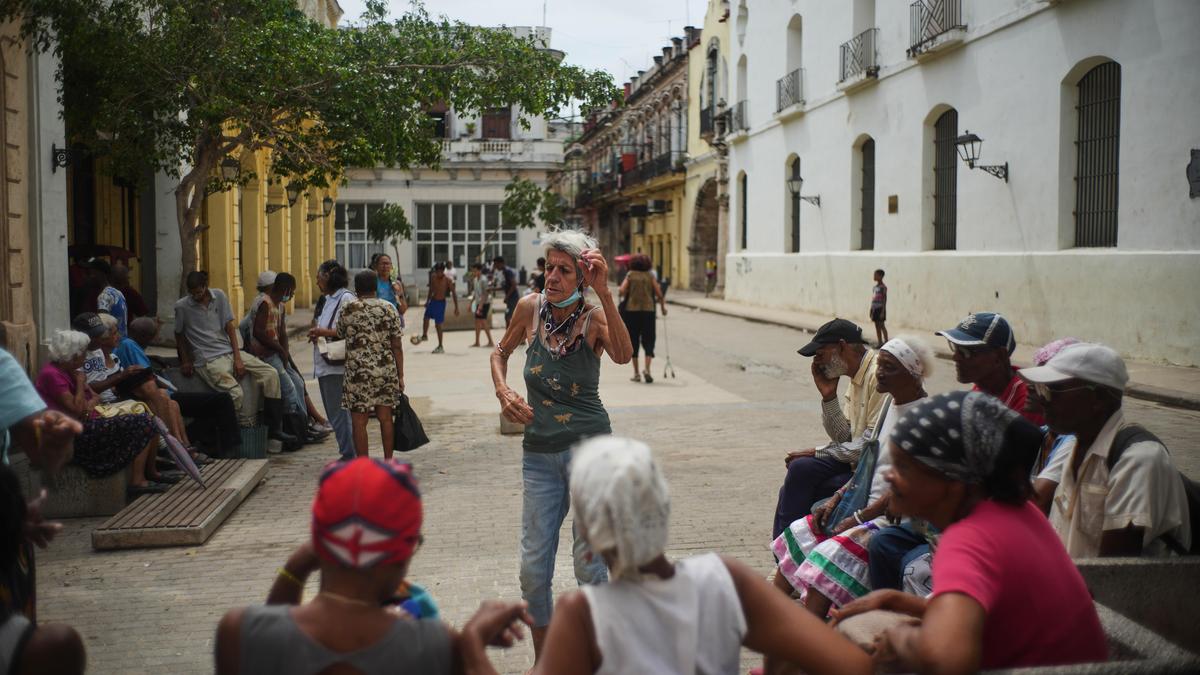
Infrastructure failure is not a political death sentence. It is a management problem. In a command economy, the "state" and the "grid" are decoupled when necessary. The elite neighborhoods, the military headquarters, and the tourist hotels—the hard currency generators—have their own redundancies. The blackout is a tax levied on the poorest, not a threat to the palace.
When the Antonio Guiteras power plant trips, the international press reports on the "energy crisis." But the crisis is the point. Scarcity justifies control. Scarcity justifies the crackdown. Scarcity justifies the "emergency measures" that allow the state to bypass what's left of its own bureaucratic red tape to secure its survival.
The Foreign Policy Hallucination
Rubio and Trump’s calls for "new leaders" assume there is a viable, organized alternative waiting in the wings that can be activated by a lack of electricity. This is a fundamental misunderstanding of the Cuban internal security apparatus.
I have spent decades watching political risk analysts predict the "imminent end" of the Communist Party of Cuba. They always cite the same data: GDP contraction, migration numbers, and caloric intake. They ignore the only metric that matters: the loyalty of the mid-level officer corps.
In Cuba, the military (GAESA) doesn't just hold the guns; they hold the keys to the hotels, the foreign exchange stores, and the supply chains. You aren't looking at a government; you're looking at a conglomerate with a flag. Expecting a blackout to trigger a coup is like expecting a power outage at a Walmart to cause the board of directors to resign. It’s a category error.
The Counter-Intuitive Truth About Sanctions
We are told that "maximum pressure" will eventually reach a breaking point.
Logic suggests that if you squeeze an economy hard enough, the people will rise. History suggests the opposite. When you squeeze a closed system, you don't empower the rebels; you empower the black marketeers and the state-linked oligarchs who are the only ones with the resources to navigate the blockade.
Why Pressure Actually Preserves the Status Quo:
- Elimination of the Middle Class: High-pressure sanctions destroy the independent entrepreneur who needs a stable internet and global banking. Who is left? The state and those the state chooses to feed.
- External Scapegoating: Every failure—from a rusted boiler to a bad harvest—is blamed on the "blockade." The U.S. gives the Cuban government an eternal "get out of jail free" card for its own incompetence.
- The Migration Valve: When things get too bad, the government doesn't face a revolt; it opens the gates. The most frustrated, most capable, and most likely revolutionaries leave for Miami. The U.S. gets a migration crisis, and the Cuban government gets a reduction in internal pressure and a new source of remittances.
The "Failed State" Myth
Is Cuba a failed state? By Western metrics of consumer choice and infrastructure reliability, yes. By the metric of state survival and domestic control, it is one of the most successful entities on the planet.
People ask, "How can they keep going like this?" They ask the wrong question. They should ask, "Who benefits from this specific type of dysfunction?"
The answer is the new class of "techno-bureaucrats" who are currently privatizing pieces of the Cuban economy under the guise of SME (pymes) reforms. These aren't grassroots capitalists. They are the sons and daughters of the revolution, trading their olive drab for Italian wool. They are watching the Russian model of the 1990s and the Chinese model of the 1980s, and they are carving up the island while the world waits for a "collapse" that isn't coming.
The Real Danger of the Current Rhetoric
The "freedom is near" rhetoric from Florida politicians isn't just wrong; it’s dangerous because it prevents a cold-blooded assessment of the reality.
If we keep waiting for a "Berlin Wall moment" in Havana, we will be waiting while the island becomes a permanent outpost for Russian intelligence and Chinese SIGINT. While we tweet about blackouts, Beijing is building ports. While we talk about Rubio’s "strong words," Moscow is restructuring Cuban debt.
We are playing a 20th-century game of ideology against a 21st-century game of geopolitical real estate.
Stop Looking at the Lights
If you want to know when Cuba will change, stop looking at the power grid. Stop looking at the food lines.
Start looking at the shipping manifests in the Port of Mariel. Start looking at the ownership structures of the new "private" firms. Start looking at the backroom deals between Havana and the BRICS+ nations.
The Cuban government is currently performing a high-wire act: transitioning from a subsidized Soviet relic to a decentralized, autocratic security state. The blackouts are just the noise of the old machinery grinding to a halt. The new machinery—quiet, cynical, and deeply integrated with our global adversaries—is already being installed.
Washington’s obsession with "regime change" via economic strangulation is a relic. It is a policy designed for a world that no longer exists, pushed by politicians who prefer a convenient narrative over a complex truth.
The crisis in Cuba isn't a prelude to a revolution. It’s the smoke from a massive, structural pivot that the West is completely ignoring.
Instead of waiting for the Cuban people to do the impossible, we should be asking why we are making it so easy for the regime to sell the island's sovereignty to the highest bidder in the East. But that would require a level of nuance that doesn't fit into a campaign speech.
The lights are out in Havana, but the regime sees perfectly well in the dark.