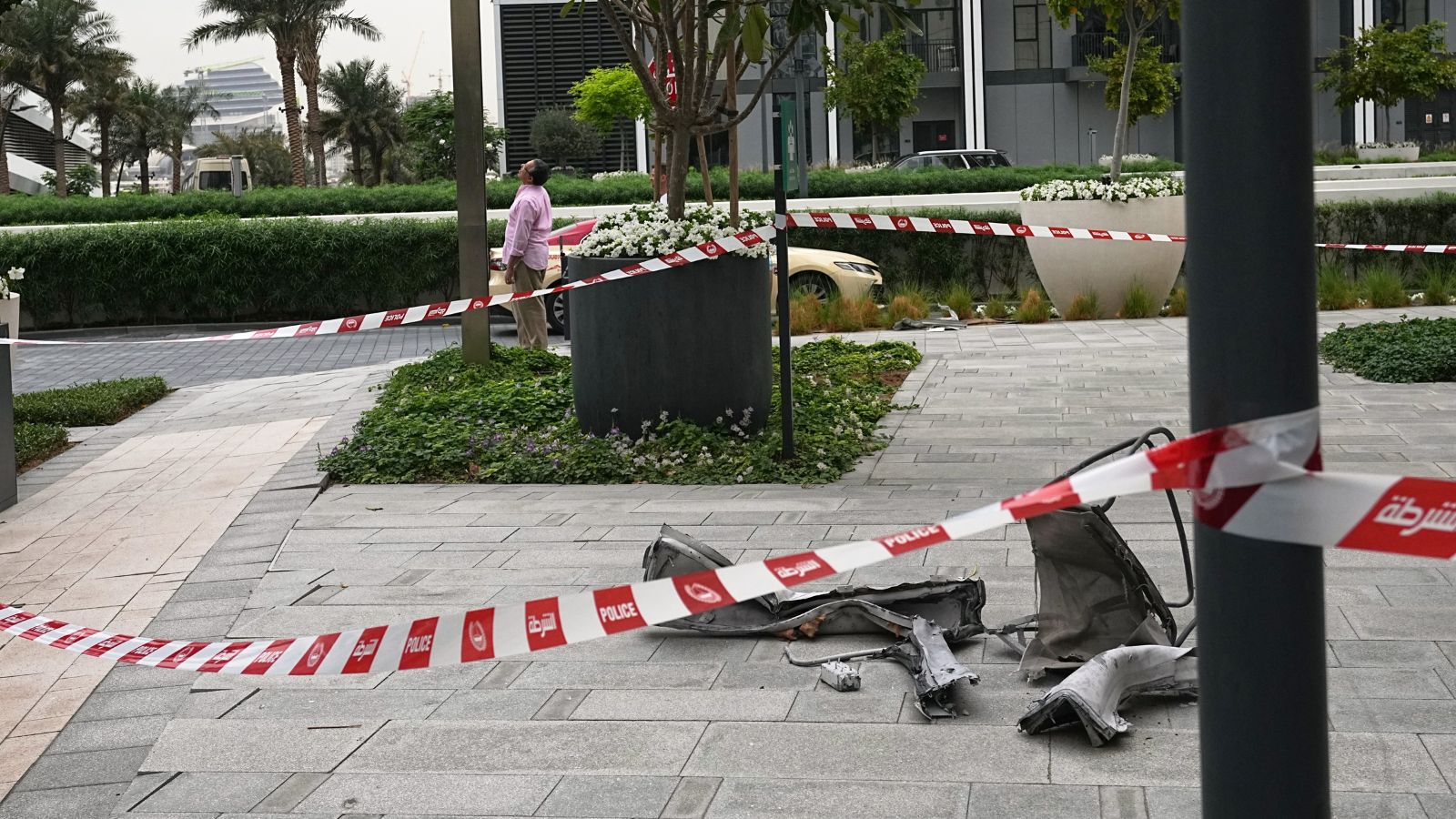
The headlines are carbon copies of a tired script. "Industrial area hit." "Abandoned warehouse struck." "Surgical precision demonstrated."
If you believe the standard narrative, the recent US-Israeli strike near Tehran was a masterclass in kinetic diplomacy. The consensus suggests that by hitting "abandoned" facilities or "industrial" zones, the coalition sent a sophisticated message while avoiding escalation.
They are wrong.
Calling a strike on an empty building a success is like bragging about winning a boxing match against a heavy bag. It looks good on a highlight reel, but it does nothing to stop the guy in the other corner who is actually planning to hit you back. When you target "abandoned" infrastructure, you aren't demonstrating power. You are demonstrating a lack of intelligence or, worse, a lack of nerve.
The Intelligence Void in Industrial Warfare
In modern kinetic operations, there is no such thing as an "abandoned" target of value.
If a warehouse is truly abandoned, hitting it is a waste of a multimillion-dollar munition. If it is being used as a "shell" to mask underground activity, calling it "industrial" is a failure of nomenclature. The media loves the term "industrial area" because it sounds productive without being provocative. It suggests we are hitting the enemy's gears without killing their people.
Here is the reality I have seen after years of analyzing satellite imagery and logistics chains: the most dangerous assets are never in the buildings that look like factories.
Real capability sits in hardened, deeply buried facilities that $2,000lb$ joint direct attack munitions (JDAMs) barely scratch. When a strike hits an "industrial area" and the result is a pile of corrugated metal and dust, the adversary isn't mourning a loss. They are laughing at the bill. We spent $100,000 on a missile to destroy $5,000 worth of scrap metal.
That isn't a strike. It’s an expensive form of urban renewal.
The Escalation Ladder is a Circle
The "lazy consensus" argues that hitting low-value targets allows for "calibrated escalation." The logic is that you can climb the ladder of intensity one rung at a time.
This theory is dead.
In the Middle East, the escalation ladder isn't a ladder; it’s a circle. When you hit a secondary or tertiary target, you don't deter the opponent. You provide them with a low-cost opportunity to retaliate. By striking an "abandoned" site, the US and Israel gave Tehran a PR victory. Iran can now claim they stood up to "Zionist aggression" while suffering zero actual degradation of their nuclear or missile breakout capacity.
We have reached a point where "precision" has become a crutch for indecision. We are so precise at hitting nothing that we have forgotten how to hit things that matter.
The Logistics of Deception
Let's talk about the math of the strike.
To hit a target in the Tehran periphery, you aren't just dropping a bomb. You are coordinating mid-air refueling, electronic warfare (EW) suites to jam S-300 or S-400 batteries, and high-altitude surveillance. The operational cost of a single sortie into contested airspace is staggering.
Imagine a scenario where a CEO spends $50 million on a marketing campaign to reach three people who already bought the product. That CEO would be fired. Yet, in the realm of geopolitics, we applaud this as "strategic restraint."
The "abandoned warehouse" is often a deliberate decoy. Iranian doctrine—inherited from Soviet "Maskirovka" and refined through decades of sanctions—relies on thermal decoys and inflatable structures. If your post-strike assessment shows an "industrial area" hit, there is a high probability you just helped the enemy test their camouflage.
Why Conventional Wisdom Fails
- The "Message" is Never Received: Generals think they are sending a message. The recipient only sees a miss.
- Resource Exhaustion: Every "symbolic" strike burns through high-end munitions that are increasingly scarce due to global supply chain crunches and other active fronts.
- Intelligence Laundering: Frequently, "industrial" targets are selected not because they are vital, but because they are the only ones the legal department will sign off on.
The High Cost of Playing It Safe
I’ve sat in rooms where "collateral damage estimation" (CDE) software dictates the entire war plan. If the probability of breaking a civilian window is too high, the target is scrubbed. While this is ethically sound, it has led to a tactical environment where we only hit things that don't matter.
We are prioritizing the optics of the strike over the outcome of the strike.
If the goal is to stop a regional power from achieving nuclear parity or exporting ballistic technology, hitting a warehouse near Tehran is theater. It’s a pyrotechnic display for a domestic audience.
Real deterrence requires hitting the "Irreplaceable."
- The Command Nodes: Not the buildings, but the people who occupy them.
- The Power Grid: Specific, high-voltage transformers that take years to replace.
- The Financial Hubs: The digital architecture that allows a sanctioned regime to move money.
Everything else is just noise.
Stop Asking if the Strike Was "Successful"
People always ask: "Did they hit the target?"
That is the wrong question. The right question is: "Was the target worth hitting?"
If the answer is "an abandoned industrial site," then the mission was a failure regardless of how many bombs hit the bullseye. We are currently obsessed with the process of warfare—the stealth, the flight paths, the payload—while ignoring the purpose.
This "surgical" approach has created a "forever-war" loop. Because we never deliver a knockout blow to the infrastructure that actually sustains a regime's kinetic capability, we are forced to keep coming back every six months to "mow the grass."
It’s time to admit that these strikes are a form of geopolitical cope. They allow leaders to say they "acted" without having to deal with the consequences of actually winning.
Stop celebrating the destruction of empty sheds. Until we are willing to target the physical and digital foundations of the adversary's power, we are just rearranging the rubble.
The next time you see a report about a strike on an "industrial area," don't look at the explosion. Look at what was left standing. That’s where the real war is being lost.