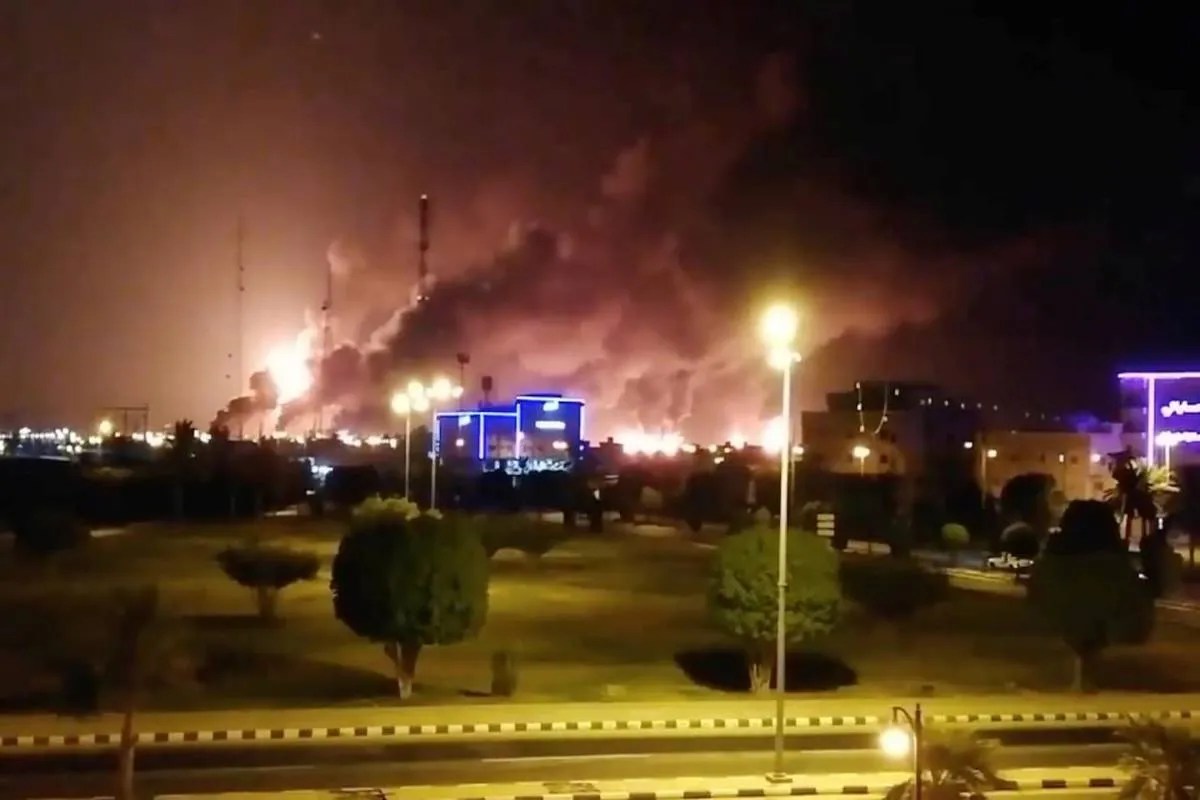
The global energy market operates on a fragile illusion of security that vanished the moment a swarm of low-cost drones bypassed multi-billion dollar defense systems to strike the heart of Saudi Arabia’s oil infrastructure. When the Abqaiq processing facility and the Khurais oil field went up in flames, the world didn't just lose 5.7 million barrels of daily crude production. It lost the certainty that the traditional guardians of the global economy could actually protect the flow of oil. This wasn't just a localized skirmish or a headline-grabbing fire. It was a surgical demonstration of asymmetric warfare that rendered traditional military spending metrics obsolete overnight.
The immediate fallout was a record-breaking spike in Brent crude prices, the largest single-day jump since the 1990s. But focusing on the price per barrel misses the structural rot this event exposed. For decades, the logic of energy security relied on the "Fortress Aramco" mentality. The belief was that the sheer scale of Saudi infrastructure, backed by American-made Patriot missile batteries and sophisticated radar, made it an impenetrable vault. That belief is dead. The strikes proved that a motivated actor using off-the-shelf technology and clever flight paths can cripple the world's most profitable company with a fraction of the budget required to defend it.
The Calculus of Cheap Destruction
The hardware used in these attacks—specifically the delta-wing drones and small-diameter cruise missiles—costs less than a luxury SUV. In contrast, the interceptor missiles used to defend these sites cost millions of dollars per shot. This is the new, brutal math of Middle Eastern energy logistics. You cannot win a war of attrition when your shield costs a thousand times more than the enemy’s sword.
The technical failure at Abqaiq was not necessarily a failure of the Patriot systems themselves, which are designed to intercept high-altitude ballistic threats. Instead, it was a failure of imagination. The attackers utilized low-altitude, "nap-of-the-earth" flight paths that hug the terrain to stay beneath radar horizons. By the time the heat signatures were detected, the kinetic impact was inevitable.
This creates a permanent risk premium that will now be baked into every barrel of oil coming out of the Gulf. Analysts who treat this as a one-off "black swan" event are ignoring the proliferation of drone technology across the region. The barrier to entry for destabilizing a global commodity has never been lower.
Beyond the Smoke at Abqaiq
While the physical fires were extinguished within days, the structural fires in the boardroom of the Saudi Ministry of Energy are still smoldering. The kingdom’s entire economic transformation strategy, known as Vision 2030, depends on a high valuation of Saudi Aramco. When the "world's most reliable supplier" shows it can be taken offline by a handful of drones, the risk profile for international investors shifts from "safe haven" to "vulnerable asset."
The ripple effects extend far beyond Riyadh.
- Insurance Premiums: Shipping lanes in the Persian Gulf saw war-risk insurance rates climb by nearly 200 percent in the months following the strike.
- Refinery Sophistication: The strike targeted "stabilization" towers—the specialized equipment that removes hydrogen sulfide and reduces the vapor pressure of crude. These are not items you can order on Amazon. They are custom-engineered structures that take months or years to replace.
- The SPR Dilemma: The United States and other IEA nations were forced to signal a release from Strategic Petroleum Reserves. This signaled to the market that the world’s "spare capacity" is actually a myth if the primary source is under constant threat.
The Geopolitical Fingerprint
Attributing these attacks to Yemen’s Houthi rebels, as was initially claimed, serves a convenient political narrative but fails the smell test of military intelligence. The sophistication of the flight paths, the synchronized timing, and the precision of the impact points suggest a level of command and control that points toward a more established state actor.
Intelligence agencies quickly pivoted their focus toward Iran, citing the direction of the drones and the debris recovered from the sites. This creates a terrifying stalemate. If the world’s oil supply is being held hostage by a nation that feels it has nothing to lose under heavy sanctions, then the price of oil is no longer determined by supply and demand. It is determined by the tolerance for regional escalation in Tehran.
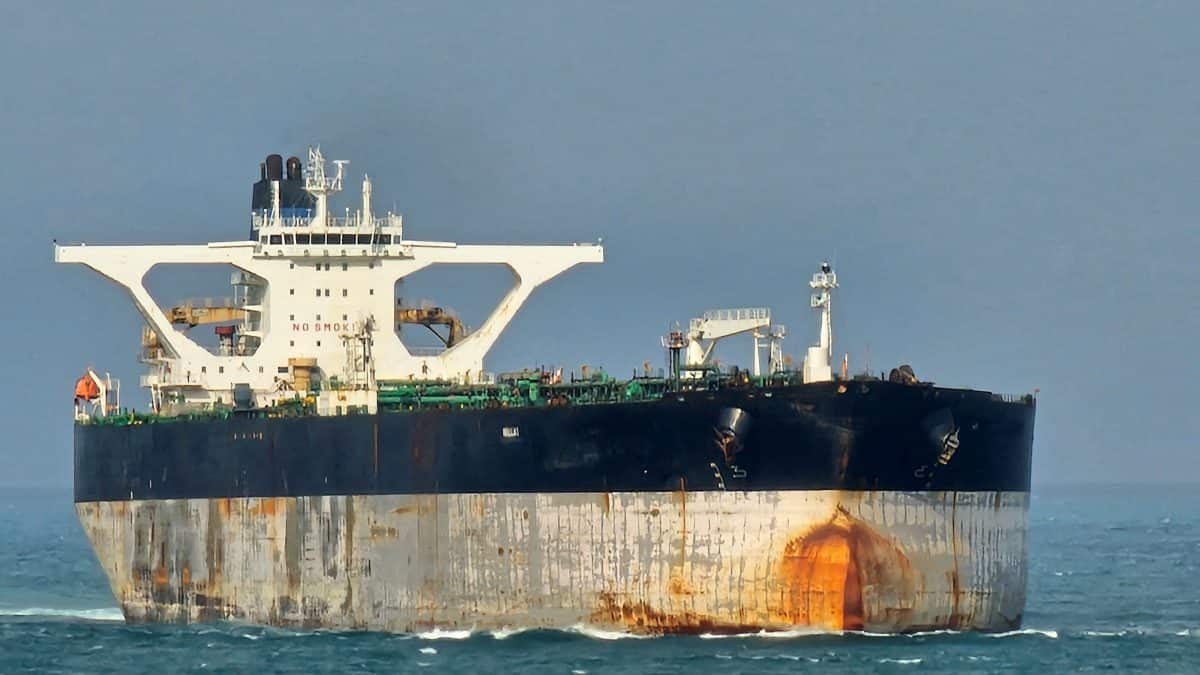
The "Tanker Wars" of the 1980s were about blocking straits and slow-moving ships. This new era is about "Point Defense" failure. You can protect a ship, but you cannot protect every square inch of a sprawling desert refinery from a swarm of twenty drones coming from different directions simultaneously.
The Myth of Energy Independence
The common refrain in North America is that domestic shale production provides a "cushion" against Middle Eastern instability. This is a fundamental misunderstanding of how a globalized commodity market works. Oil is fungible. When 5 percent of the global supply disappears in a single afternoon, the price of a barrel in West Texas rises just as fast as a barrel in Dubai.
Even if the United States produces more than it consumes, its refineries are often configured to process the "heavy, sour" crude that comes from the Middle East. Losing the Saudi supply doesn't just raise prices; it creates a chemical mismatch in the global refining system. The Abqaiq strike proved that no amount of domestic drilling can insulate a modern economy from the shockwaves of a drone strike 7,000 miles away.
Cyber Physical Convergence
What is rarely discussed in the post-mortem of the Aramco attacks is the potential for a coordinated cyber-physical strike. While the drones did the physical damage, the ability to suppress early warning systems or manipulate the pressure valves within the refinery during an emergency could turn a small fire into a total loss.
We are entering an era where the "kinetic" (the bomb) and the "digital" (the code) are used in tandem. Aramco has been the target of massive cyberattacks in the past—most notably the Shamoon virus that wiped 30,000 hard drives in 2012. The 2019 drone strikes were the physical manifestation of that same intent: total paralysis of the Saudi state’s primary revenue stream.
Tactical Reality vs. Political Rhetoric
Politicians often speak of "red lines" and "proportional responses." However, in the energy sector, there is no such thing as a proportional response to a refinery fire. Once the supply is gone, the damage is done. The Saudi response—investing heavily in "anti-drone" laser technology and electronic jamming—is an attempt to close the barn door after the horse has bolted.
The reality is that defense is always harder than offense. An attacker only needs to get one drone through. The defender must stop all twenty. In a facility like Abqaiq, which covers an area the size of several hundred football fields, achieving 100 percent interception is a mathematical impossibility.
The End of the "Safe" Oil Era
Investors and governments must stop viewing these attacks as geopolitical noise. They are the signal. The signal says that the infrastructure of the 20th century is fundamentally incompatible with the warfare of the 21st century. We have built massive, centralized nodes of immense value and left them exposed to decentralized, low-cost threats.
The transition to renewable energy is often framed as an environmental necessity, but the Aramco strikes make the case for it as a national security imperative. A decentralized power grid made of millions of solar panels and wind turbines cannot be taken down by a single drone swarm. You cannot "firebomb" a distributed energy system into a global recession.
For now, the world remains tethered to the vulnerabilities of the Saudi desert. Every time a drone launches in the Middle East, the global economy holds its breath. This isn't a temporary state of affairs; it is the new baseline for the energy market. The true cost of oil isn't found on a ticker tape in New York or London. It is found in the price of the missiles required to protect the wells, and as we saw at Abqaiq, that is a price the world can no longer afford to pay.
The next strike won't be a surprise; it will be a confirmation that the world chose to ignore the warning signs written in the black smoke over the Saudi desert.
Watch the skies, because the radar isn't.