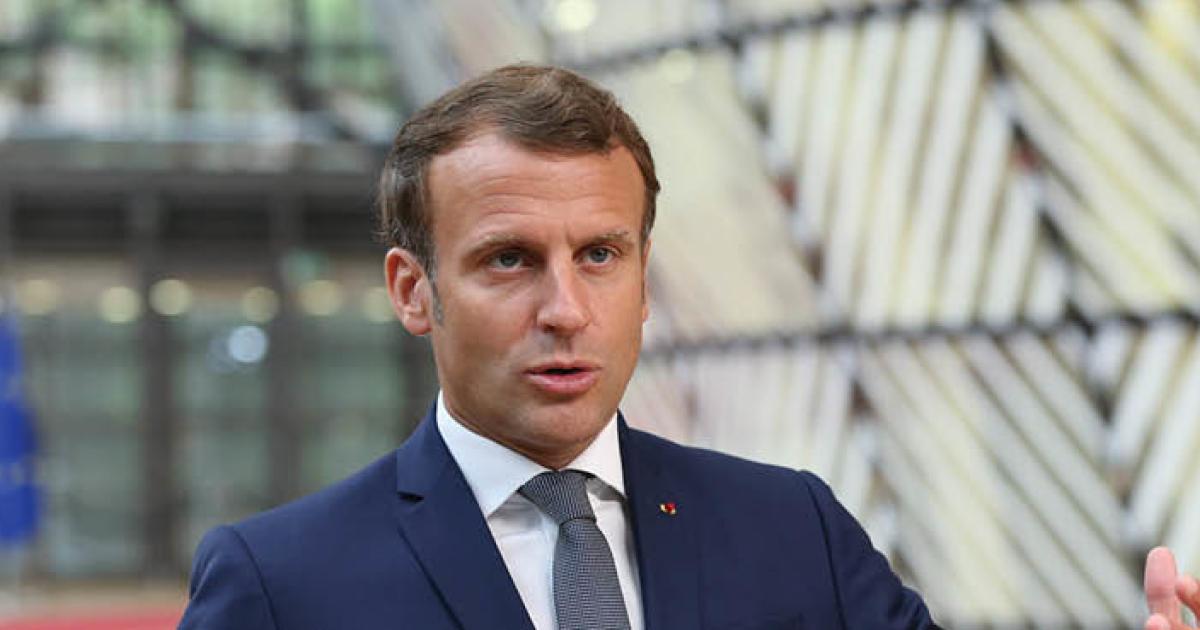
Emmanuel Macron is playing a high-stakes game of diplomatic poker where the chips are regional stability and France’s remaining shreds of influence in the Middle East. By declaring Lebanon’s struggle "just" in the face of intensifying Israeli military operations, the French President isn't merely offering a moral platitude. He is attempting to wedge France back into a Levant power dynamic that has largely moved on without Paris.
The reality on the ground is a devastating convergence of military escalation and state collapse. As Israeli airstrikes pound Hezbollah strongholds and move closer to the heart of Beirut, the Lebanese state remains a shell of itself, paralyzed by a vacuum of leadership and a ruined economy. Macron’s rhetoric serves a dual purpose: it signals to the Arab world that a Western power still recognizes Lebanese sovereignty, and it attempts to restrain an Israeli administration that increasingly views the Lebanese border through a purely kinetic lens. You might also find this related coverage interesting: Strategic Asymmetry and the Kinetic Deconstruction of Iranian Integrated Air Defense.
The Strategy of the Moral High Ground
France has long viewed Lebanon as its special responsibility, a remnant of the Mandate era that Paris refuses to let go. However, "responsibility" is a heavy word for a country that cannot provide its own electricity, let alone defend its borders. When Macron calls the fight just, he is speaking to the Lebanese people over the heads of their dysfunctional political class. He is trying to preserve the idea of the Lebanese State as a distinct entity from Hezbollah, even as those lines become increasingly blurred by the heat of war.
This isn't just about sentiment. It is about preventing a total regional contagion. If Lebanon collapses into a failed state or becomes a permanent battlefield, the resulting migrant waves and security vacuums will hit Europe first. France knows this. The "just" label is a diplomatic shield intended to prevent the total delegitimization of the Lebanese Armed Forces, which remain the only institution even theoretically capable of holding the country together. As reported in latest articles by The Guardian, the effects are notable.
The Friction Between Paris and Jerusalem
The relationship between the Élysée and the Prime Minister’s Office in Jerusalem has reached a freezing point. Macron’s recent calls for an arms embargo on weapons used in Gaza and Lebanon were met with visible fury from Benjamin Netanyahu. The disagreement isn't just about tactics; it’s about the definition of victory.
Israel views its campaign as an existential necessity to return displaced citizens to the north. For the IDF, the "just" cause is the removal of a missile threat on their doorstep. For Macron, the "just" cause is the survival of Lebanon as a sovereign nation. These two definitions are currently incompatible. Every strike that hits civilian infrastructure or Lebanese military outposts pushes the two allies further apart.
Macron is betting that by positioning France as the advocate for Lebanese sovereignty, he can lead a multi-lateral coalition to eventually broker a ceasefire. This assumes, perhaps wrongly, that the warring parties are still interested in European mediation. The United States remains the only power with the actual leverage to stop the engines of war, leaving France to perform the role of the global conscience—a role that carries significant prestige but often lacks tangible results.
The Hezbollah Dilemma
You cannot talk about Lebanon’s "just" fight without addressing the elephant in the room. Hezbollah is a state within a state, a social services provider, and a heavily armed militia all at once. Macron’s strategy has always been one of "critical engagement" with Hezbollah’s political wing, a move that has historically irritated Washington and Jerusalem.
The French gamble is that by acknowledging the legitimacy of the Lebanese cause, they can empower the non-aligned elements of society to reclaim their country. It is a long shot. Hezbollah’s grip on the south and its integration into the Lebanese political fabric make it nearly impossible to support "Lebanon" without inadvertently providing cover for the group that triggered the current escalation.
The Military Reality vs Diplomatic Fantasy
The Lebanese Armed Forces (LAF) are in a precarious position. They are funded largely by the U.S. and Qatar, trained by Western powers, yet they are unable to challenge Hezbollah or stop Israeli incursions. Macron’s rhetoric puts the LAF in an impossible spotlight. To be the defenders of a "just" cause, they would need the hardware and the mandate to actually defend the border. Currently, they have neither.
Instead, the LAF spends its time managing internal refugees and trying to prevent a sectarian civil war from reigniting in the streets of Beirut. When Paris talks about a just fight, it is often referring to this internal struggle for the soul of the nation, rather than the exchange of fire across the Blue Line.
The Economic Ghost at the Table
Lebanon’s true vulnerability isn't just the missiles; it’s the empty treasury. The Lebanese Lira has lost over 98% of its value since 2019. Banks have locked depositors out of their life savings. The port of Beirut remains a scarred ruin years after the 2020 explosion.
Macron’s focus on the "just" nature of the conflict is partly a distraction from the fact that the international community—France included—has failed to force the Lebanese elite to implement any meaningful reforms. Without a functional economy, Lebanon cannot sustain a defense, a government, or a future. The war is simply the final weight on a bridge that was already buckling.
A Legacy at Risk
For Emmanuel Macron, Lebanon is a personal project. He was the first world leader on the ground after the port blast. He has hosted summit after summit in Paris. If Lebanon falls, it is a direct indictment of French foreign policy in the 21st century.
The rhetoric is getting sharper because the options are getting fewer. By framing the conflict as a matter of justice, Macron is trying to move the conversation away from the brutal math of military attrition. He is appealing to international law and the UN Charter at a time when those concepts are being shredded in real-time across the Middle East.
The Limits of Soft Power
Soft power is a luxury of peacetime. In the middle of a multi-front war, words like "just" and "sovereignty" carry less weight than the tonnage of a 2,000-pound bomb. France’s influence is limited by its lack of military skin in the game. While French UNIFIL troops sit in the crossfire in southern Lebanon, their presence is more symbolic than deterrent.
The real test will come in the next few weeks. If Israel expands its ground operation and the Lebanese state formally fractures, Macron’s declarations will be remembered as the eulogy for a country France couldn't save.
The path forward requires more than just high-minded speeches. It requires a hard-nosed realization that Lebanese sovereignty cannot exist as long as the country is used as a proxy battlefield for regional powers. If France wants to be the champion of a "just" fight, it must find a way to make the Lebanese state relevant again, starting with the immediate election of a president and the stabilization of the border through a reinforced UN mandate that actually has teeth.
Demand that your representatives stop treating Lebanese sovereignty as a theoretical concept and start treating it as a security requirement for the Mediterranean.