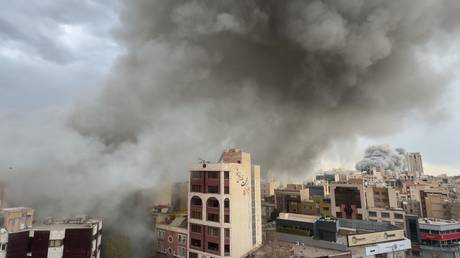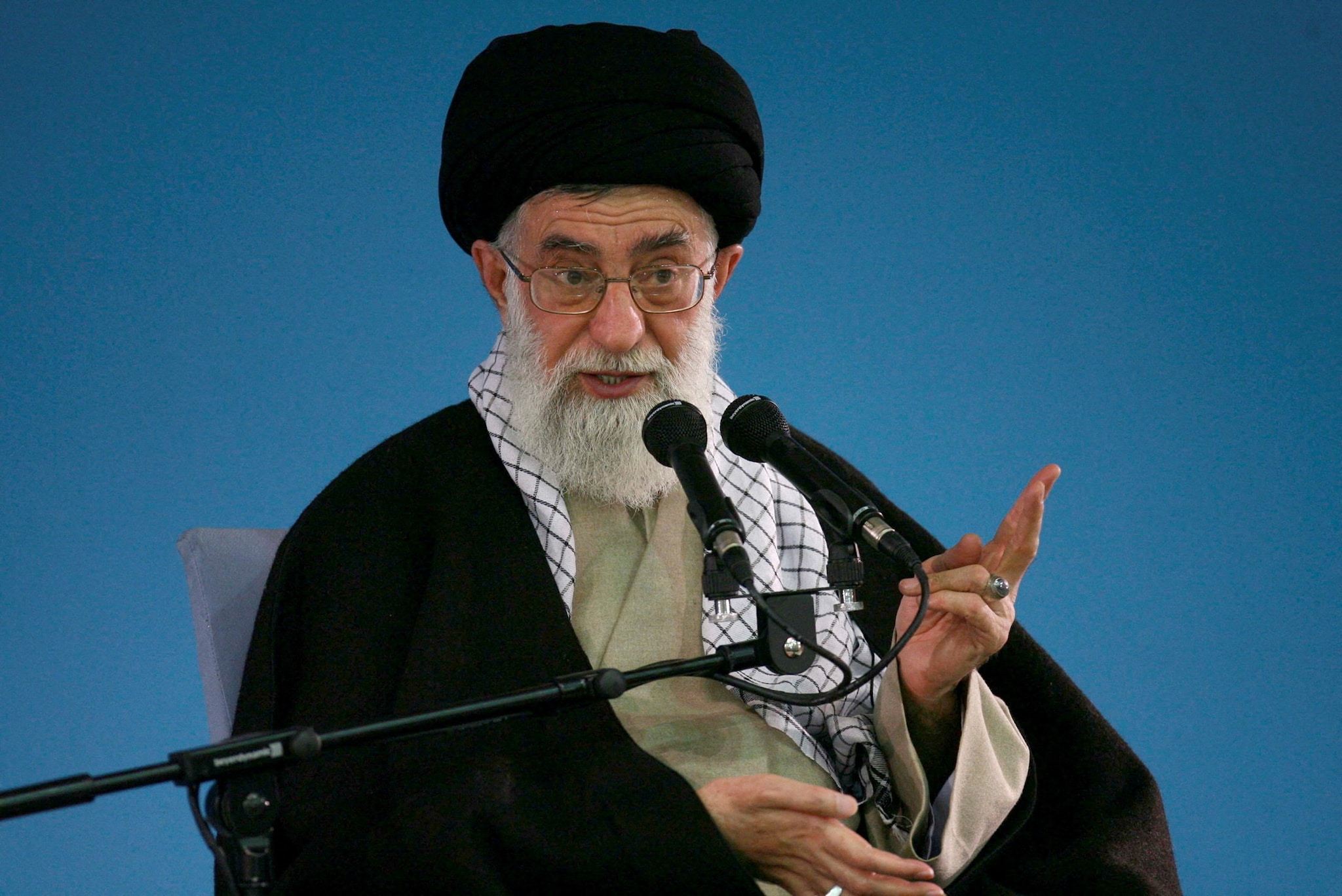
The death of Mansoureh Khojasteh Bagherzadeh, widow of the late Supreme Leader Ali Khamenei, following an insurgent attack, represents more than a personal tragedy for the ruling elite; it functions as a critical stress test for the Islamic Republic’s internal security apparatus and its symbolic continuity. In the wake of Ali Khamenei’s passing, the Iranian state has entered a phase of "successional friction" where the traditional pillars of power—the Office of the Supreme Leader, the Islamic Revolutionary Guard Corps (IRGC), and the clerical establishment in Qom—must navigate a landscape of diminished charismatic authority and escalating kinetic threats. This event accelerates the erosion of the "Shield of Sanctity" that historically protected the inner circle of the leadership, signaling a shift from ideological deterrence to a state of reactive, high-attrition internal defense.
The Triad of Institutional Vulnerability
The attack on a figure as central to the revolutionary identity as Bagherzadeh reveals three distinct failures in the Iranian strategic architecture. To understand the gravity of this breach, one must categorize the state's defensive posture into the following components:
- Intelligence Permeability: The ability of an adversarial element to track, locate, and strike a high-value target (HVT) within a supposedly "sterile" security zone indicates a compromise in the counter-intelligence layers. This suggests either a sophisticated external operation or, more likely, "insider-aided" penetration where systemic dissatisfaction within the security ranks facilitates operational windows for attackers.
- The Deterrence Deficit: Historically, the Iranian state relied on the perceived omnipresence of its intelligence services (VAJA and the IRGC Intelligence Organization) to prevent domestic strikes. An attack of this magnitude demonstrates that the cost-benefit analysis for insurgent groups or foreign proxies has shifted. The perceived penalty for targeting the "Inner House" no longer outweighs the symbolic and political utility of the strike.
- Succession Vacuum Mechanics: In a system where power is concentrated in a single, divinely-sanctioned head, the death of that head followed by an assault on his immediate lineage creates a perception of "terminal fragility." This undermines the legitimacy of the Assembly of Experts as they attempt to formalize a permanent successor, as the state appears unable to protect the very symbols of the previous era's stability.
Kinetic Attrition and the IRGC Response Function
The IRGC operates on a doctrine of "Asymmetric Internal Stabilization." When a breach occurs, the response is rarely surgical. Instead, the state employs a broad-spectrum suppression model designed to re-establish the appearance of absolute control. This creates a feedback loop of instability.
The IRGC's response function is typically divided into three phases:
- Phase I: Immediate Containment and Information Blackout. Restricting communication in the impact zone and controlling the narrative to prevent the event from becoming a catalyst for wider civil unrest.
- Phase II: Kinetic Retaliation. Executing raids against suspected "terrorist cells" or "Zionist-linked" assets. These are often performative, aimed at satisfying the domestic hardline base rather than dismantling the actual source of the threat.
- Phase III: Structural Purging. Using the security failure as a pretext to remove internal rivals within the intelligence services.
This third phase is the most dangerous for the state's long-term health. When purges occur during a successional crisis, they remove experienced technocrats and replace them with ideologues whose primary qualification is loyalty. This further degrades the intelligence permeability threshold, making future attacks more likely.
The Economic Implications of Elite Insecurity
Political instability in Tehran correlates directly with capital flight and the volatility of the Iranian Rial (IRR). Markets interpret an attack on the Supreme Leader’s family as a precursor to civil war or a significant shift in the "State vs. Society" conflict.
Investors and internal actors track the "Instability Premium." This is the additional cost of doing business in a theater where the ruling elite is physically unsafe. The mechanism works as follows:
- Hyper-Inflationary Pressure: As the state redirects more of its dwindling budget toward domestic surveillance and IRGC hardening, social welfare programs are cannibalized. This increases the "Misery Index," which in turn fuels the recruitment pools for the very insurgent groups the state is trying to suppress.
- Parallel Economy Dominance: The IRGC-linked Bonyads (charitable foundations) and businesses tighten their grip on the economy to fund their security operations. This stifles any remaining private sector activity, leading to a "War Economy" footing that is unsustainable without high oil prices or significant Chinese/Russian credit lines.
Strategic Framework: The Resilience of the Clerical Network
While the kinetic attack shows a breach in the physical security layer, the clerical network’s resilience should not be underestimated. The Islamic Republic is not a monolith; it is a networked system of competing interests bound by a shared survival instinct.
The death of Bagherzadeh forces the clerical establishment to consolidate. In the face of an existential threat, internal bickering between "pragmatists" and "hardliners" often gives way to a "Garrison State" mentality. This consolidation is often mistaken for strength by external observers, but it is actually a narrowing of the state's support base. By moving toward a purely military-backed autocracy, the regime loses the "clerical legitimacy" that allowed it to mediate social disputes for decades.
Operational Limitations of the Insurgency
Analyzing the "Attack Vector" is essential for a realistic assessment of the state's longevity. If the attack was a sophisticated IED or a coordinated small-arms ambush, it suggests a level of logistical support that requires either a significant domestic underground or foreign state backing.
However, there is a limitation to this strategy. Insurgent groups often overplay their hand. An attack on a non-combatant spouse, even one as politically integrated as Bagherzadeh, can be framed by state media as a "despicable act of terror against a mother of the nation." This allows the regime to reclaim a portion of the moral high ground, at least among the more conservative rural demographics, and justifies a brutal crackdown that might otherwise have sparked international condemnation.
The Strategic Path Forward for the Iranian State
The Iranian leadership now faces a binary choice in its "Endgame Management":
Option A: The North Korean Path (Total Insulation)
The state increases its isolation, doubles down on its nuclear hedging as an ultimate deterrent against foreign intervention, and treats its entire population as a potential hostile force. This requires an absolute synchronization between the new Supreme Leader and the IRGC. If this synchronization fails, the state risks a military coup.
Option B: The Tactical De-escalation (Managed Opening)
Recognizing that the current security model is failing, the state might attempt a "Managed Succession" that includes minor concessions to public sentiment to lower the internal temperature. This is high-risk, as any sign of weakness during a transition period can embolden the opposition.
The immediate strategic priority for the IRGC will be the re-establishment of the "Intelligence Perimeter." This will likely manifest as a series of high-profile arrests and "confessions" broadcast on IRIB (Islamic Republic of Iran Broadcasting). However, the underlying variable—the fact that the inner sanctum was breached—cannot be unlearned by the public or the opposition.
The death of Mansoureh Khojasteh Bagherzadeh is a trailing indicator of a system in systemic decline. The focus must now shift to the "Institutional Integrity Index" of the IRGC. If the Guard remains unified, the state can absorb this blow. If the attack leads to internal finger-pointing and the fragmentation of the security command, the "successional friction" will transition into a full-scale institutional collapse. The state is no longer defending an ideology; it is defending its physical existence.
Establish a monitoring protocol for IRGC personnel shifts in the Tehran province. Any anomalous turnover in the "Ansar-ul-Mahdi" protection unit—responsible for HVT security—will serve as the primary lead indicator for the depth of the internal purge and the subsequent level of state paranoia.