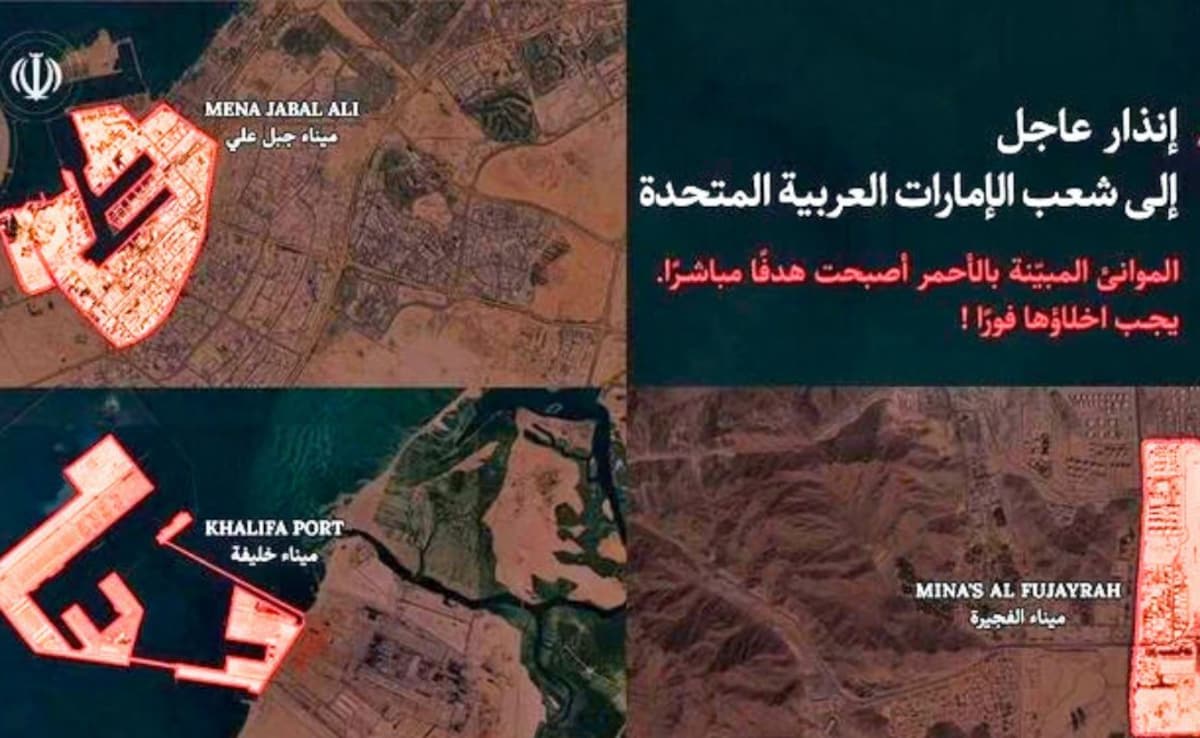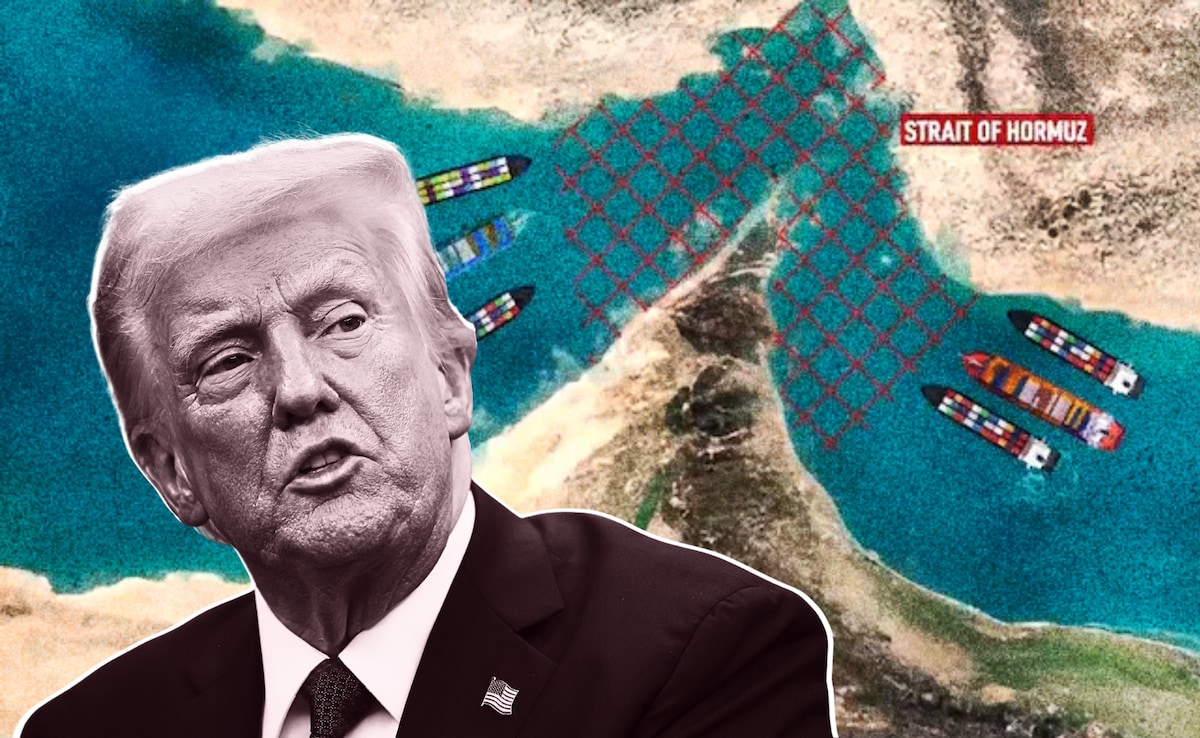
The global energy market is currently held hostage by 21 miles of water. For decades, the Strait of Hormuz has been the ultimate geopolitical pressure point, a narrow corridor where the world’s economic blood supply—roughly 21 million barrels of oil per day—must pass through a gauntlet of Iranian surveillance and weaponry. On Saturday, President Donald Trump escalated the stakes of the ongoing conflict with Tehran, issuing a blunt directive to the international community: Send your warships.
The message, delivered via Truth Social, marks a significant shift in the administration's strategy to break the "Hormuz Chokehold." Trump asserted that the United States is prepared to begin naval escorts for commercial tankers "soon, very soon," while calling on nations like China, the United Kingdom, and Japan to contribute their own naval assets to a multi-national task force.
This is not merely a call for military assistance. It is an attempt to internationalize the risk of a war that has already sent oil prices surging and insurance premiums into the stratosphere. By demanding that other major importers put skin in the game, the White House is trying to solve a puzzle that has bedeviled military planners for half a century: How do you protect a slow-moving, 300,000-ton supertanker from a swarm of "suicide" drones and shore-to-ship missiles?
The Super Weapons Engagement Zone
To understand why the "Send Warships" order is a massive gamble, one must look at the geography of the Strait. At its narrowest, the shipping lanes are only two miles wide, flanked by Iranian-controlled islands and a coastline bristling with road-mobile missile launchers.
Industry analysts and retired naval officers warn that the Strait has become a "super weapons engagement zone." Unlike the open ocean, where a Carrier Strike Group can use its range to stay out of trouble, the Persian Gulf is a bathtub. US warships must operate in confined waters where Iranian forces can launch saturation attacks using relatively cheap technology.
- Shore-Based Missiles: Iran possesses thousands of anti-ship cruise missiles (ASCMs) and ballistic missiles that can be fired from the back of civilian trucks, making them nearly impossible to target before they launch.
- The Drone Swarm: Cheap, one-way attack drones can be launched in hundreds. Even the most advanced Aegis combat system can be overwhelmed by sheer volume, forcing a billion-dollar destroyer to expend its limited magazine of multi-million dollar interceptors on $20,000 plastic drones.
- Naval Mines: This is the "silent killer" of the Strait. Sophisticated "smart" mines can sit on the seabed for months, waiting for the specific acoustic signature of a tanker before detonating.
The President claimed on Saturday that "100% of Iran’s military capability" has been destroyed following the bombardment of Kharg Island and other strategic sites. However, the reality on the ground—and under the water—is more complex. While the traditional Iranian Navy (the IRIN) may be crippled, the Islamic Revolutionary Guard Corps Navy (IRGCN) was designed specifically for asymmetric, guerrilla-style maritime warfare. They do not need a fleet of frigates to close the Strait; they only need to sink one ship or damage one hull to make the entire waterway uninsurable.
The Insurance Wall and the DFC Solution
The primary reason the Strait is "closed" right now isn't a physical blockade of ships. It is an economic blockade of paper.
When a conflict reaches this level of intensity, commercial insurers like Lloyd’s of London move the region into "listed areas." Premiums for "War Risk" insurance can jump from a few thousand dollars to hundreds of thousands of dollars per voyage. Eventually, insurers simply refuse to cover the hull at all. Without insurance, no sane captain or shipping company will enter the Gulf.
The Trump administration's counter-move is an unprecedented use of the United States Development Finance Corporation (DFC). By offering "political risk insurance and guarantees," the US government is essentially acting as a global insurance firm of last resort. The goal is to bypass the private market's hesitation and force oil back onto the water.
Why China is the Wildcard
Perhaps the most intriguing part of the President’s directive was the explicit call for China to send its own warships. This is a masterful, if risky, diplomatic play.
China is the world's largest importer of crude oil, and a significant portion of its supply comes directly through the Strait of Hormuz. For years, Beijing has enjoyed the "free rider" benefit of the US Navy securing global commons while simultaneously criticizing American "hegemony" in the region.
By asking China to send the People's Liberation Army Navy (PLAN) to join the escort mission, the Trump administration is forcing Beijing into a corner:
- Participate: Help the US secure the Strait, thereby validating American leadership and potentially risking Chinese ships in a conflict with an Iranian "partner."
- Refuse: Watch their energy security crumble and prove they are incapable of protecting their own vital interests, or attempt to cut a separate deal with Tehran that would further alienate them from the West.
The Ground Reality of Escort Missions
Escorting tankers is a grueling, resource-intensive task. During the "Tanker War" of the 1980s (Operation Earnest Will), the US Navy discovered that simply being there wasn't enough. Warships had to literally "box in" tankers, providing a 360-degree shield against mines and Iranian speedboats.
In 2026, the threat is faster and more lethal. Modern destroyers, such as the Arleigh Burke-class, are designed for high-end blue-water combat. Using them to babysit tankers in the Strait of Hormuz is like using a Ferrari to deliver milk in a war zone. It works, but the wear and tear on the crews and the hardware is immense.
Furthermore, military analysts point out that an escort mission cannot exist in a vacuum. To safely move ships, the US and its allies would likely need to establish a "buffer zone" on the Iranian shoreline. This means continuous suppression of enemy air defenses (SEAD) and "bombing the hell out of the shoreline," as the President put it. This isn't just an escort; it's a rolling battle.
The Stalemate of the Strait
Despite the rhetoric of "Mission Accomplished" and the total destruction of Iranian forces, more than 1,000 cargo ships currently sit idle, unable to move. Global supply chains are feeling the pinch, not just in energy, but in fertilizers (urea) and liquefied natural gas (LNG).
The move to send more warships—including a reported 2,200 Marines aboard the USS Tripoli—suggests the administration knows that air power alone hasn't solved the problem. If Iran has indeed begun mining the waterway, the US will need specialized mine-countermeasure (MCM) vessels, which are in notoriously short supply in the modern Navy.
The coming weeks will determine if the "Warship Task Force" can actually reopen the veins of global trade. If the tankers start moving, the President will have successfully called Iran’s bluff. If a single US-escorted tanker is hit, the pressure to expand the war from the sea to a permanent ground presence on the Iranian coast may become irresistible.
The "Hormuz Chokehold" isn't just a military obstacle. It is a test of whether the traditional rules of maritime power still apply in an age of cheap, precision-guided asymmetric warfare.
The warships are coming. The question is whether they are arriving to secure a peace or to serve as targets in an escalating energy war that has no clear exit strategy.