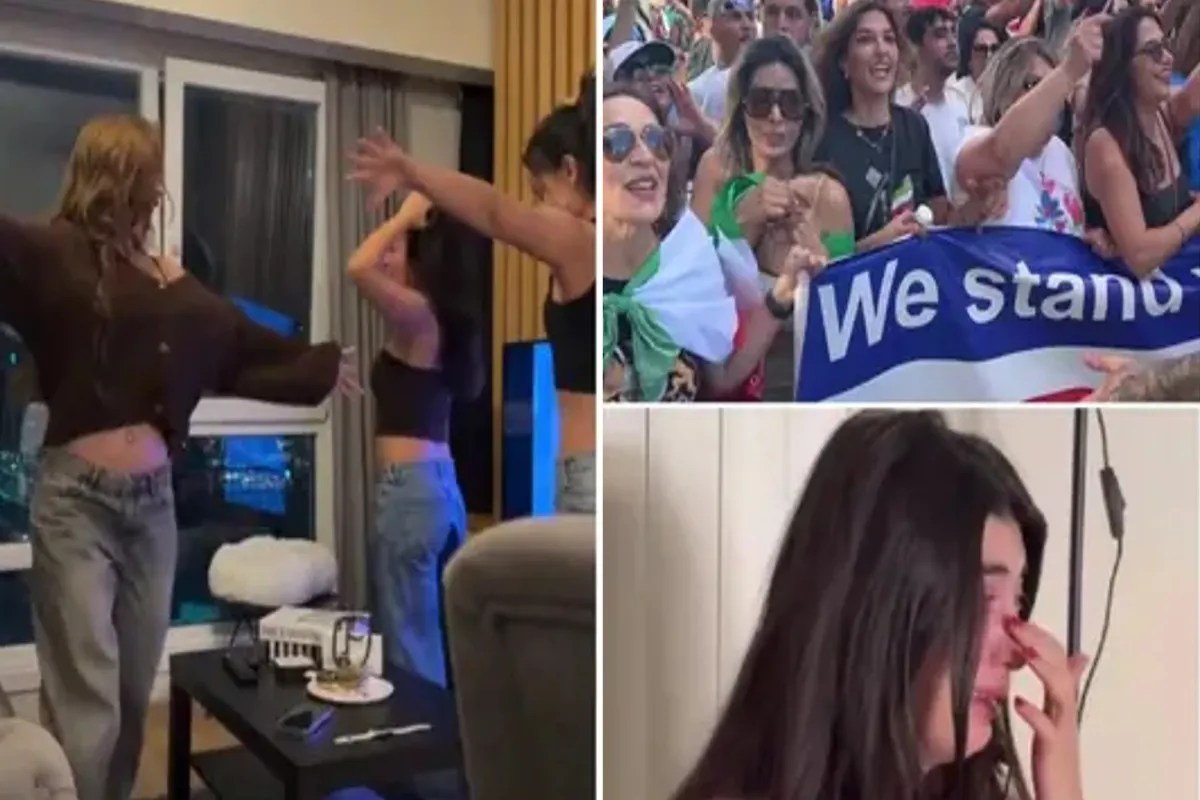
Iran is a country of two worlds. One world lives in the somber, black-clad broadcasts of state television, where every official death is a national tragedy and every setback is a call for holy war. The other world lives on smartphones, behind VPNs, and in the private living rooms of Tehran and Shiraz. Right now, these two worlds are crashing into each other in a way that’s impossible to ignore. While the Iranian leadership tries to enforce a period of mourning for high-profile figures lost in the escalating regional conflict, a viral trend is mocking that very solemnity. Iranians are doing the "Trump Dance."
It’s not necessarily about an obsession with American politics. It’s about defiance. When you see a young Iranian woman or a group of teenagers mimicking the rhythmic, double-fist-pump dance moves associated with Donald Trump, they aren't just sharing a meme. They're signaling that they no longer care about the regime's red lines. They're choosing a symbol that represents the ultimate "other" to their leaders.
Why the Trump Dance is a Middle Finger to the IRGC
The Iranian government spends millions of dollars on propaganda. They use giant murals, massive funeral processions, and state-sanctioned grief to maintain a sense of national unity. But the "Trump Dance" reels appearing on Instagram and TikTok suggest that the propaganda isn't sticking.
For the average Gen Z Iranian, the regime's mourning feels performative and disconnected from their daily struggles. They're dealing with massive inflation, a plummeting rial, and a lack of personal social freedoms. When the Islamic Revolutionary Guard Corps (IRGC) or the Supreme Leader’s office tells the public to weep for a fallen commander or a political ally, the "Trump Dance" becomes a tool of psychological warfare from the bottom up. It says, "Your enemies aren't our enemies."
This isn't just my opinion. Look at the timing. These videos often spike right after state-mandated moments of silence or funeral ceremonies. It’s a deliberate juxtaposition. On one side of the screen, you have grainy footage of weeping officials; on the other, you have upbeat music and a dance that the authorities find repulsive. It’s a digital insurrection that’s hard to arrest because it’s everywhere at once.
The Great Divide Between State and Street
We have to talk about the mood in Iran right now. It’s heavy, but it’s also cynical. The regime is currently navigating a precarious geopolitical tightrope. Between the ongoing fallout from the "Woman, Life, Freedom" protests and the direct military exchanges with Israel, the leadership is desperate for a show of public support.
Instead, they're getting memes.
The divide is generational, but it’s also ideological. The older generation, the ones who remember the 1979 revolution, might still feel a sense of duty toward the state’s narratives. But the youth? They’re over it. They see the "Trump Dance" as a way to trigger the morality police without saying a single word. It’s low-effort, high-impact rebellion.
I’ve seen reports of people being questioned for these videos. The state sees it as "soft war" or Western cultural infiltration. To the kids dancing, it’s just a Saturday night. They don't want to be martyrs; they want to be part of the global internet culture that the regime tries so hard to block.
Memes as a Shield Against State Narrative
In a country where traditional protest can get you jailed or worse, the internet remains the only semi-free space. Yes, the government shuts down the internet during unrest. Yes, they filter everything. But Iranians are the world masters of the VPN. They find a way.
The "Trump Dance" is a perfect example of "subversive joy." In a regime that prioritizes the "culture of martyrdom," being happy—especially in a Western, silly way—is an act of resistance. When the state demands "Matam" (mourning), the people offer "Raqs" (dance). It’s a binary choice. By choosing the dance, they’re effectively opting out of the social contract the Islamic Republic offers.
There’s also a deeper layer of irony here. The Iranian leadership spends so much energy framing the United States as the "Great Satan." By adopting the mannerisms of a figure like Trump, who is perhaps the most polarizing U.S. figure in Iranian eyes, these creators are leaning into the "Satan" narrative just to spite their own rulers. It’s "the enemy of my enemy is my dance partner."
What This Tells Us About Iran’s Future
Don't mistake this for a sudden love for American policy. If you talk to young Iranians, many are still deeply critical of U.S. sanctions that make their lives harder. However, they're even more critical of a government that uses those sanctions as an excuse to tighten the screws on its own people.
The mood is shifting from fear to mockery. Fear is a great tool for a dictatorship, but mockery is a poison. Once the people start laughing at the state’s most sacred rituals, the state loses its aura of invincibility. That’s what we’re seeing with these reels. The "mood of Iran" isn't monolithic. It’s a tug-of-war between a regime that wants to look back at the 7th century and a youth population that wants to live in the 21st.
The government can hold as many funerals as it wants. It can fill the streets with buses of supporters brought in from the provinces. But it can’t stop the kid in a North Tehran apartment from hitting record on her phone and dancing to a beat that the Mullahs hate.
Pay Attention to the Digital Underground
If you want to know what’s actually happening in Iran, stop watching the state news agency, IRNA. Look at the hashtags. Look at the songs being used in the background of seemingly mundane videos. The "Trump Dance" is just the latest trend, but the underlying sentiment—the rejection of state-mandated grief—is a permanent fixture now.
The IRGC knows this. They’ve increased their presence on social media to counter these trends, often producing their own awkward versions of popular memes to try and "reach the youth." It almost always fails. You can’t manufacture cool, and you certainly can’t manufacture genuine grief.
Keep an eye on the VPN usage stats and the trending audio in the region. When the next big regional event happens, don't just look at the missiles. Look at the TikToks. That's where the real war for the soul of Iran is being fought. The state has the guns, but the people have the humor. In the long run, humor is a lot harder to kill.
To stay informed on the actual ground reality in Iran, you should follow independent journalists who specialize in OSINT (Open Source Intelligence) and digital culture within the Middle East. They often catch these trends weeks before they hit mainstream Western news cycles. Look for contributors on platforms like X or Telegram who specifically track Persian-language social media trends. That’s where the mask of the regime truly slips.