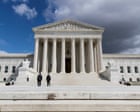
The United States Supreme Court's decision to stay a lower court order regarding New York’s 17th Congressional District represents a critical stabilization of the "Purcell Principle," the judicial doctrine that discourages federal courts from altering election rules close to an election. This intervention effectively preserves the existing map for the 2026 cycle, signaling a high judicial threshold for mid-cycle redistricting mandates. To understand the strategic implications of this ruling, one must dissect the friction between state constitutional mandates, federal voting rights protections, and the logistical timeline of the American electoral apparatus.
The Logic of the Stay
The Supreme Court’s action functions as a procedural pause rather than a final ruling on the merits of the case. In redistricting litigation, the granting of a stay typically hinges on three variables: the likelihood of the applicant’s success on the merits, the presence of "irreparable harm" if the stay is denied, and the balance of equities concerning the public interest.
The primary mechanism at play here is the preservation of the status quo. When a lower court orders the redrawing of a district—especially one that has already been utilized in a previous election cycle—it introduces administrative volatility. The Supreme Court’s intervention suggests that the risk of voter confusion and administrative burden outweighs the immediate necessity of correcting alleged map deficiencies before the next primary cycle.
Structural Constraints of New York’s Redistricting Process
New York’s redistricting environment is defined by a multi-layered oversight system that includes the Independent Redistricting Commission (IRC), the State Legislature, and the State Judiciary. The 17th District, currently held by Republican Mike Lawler, became a focal point of litigation due to its competitive nature and its demographic composition.
The Conflict of Jurisdictions
The legal challenge originated from claims that the current boundaries dilutes the voting power of specific constituencies. However, the constitutional framework for redistricting in New York requires a specific sequence of events:
- The IRC submits a map.
- The Legislature approves or rejects the map.
- If rejected twice, the Legislature may amend and adopt its own version.
The Supreme Court’s stay effectively honors the map produced through this finalized state process, indicating that federal courts should be wary of disrupting state-sanctioned legislative outcomes without a clear, egregious violation of the U.S. Constitution or the Voting Rights Act.
The Purcell Principle as a Barrier to Entry
The Purcell Principle serves as the primary defensive wall for existing district lines as an election year approaches. The doctrine posits that the closer an election is, the more likely a court order will cause confusion for voters and election officials, thereby harming the integrity of the election itself.
By granting the stay, the Supreme Court reinforces a strict timeline for redistricting challenges. For challengers, the window of opportunity for "actionable litigation" is narrowing. Any challenge not resolved well before the start of the petitioning period faces a high probability of being deferred until the following cycle. This creates a strategic advantage for incumbents who can rely on the procedural inertia of the court system to survive legal scrutiny through at least one more election.
The Cost Function of Mid-Cycle Changes
Redrawing a single district does not happen in a vacuum. Because districts must maintain roughly equal populations (the One Person, One Vote principle), a change in District 17 necessitates a "ripple effect" across neighboring districts.
Variables of Administrative Friction
- Voter Registration Data: Shifting boundaries requires the mass migration of voter records between different jurisdictional databases.
- Candidate Eligibility: Mid-cycle changes can result in candidates suddenly living outside the districts they intend to represent, leading to further litigation.
- Ballot Production: In highly diverse areas like New York City and its suburbs, ballots must be translated into multiple languages. Changing lines late in the cycle increases the risk of printing errors or missed deadlines for absentee and overseas voters.
The Supreme Court’s decision suggests an implicit calculation that these administrative costs are too high to justify a mandatory redraw while the legal merits of the original challenge remain under debate in the appellate system.
Distinguishing Between Partisan and Racial Gerrymandering
The legal weight of this case depends on the classification of the challenge. While the Supreme Court has ruled that partisan gerrymandering is a non-justiciable political question (Rucho v. Common Cause), racial gerrymandering remains a valid ground for federal intervention under the 14th Amendment and the Voting Rights Act.
The plaintiffs in the New York case argue that the current lines improperly fragment minority communities. The Supreme Court’s stay does not dismiss these claims; rather, it questions whether the plaintiffs have met the "clear and convincing" standard required to bypass the Purcell Principle. If the map is eventually found to be unconstitutional, the remedy will likely be applied to the 2028 cycle, rendering the 2026 lines a "lame duck" geography.
Impact on 2026 Strategic Planning
For political operatives and strategists, the Supreme Court’s intervention provides a rare moment of certainty in a traditionally fluid environment. The retention of the current 17th District boundaries allows for immediate capital allocation.
Resource Allocation
Campaigns can now commit to long-term media buys and field office leases without the risk of their target demographics being moved into a different congressional contest. This is particularly vital in the Hudson Valley, where television markets are expensive and overlap with multiple districts.
Voter Outreach
Incumbents can maintain their constituent services and outreach programs with the assurance that their current base will remain their primary electorate. For challengers, the stay removes the possibility of a "friendlier" map, forcing them to compete on the current, highly competitive terrain.
The Precedent of Judicial Restraint
This ruling fits into a broader trend of the Roberts Court favoring judicial restraint regarding state election laws. By allowing the New York map to stand, the Court is signaling to state legislatures that their maps will be protected from last-minute federal intervention, provided they follow their own internal constitutional processes.
This creates a high-stakes environment for the 2030 census cycle. If the Supreme Court continues to strengthen the Purcell Principle and limit the scope of federal intervention, the initial map-drawing phase becomes the only phase that truly matters. Legal "fixes" are becoming increasingly difficult to achieve within a single decade's timeframe.
The stay issued by the Supreme Court serves as a definitive signal: the 2026 electoral map for New York is effectively locked. Stakeholders must now operate under the assumption that the 17th District's current configuration is the field of play. The focus of the litigation will now shift to a slower, more deliberate examination of the map’s legality, which will likely reach a conclusion only after the 2026 midterms have concluded. This necessitates an immediate pivot from legal speculation to ground-level mobilization within the existing boundaries. Every dollar and hour of volunteer labor should be deployed according to the current GIS data, as the probability of a court-ordered redraw before the 2026 cycle has dropped to near zero. Reach out to local county boards of elections to confirm the finalized precinct lists, as these will be the definitive units of measure for the upcoming primary and general contests.